Italy is hosting the fourth annual conference on rebuilding war-torn Ukraine to promote public-private partnerships.
According to Katarina Mathernova, ambassador of the European Union to Ukraine, leaders gathered in Rome at the Ukraine Recovery Conference 2025 meeting on July 10 to “talk about energy, infrastructure, health care, education, opportunities for veterans, and about the reforms that will anchor Ukraine’s path toward the EU.”
Italian Prime Minister Georgia Meloni and Ukrainian President Volodymyr Zelenskyy opened the event.
It’s the fourth such conference on Ukraine’s recovery since the Russia–Ukraine conflict began in 2022, following earlier editions in Lugano, Switzerland, in 2022; in London in 2023; and in Berlin in 2024.
The World Bank Group, European Commission, and the United Nations have estimated that Ukraine’s war recovery will cost $524 billion over the next decade. This is 2.8 times the estimated nominal GDP of Ukraine for 2024, according to a Feb. 25 statement from the World Bank Group.
European Commissioner Ursula von der Leyen, as well as economy and/or foreign ministers from other European countries, are attending.
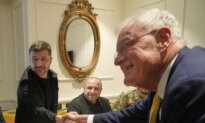
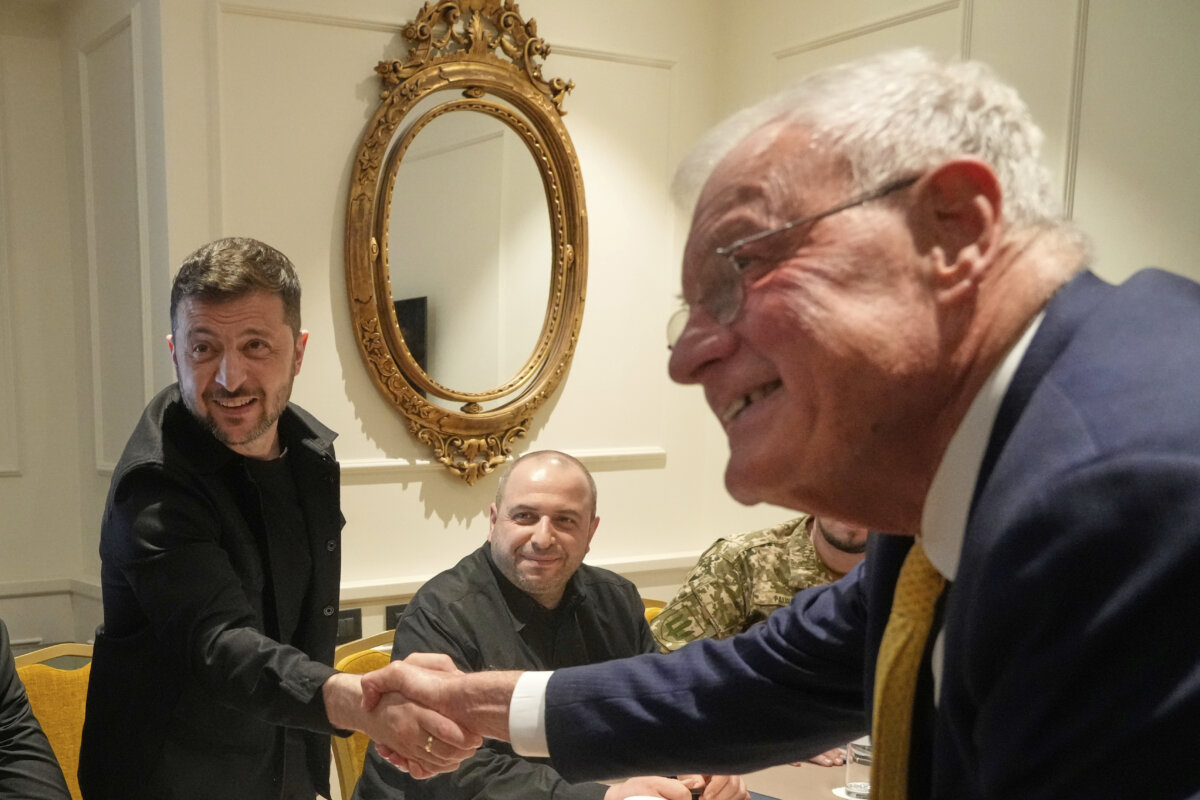
Retired Lt. Gen. Keith Kellogg, U.S. special envoy to Ukraine and Russia, was in Rome and met with Zelenskyy on July 10.
In a statement on July 10, the Council of Europe said that the European Court of Human Rights delivered a “historic judgment” on July 9 that it said holds Russia accountable for “widespread and flagrant abuses of human rights arising from the conflict in Ukraine since 2014, in breach of the European Convention on Human Rights.”
Posting on social media platform X on July 9, Zelenskyy wrote that he met with Italian President Sergio Mattarella.
“We discussed the return of Ukrainian children who were forcibly transferred to Russia, European integration, sanctions pressure on the Russian Federation, and the establishment of a Special Tribunal for the Crime of Aggression against Ukraine,” Zelenskyy said.
“I called on Italy to ratify the relevant Agreement so that the Tribunal can start operating as soon as possible.”
Moscow’s forces have upped aerial attacks in recent weeks.
On the night of July 3–4, Russia launched the largest aerial assault on Ukraine since the war began.
The Ukrainian Air Force said Moscow unleashed 550 drones and missiles over the country, with the vast majority being Iranian Shahed UAVs.
Kyiv’s forces said they managed to neutralize 478 of the weapons launched, with air defenses downing 270 targets, including two cruise missiles, and another 208 lost from radar and presumed jammed.
However, Russia succeeded in hitting eight locations with nine missiles and 63 drones.
Ukraine’s capital was the focus of the Kremlin’s nocturnal barrage, which resulted in at least 23 injuries, of which 14 required hospital treatment, Kyiv Mayor Vitali Klitschko said on Telegram.
On July 9, Russia launched 728 Shahed and decoy drones, as well as 13 missiles, at Ukraine overnight, the Ukrainian Air Force said in a statement.
Zelenskyy said the northwestern city of Lutsk, near the Polish and Belarusian borders, was the hardest hit, although 10 other regions were also struck.
“At the moment, efforts are ongoing across many regions of Ukraine to eliminate the consequences of last night’s Russian attack,” Zelenskyy said in a July 9 statement on X.
“The main strike targeted Lutsk. Damage has also been reported in the Dnipro, Zhytomyr, Kyiv, Kirovohrad, Mykolaiv, Sumy, Kharkiv, Khmelnytskyi, Cherkasy, and Chernihiv regions.”
Lutsk is home to airfields used by Ukraine’s forces, with cargo planes and fighter jets routinely flying over the city.
“This is yet another proof of the need for sanctions—biting sanctions against oil, which has been fueling Moscow’s war machine with money for over three years of the war,” Zelenskyy said.
On July 7, the Pentagon announced that it is sending more defensive weapons to Ukraine.
Guy Birchall and Reuters contributed to this report.
 Friends Read Free
Copy
Facebook
Tweet
Friends Read Free
Copy
Facebook
Tweet