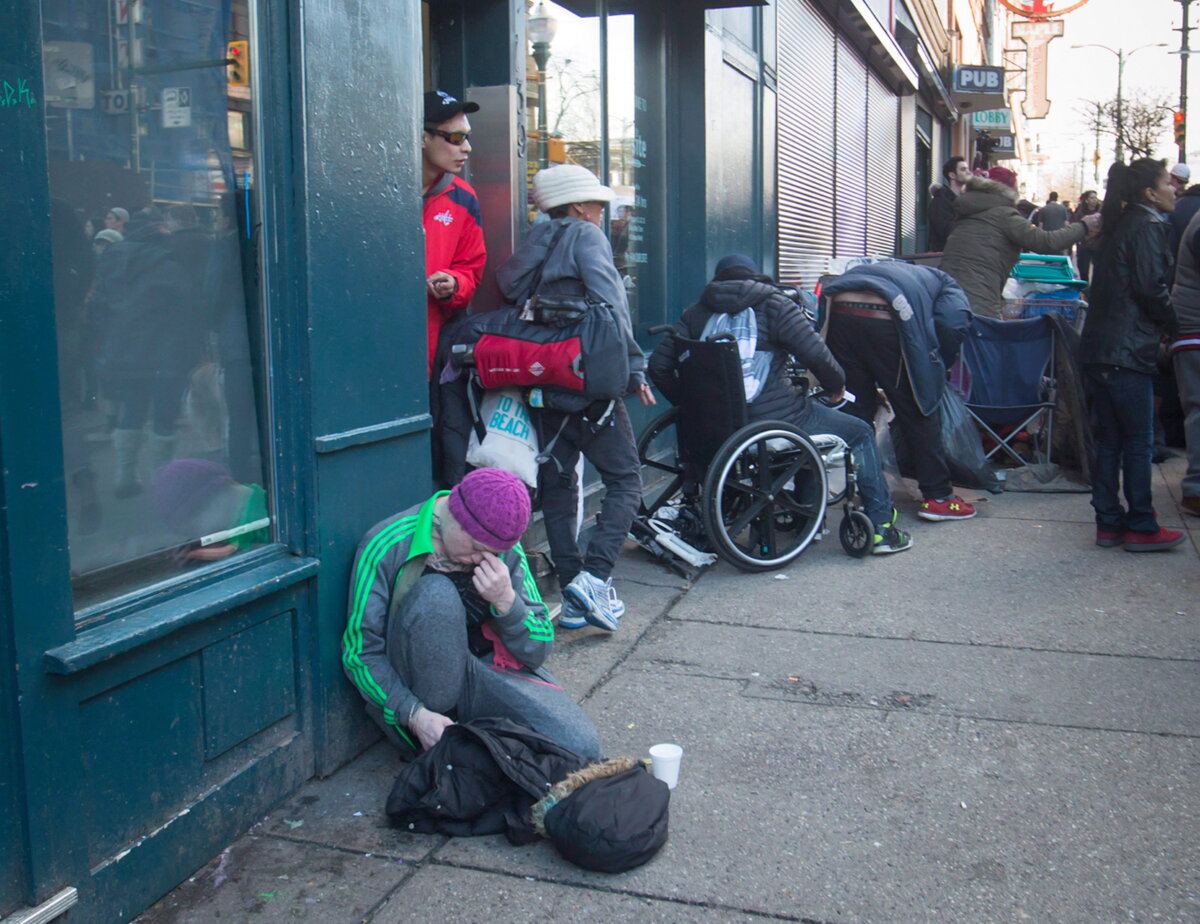

Kelowna Mayor Tom Dyas is asking Health Canada to deny the 2027 renewal of a supervised drug consumption site in the city’s downtown, citing thousands of police and emergency calls since the site’s opening.
“There’s nothing safe about a site that creates disorder for the surrounding community,” Dyas wrote on social media about the supervised consumption site operating at Outreach Urban Health, located at 1649 Pandosy Street.
Dyas wrote that the site had resulted in a “significant impact on crime rates, expressions of community opposition, and gaps in the legislated engagement and consultation.”
Previous requests to the B.C. government and the province’s Interior Health to voluntarily remove the site had not resulted in action or a “substantive response” despite the city council providing data-driven information, he wrote.
He added that his city has continued to advocate for treatment and support services for those addicted to drugs, and has contributed land for the cause, but the site on Pandosy had become unsustainable.
Dyas said there had been 3,466 calls to the RCMP, 395 Kelowna Fire Department responses—including 371 medical incidents and 24 outdoor fires—and 420 bylaw service calls related to the site since it opened in 2021.
“These incidents extend well beyond nuisance concerns. The City, RCMP, and public safety partners continue to respond to serious and recurring incidents near the site, including gang activity, weapons-related assaults, intimate partner violence, drug trafficking, fencing of stolen property, arson, overdoses, and other medical emergencies,” he wrote.
Dyas also cited a 2023 survey showing that 89 percent of 133 respondents said the site’s impact is “bad” or “very bad.”
He said the request for the site’s removal comes after the city spent five years attempting to mitigate its impact through environmental design review, cleaning and maintenance, graffiti abatement, temporary fencing, sidewalk improvements, waste-bin removal, coordinated enforcement, and temporary alley closure.
A Sept. 5 press release about construction on a mental-health and substance-use treatment facility in Surrey indicates the province is planning more facilities for drug users.
“This is one part of the government’s work to improve access to mental-health and addictions care, which includes a focus on expanding supports and services that work for everyone,” it says. “The Province continues to add and expand care, including early intervention and prevention, treatment and recovery services, supportive and complex-care housing, overdose-prevention services and more.”
Some provinces have closed or restricted their supervised consumption sites.
Ontario government has said that it has ended financial support for seven supervised drug consumption sites, as it shifted focus toward treatment.
The province had previously seen 10 sites close in 2025 after new rules prohibited the operation of sites within 200 metres of schools or daycares.
Alberta announced in March the planned closure of the Sheldon M. Chumir Health Centre in Calgary, which was then permanently closed on June 30, as well as the closure of the mobile service operating in Lethbridge. That follows the closure of two sites in Edmonton and Red Deer the year before, as the province moves toward a recovery model of addiction treatment.
Meanwhile, Manitoba opened its first supervised consumption site in Winnipeg in August.
 Friends Read Free
Copy
Facebook
Tweet
Friends Read Free
Copy
Facebook
Tweet