Although the Liberal government briefly lost its majority status following the resignation of several MPs, it regained it following the Aug. 31 byelections.
The Liberals won all three byelections in Quebec, Ontario, and British Columbia, obtaining more than 50 percent of the vote in each. The Conservatives lost a seat, while the Bloc Québécois and NDP also trailed in the vote totals.
Here are some key takeaways from the three Aug. 31 byelections.
Liberals
After the resignation of former Environment Minister Steven Guilbeault this weekend, the Liberals’ seat count had fallen to 170 MPs, which was two short of a majority government. But the byelection results mean that when the House of Commons resumes on Sept. 21, they will have 173 seats.
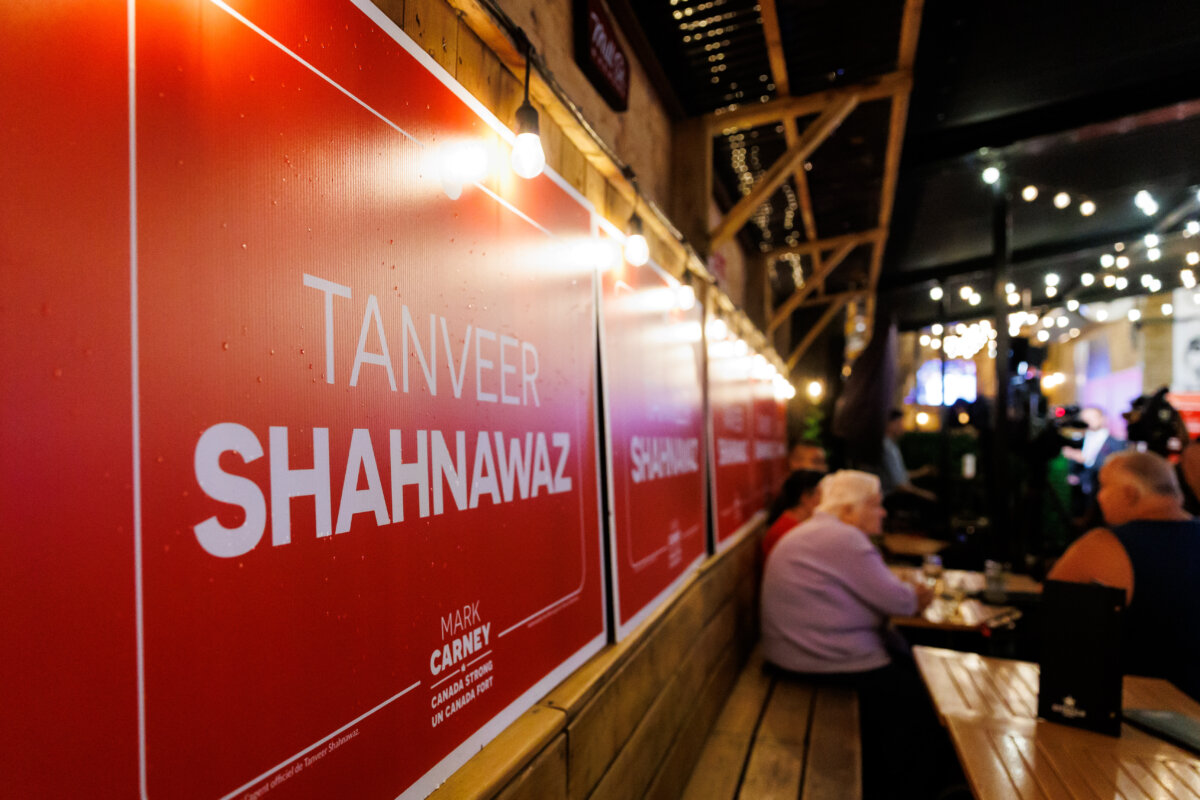
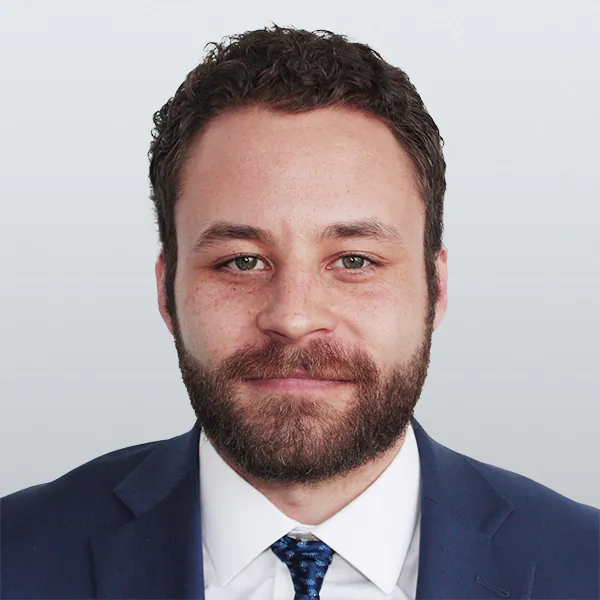
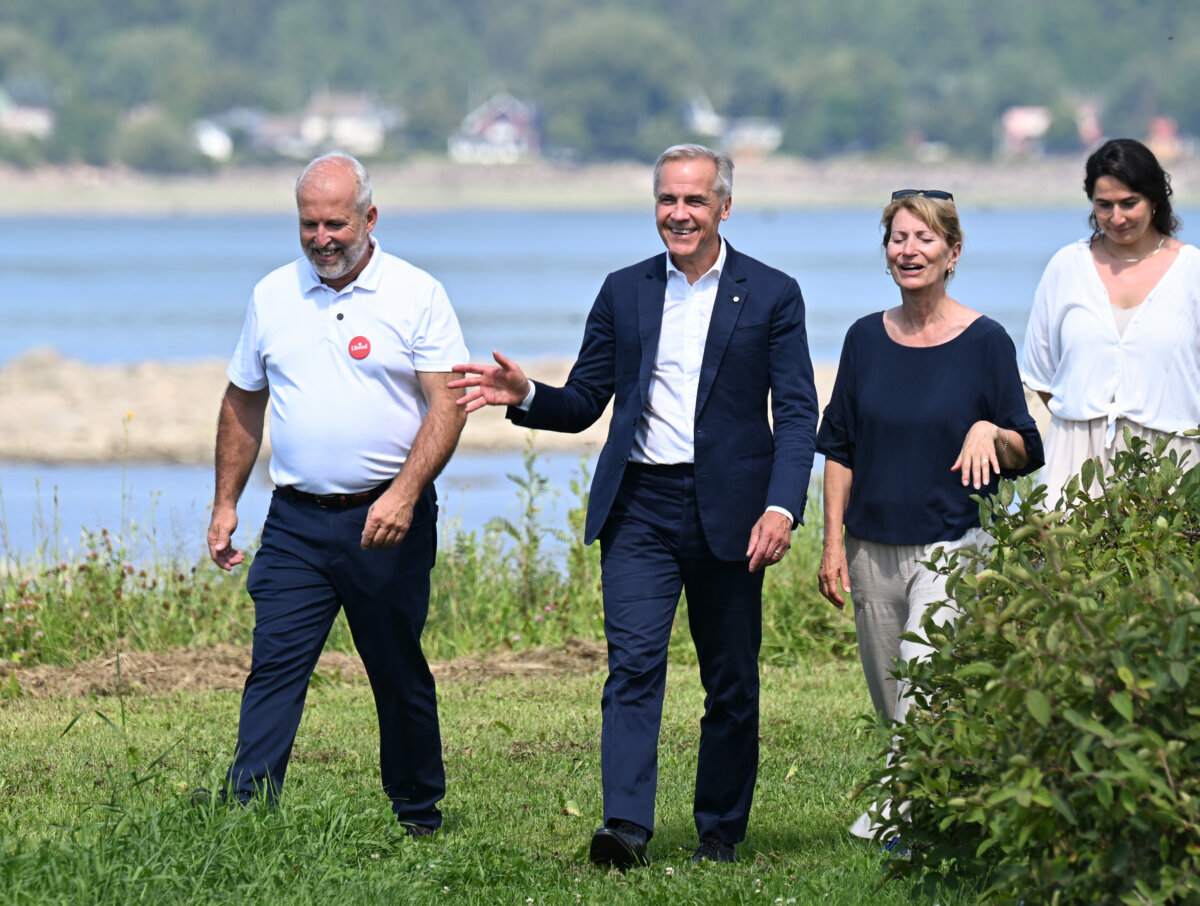
Liberal candidate and Quebec dairy farmer Daniel Gobeil won with 51.3 percent of the vote in the riding of Chicoutimi-Le Fjord, while Liberal candidate Tanveer Shahnawaz won with 55.7 percent of the vote in the Toronto riding of Beaches-East York, and Liberal candidate and Prime Minister Mark Carney’s former deputy chief of staff Braeden Caley won the B.C. riding of North Vancouver-Capilano with 58.6 percent of the vote.
Carney later told reporters that the results show Canadians “have put their trust in our government,” and that the Liberal Party’s plan is working.
Nik Nanos, chief data scientist and founder of Nanos Research, said that the Liberals had “a good night” given that they “held the two seats that they were supposed to hold, and they picked up one seat.”
However, Nanos said his firm’s polling has shown the Liberal lead over the Conservatives is narrowing for the first time in recent tracking, as the Canada–U.S. trade war expands.
“I think things are starting to sink in that there could be negative fallout from this. … If and when we start to see economic or business casualties, I don’t know how resilient Canadians are going to be in terms of their views of Mark Carney and the Liberals,” he said.
Conservatives
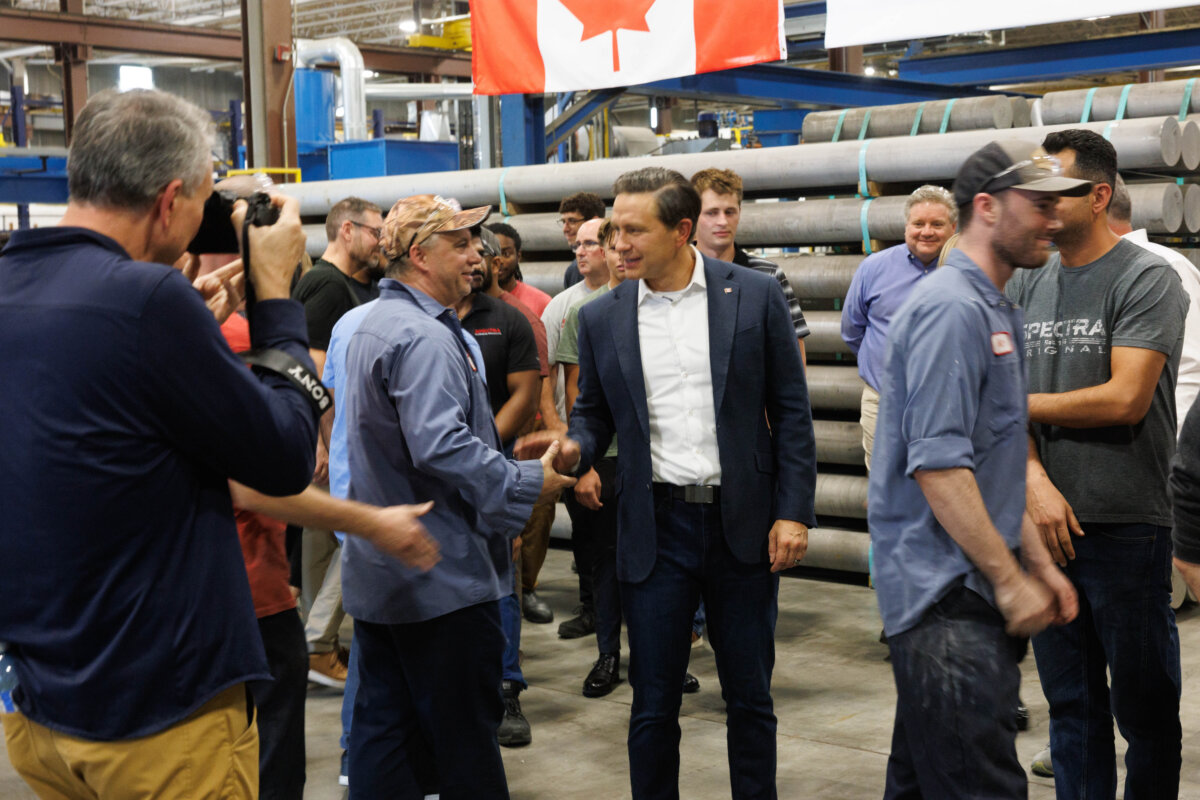
While the Conservatives were not projected to win the Toronto and Vancouver ridings—which have both been held by the Liberals since 2015—Nanos said the party’s loss of Chicoutimi-Le Fjord was a “disappointing outcome” for the party.
The Quebec riding had been held by the Tories since 2018, but it became vacant when Carney appointed Conservative MP Richard Martel to the Senate in July.
“For the Liberals, their crafty move paid off,” Nanos said.
The Conservatives’ share of the vote in Chicoutimi-Le Fjord fell from 34.1 percent of the vote in the April 2025 federal election to just 12.5 percent on Aug. 31, which put the party in third place. The same decline happened in the Vancouver riding, where the Tories gained 33.7 percent of the vote in April 2025 but 29.2 percent on Aug. 31, and in Toronto where their support fell from 23.5 percent to 15.5 percent, finishing third behind the NDP.
New Democrats
The NDP had better performance compared to last year in one riding, but fell behind the Greens in another.
The NDP’s share of the vote in Chicoutimi-Le Fjord remained virtually the same at about 2 percent, and their support fell slightly in Vancouver from 4.2 percent in April 2025 to 3.1 percent on Aug. 31, but this time finishing fourth behind the Greens. But the party saw its support in Toronto rise from 6.9 percent to 25.8 percent, surpassing the Conservatives for second place.
Nelson Wiseman, professor emeritus at the University of Toronto, said the NDP saw their fortunes improve in Toronto because many NDP supporters “voted for the Liberals because they didn’t want the Conservatives in, and … thought Carney could stand up to Trump,” but have now switched back.
The NDP were also likely helped by gaining a new leader, Avi Lewis, in March, he said. Lewis still does not have a seat in Parliament, and Wiseman said he should have run as a candidate in Beaches-East York.
“What [Lewis] needed to do is raise his profile nationally. It’s OK if you lose,” he said, pointing out that Green Party Leader Elizabeth May lost the first time she ran for Parliament, while former Prime Minister John Diefenbaker lost the first five times he ran to be a politician.
“Had Lewis been running, that would have been a big story. It would have gotten a lot of coverage,” Wiseman said. “You got to get your name out there.”
Quebec, Bloc, and PQ
In April 2025, the contest in Chicoutimi-Le Fjord was a close race between the Conservatives, the Bloc, and the Liberals. The Bloc performed about the same on Aug. 31, winning 32.9 percent of the vote compared to 31.2 percent in 2025.
Wiseman said the Liberals’ increased support in Quebec—despite having an anglophone leader compared to a francophone opposition—is likely a result of the Trump factor.
Peter Graefe, an associate professor of political science at McMaster University, noted that Carney has also been outspoken about protecting Canada’s supply management system and aluminum industries from U.S. tariffs, both of which are important for Quebec.
Graefe said given that the Liberals’ candidate for the riding was also a former Dairy Farmers of Canada board member, the result was “maybe a bit less of a surprise, and was certainly no doubt helped by the situation with the United States.”
The federal byelection in Quebec came just over one month before a provincial election in the province, where the governing Coalition Avenir Québec (CAQ) is seeking another mandate after eight years in power on Oct. 5. Christine Fréchette took over the party’s leadership in April after Premier François Legault stepped down amid declining popularity.
While the separatist Parti Québécois (PQ) has been leading in public opinion polls since 2023, and has won four straight byelections, the CAQ has tightened the polls after the arrival of its new leader but it’s still trailing behind the PQ. The Quebec Liberal Party is in third place, while the Conservative Party of Quebec is in fourth.
Graefe said that while the Bloc’s performance in the byelection could offer some indication of how the PQ might perform provincially, it’s hard to draw a direct comparison. He said that although the CAQ originally drew some support from PQ voters in rural Quebec, that support had “atrophied” during its time in power.
Wiseman noted that both the Quebec Liberal Party and CAQ began improving in the polls once their leaders resigned and were replaced, and said that leadership changes had played a more significant role in shifting the provincial polls than the federal byelection.
Upcoming Byelections
There are several other federal seats that are or will soon be vacant, and will need to be filled in byelections.
Five seats are currently vacant. They include Saint-Hyacinthe-Bagot-Acton in Quebec since Bloc MP Simon-Pierre Savard-Tremblay left to run for the PQ provincially; Rosemont-La Petite-Patrie when former NDP MP Alexandre Boulerice resigned to run for Québec Solidaire; Laurier-Sainte-Marie when Liberal MP Steven Guilbeault stepped down; Scarborough North in Ontario after Liberal MP Shaun Chen resigned; and Yorkton-Melville in Saskatchewan after Conservative MP Cathay Wagantall resigned.
Additionally, Conservative MP Larry Brock plans to resign in the Ontario riding of Brantford-Brant South on Sept. 18 to return to the Crown Attorney’s office.
Carney has said the remaining byelections will likely be spread out instead of held on one day, partly to avoid overlapping Quebec’s provincial election.
 Friends Read Free
Copy
Facebook
Tweet
Friends Read Free
Copy
Facebook
Tweet