
The Liberal government is pausing its plan to speed up and simplify environmental assessments for major projects and will be waiting until the fall session of Parliament to introduce legislation on it.
The move comes in the wake of criticism of the planned changes from several environmental groups and members of the Liberal caucus who opposed the proposals, including provisions that would allow major projects to receive approval before undergoing a full environmental assessment and exempt some developments from protections for at-risk species.
The government had recently called for public consultation on the proposed changes.
Ottawa’s plan, outlined in two discussion papers released last month, also proposed changing the responsibility for reviewing new pipelines, transmission lines, and offshore renewable energy ventures away from the Impact Assessment Agency to the Canada Energy Regulator.
Ottawa says the changes will speed up and simplify approvals on projects in the national interest and help draw more investment into the country, including by reducing approval timelines, getting rid of duplication in approvals from different regulators, and giving more certainty to project proponents.
The government has also said stakeholders have said the Canada Energy Regulator has expertise on energy projects that’s not available at the Impact Assessment Agency.
The government says the legislation will now be tabled after Parliament resumes on Sept. 21.
“Look, there are enormous issues at play here,” Transport Minister Steven MacKinnon told media June 4 prior to question period. “We want to make sure we get the full range of views.”
One critic of the proposed changes is Liberal MP Steven Guilbeault, who recently said he disagrees with the Liberal government’s shift toward accelerating major project approvals. Guilbeault, who formerly served as environment minister, announced on May 27 that he is resigning his seat in Parliament and leaving this summer to fight climate change and approach environmental problems “in a different way.”
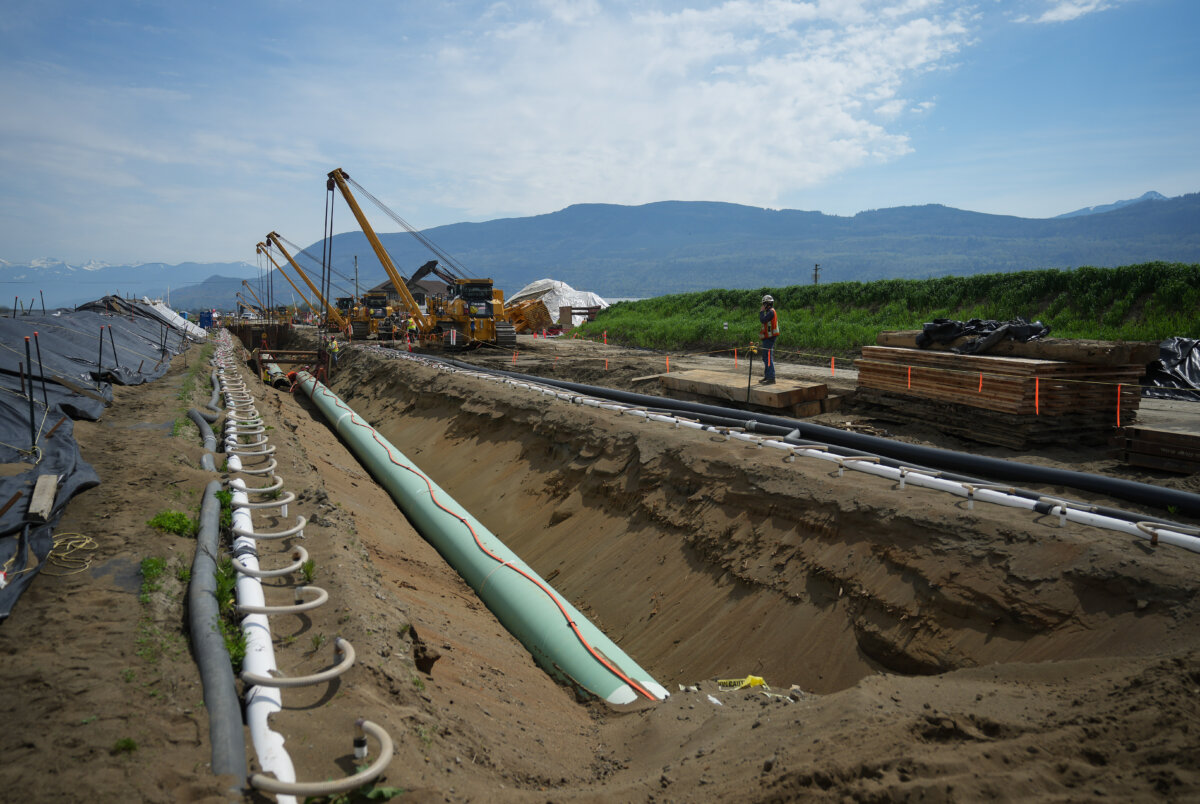
Other environmental critics have cited endangered killer whales off the B.C. coast as one case of wildlife that could be threatened if the changes are put through, in particular a pipeline from Alberta to the B.C. coast that Alberta says it will propose by July 1.
However, further protections for the killer whales have already been put in place as of June 1 via an interim order issued by Transport Canada that requires vessels to stay at least 1,000 metres away from killer whales. The Liberal government also allocated $95 million over the next five years and $16.5 million per year afterward to protect killer whales in its spring economic update in late April.
Proposed Reforms
The proposed reforms come as part of the Carney government’s plan to accelerate federal approval processes for projects deemed to be in the national interest. The changes occurred in the face of pressure from provinces including Alberta and trade tensions with the United States.
Prime Minister Mark Carney said Canada must move more quickly on building up infrastructure and approving major development projects in order to grow the nation’s economy and be less reliant on the United States.
Parliament passed the Building Canada Act in June of last year and Ottawa launched the Major Projects Office two months later to help simplify and speed up reviews as well as coordinate funding for major projects.
Conservatives have said the acceleration of major projects does not go far enough and have called on the Liberal government to fully repeal the Impact Assessment Act and scrap the federal industrial carbon pricing framework.
The Tories argue that private investors and market forces are best suited to determine which projects move forward and which fail, rather than leaving such decisions subject to government favour. They have called on the government to remove regulations they consider overly burdensome to development.
The Canadian Press contributed to this report.
 Friends Read Free
Copy
Facebook
Tweet
Friends Read Free
Copy
Facebook
Tweet