
The Liberal government has introduced a bill that would provide citizenship to individuals born abroad to Canadian parents who themselves were born in a foreign country, following the unsuccessful attempt of a similar bill in Parliament last year.
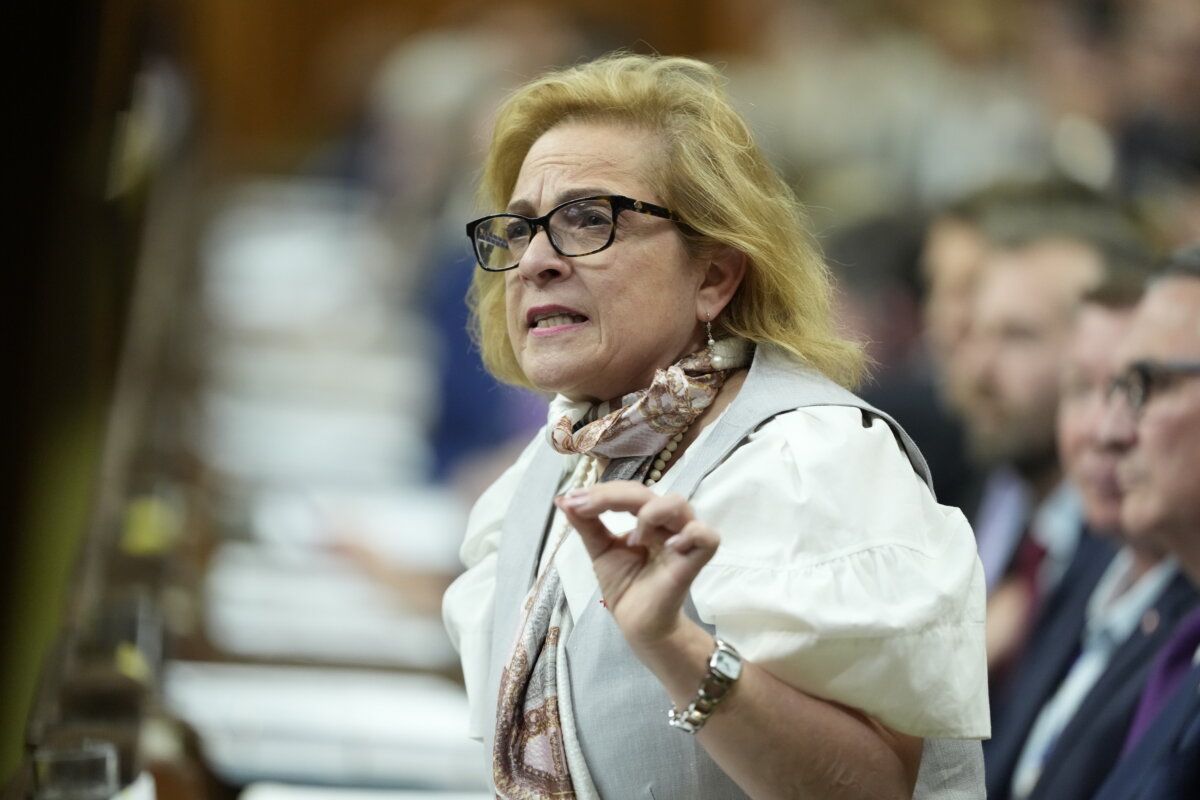
New Immigration Minister Lena Metlege Diab presented Bill C-3 in the House of Commons June 5.
The proposed legislation seeks to overturn a change made by former Prime Minister Stephen Harper in 2009 that prohibited Canadians born outside the country from transferring citizenship to their offspring unless those children were born in Canada.
Then-Immigration Minister Diane Finley said the rule was enacted to discourage “Canadians of convenience.” She described the legislation as an easy way to “protect” the value of Canadian citizenship by ensuring all citizens had a “real connection” to the country.
A December 2023 decision by the Ontario Superior Court of Justice concluded the modification was unconstitutional, saying that the “second-generation cut-off rule” was a violation of Charter rights.
Justice Jasmine Akbarali ordered Ottawa to amend the Citizenship Act within six months of her ruling.
The Justin Trudeau-led Liberal government said it would not appeal the judge’s ruling and proposed Bill C-71 last May to amend the Citizenship Act. The legislation did not receive royal assent before the prorogation of Parliament in January however, rendering it obsolete after the recent federal election.
The bill introduced by Diab this week is the government’s second run at complying with the judge’s order.
Bill C-3 is similar to the legislation introduced by then-Immigration Minister Marc Miller last May but it’s not identical.
Like the previous bill, it would automatically remedy the status of any person “who would be a citizen today were it not for the first-generation limit.”
The legislation extends its reach by creating a framework for “citizenship by descent,” enabling individuals to obtain citizenship beyond the first generation, contingent upon their Canadian parent having a “substantial connection” to Canada. That connection must be shown by a minimum of three years, or 1,095 total days, spent physically in the country before the birth or adoption of their child, according to the legislation.
Diab described Canadian citizenship as a “profound connection to the values, history, and spirit of Canada,” in a statement to introduce the new bill.
“By requiring those who pass citizenship to their children born abroad beyond the first generation to have a substantial connection to our country we are honouring that bond,” Diab said. “It reflects our belief that being Canadian means more than just a place of birth; it’s about belonging, shared experiences, and a commitment to the inclusive and diverse community we all call home.”
The government applied for a one-year extension to amend the current Citizenship Act, but Justice Akbarali declined the request, setting a deadline of Nov. 20, saying that was enough time for “remedial legislation” to be implemented if it is made a “priority.”
Akbarali described the second-generation cut-off policy in her 2023 ruling as a “patriarchal and racist policy,” adding that foreign-born Canadians were given a “lesser class of citizenship” because, unlike Canadian-born citizens, they weren’t permitted to pass their Canadian citizenship on to their children if they were also born abroad.
She noted that they also were not automatically able to return to Canada to live with their born-abroad children, a privilege that would not be denied to a Canadian-born parent.
Origins of Canada’s Cut-Off Rule
Canada’s Citizenship Act has undergone numerous amendments since it was first established in 1947.
The act previously permitted Canadian parents to transmit citizenship to their children born outside of Canada for an indefinite number of generations, provided that foreign-born descendants registered with the government by a specific age.
The year 2006 marked a turning point for that policy when Canada was faced with the expensive evacuation of more than 14,000 Lebanese Canadians who were trapped in Beirut amid Lebanon’s conflict with Israel.
The second-generation cut-off rule was suggested by Harper’s Conservative government in 2007 after facing criticism for an evacuation that came with an $85 million price tag. It became law in 2009.
Showing a substantial connection to Canada was no longer enough to secure citizenship under the 2009 regulations. Second-generation children would be treated in the same manner as other immigrants and would need parental sponsorship to gain permanent residency in Canada. Only at that point would the children be eligible to apply for citizenship.
The Canadian Press contributed to this report.
 Friends Read Free
Copy
Facebook
Tweet
Friends Read Free
Copy
Facebook
Tweet