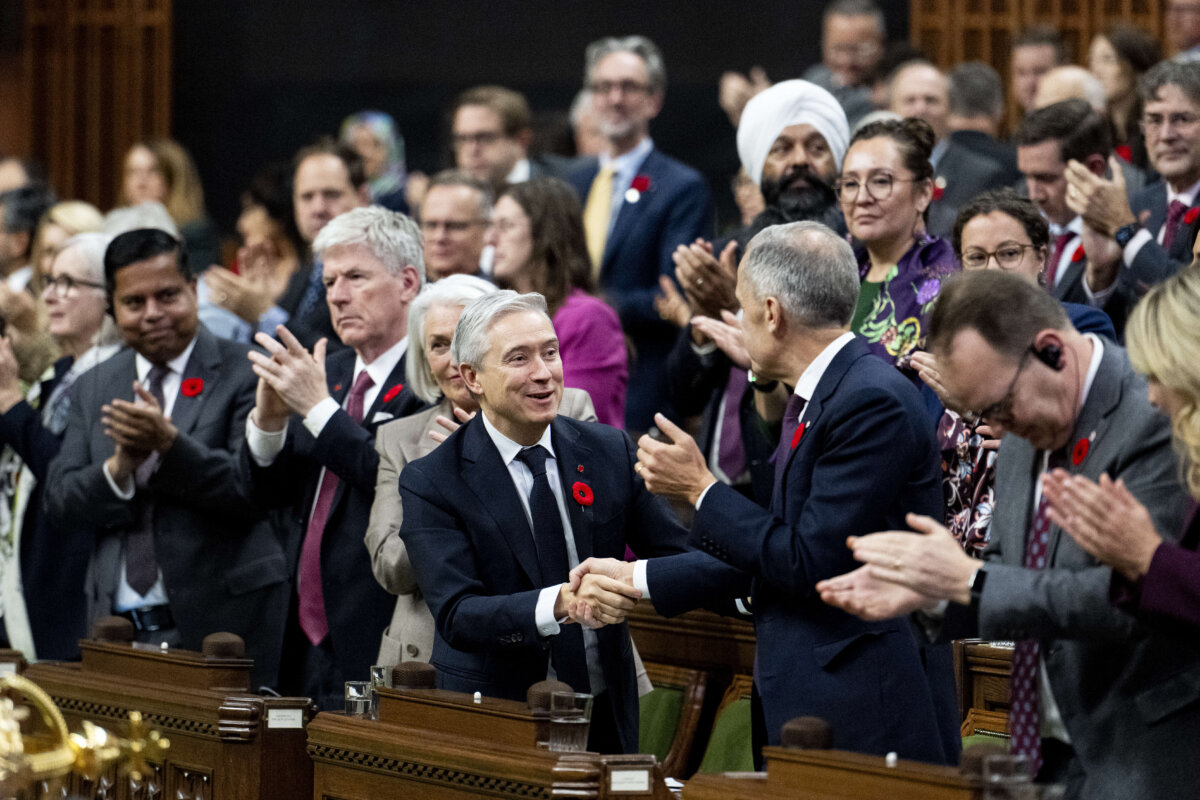

The Liberal government survived its first confidence vote related to its budget bill after a Conservative sub-amendment to the budget failed in the House of Commons.
The vote failed 139 to 198 after the Liberals, Bloc Québécois, NDP, and Green Party voted against a Conservative sub-amendment to a Bloc amendment to the budget bill on Nov. 6 that called for the House of Commons to reject the budget.
A separate vote on the Bloc amendment will happen on Nov. 7. Both votes are confidence ones, meaning that if the Liberal government loses, it could trigger an early election.
While the first amendment to be moved typically would come from the Official Opposition, Conservative Leader Pierre Poilievre did not present one after a speech responding to the budget on Nov. 5. This led to Bloc Leader Yves-François Blanchet quickly introducing an amendment to the budget instead.
The Conservatives’ sub-amendment had proposed to remove the Bloc’s wording, instead suggesting the House should condemn the budget for not matching Conservative expectations. It said the government had “presented a budget that fails to consider that every dollar the Liberal government spends comes out of the pockets of Canadians in the form of higher taxes and inflation.”
The votes on the amendment and the sub-amendment are considered confidence votes because they call on the House to reject the budget.
A third confidence vote on the Liberal government’s budget, tabled on Nov. 4, will come later this month. The Conservatives and Bloc said earlier this week that they would not vote in favour of the bill in its current form, while NDP Interim Leader Don Davies said his party would take time to consider whether to vote in favour.
Prime Minister Mark Carney’s first budget bill projects the government will post a $78.3 billion deficit this fiscal year. The budget calls for billions of dollars in new spending that the government says will help the economy, as well as cuts to the public service to reduce government spending.
The Conservatives have said they can’t support the budget because of the high value of the deficit, and that they want to see less government expenditure and more tax cuts, including dropping the industrial carbon tax.
The Bloc, meanwhile, says that the budget doesn’t include the items it had asked for, including increased health and infrastructure transfers to the provinces and increased Old Age Security payments.
Davies has said that the NDP needs more time to review the budget before declaring whether the party will vote for or against it.
The Liberals currently hold 170 seats in the House of Commons after Nova Scotia MP Chris d’Entremont left the Conservatives to join the Liberals on Nov. 4. The party is still short of two seats to be able to pass bills by itself without the support of opposition parties.
 Friends Read Free
Copy
Facebook
Tweet
Friends Read Free
Copy
Facebook
Tweet