
The Liberal government plans to rework its border security bill following criticism that its proposed sweeping changes could affect privacy and civil liberties.
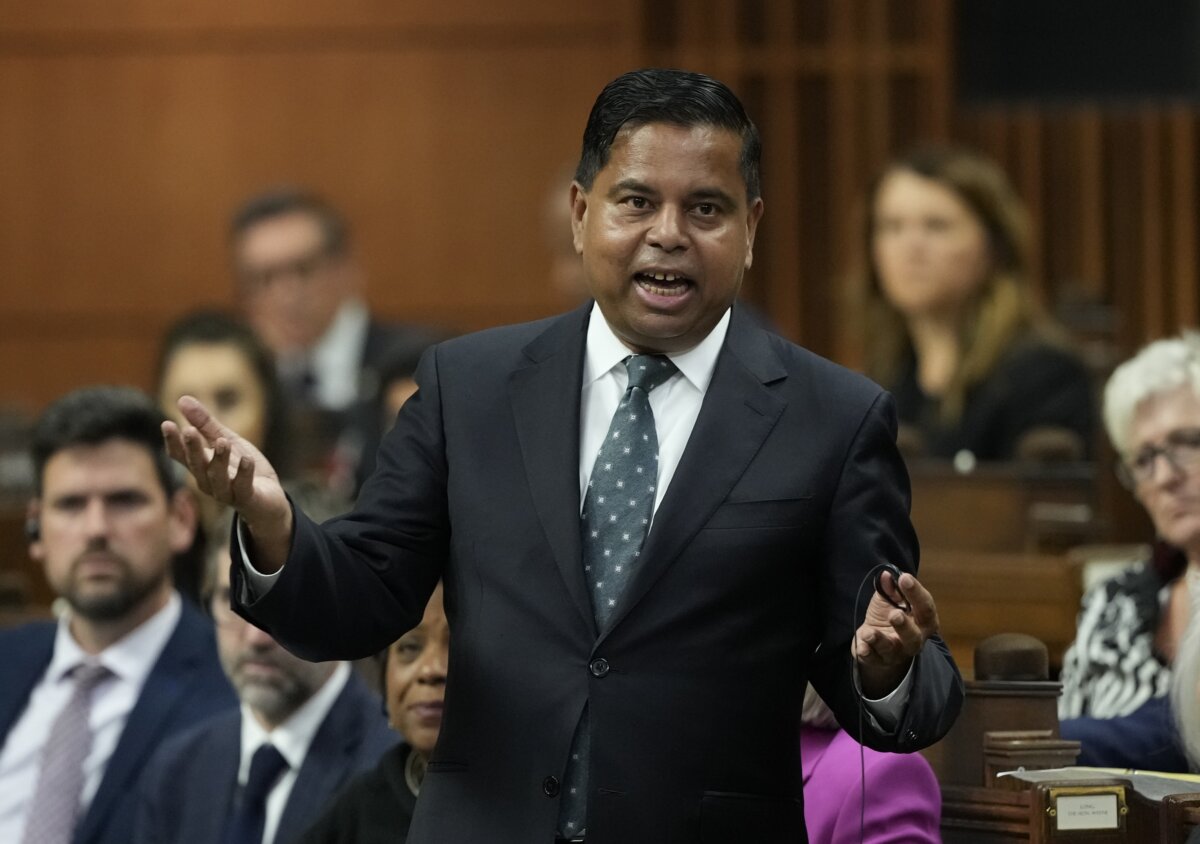
Public Safety Minister Gary Anandasangaree gave notice in the House of Commons on Oct. 6 that he will introduce a new bill on borders and immigration as early as this week.
The new bill is titled “An Act respecting certain measures relating to the security of Canada’s borders and the integrity of the Canadian immigration system and respecting other related security measures.”
The Liberal government’s original border security bill, Bill C-2, was introduced on June 3 by Anandasangaree. It was intended to keep Canada’s border secure, combat transnational organized crime, stop the flow of fentanyl, and combat money laundering.
Titled the Strong Borders Act, it would have allowed border officials to cancel asylum applications, given law enforcement expanded powers to search mail and access communications, and cracked down on money laundering and fentanyl precursors.
The bill came in response to pressure from the U.S. administration citing concerns about illegal drugs and migrants crossing the shared border. U.S. President Donald Trump said border security was one reason he imposed tariffs on Canada and Mexico. Bill C-2 also built on previous border security measures announced in late 2024 in response to U.S. concerns.
Meanwhile, Opposition parties criticized the bill during its second reading in the House of Commons on June 5. While they agreed on the need to crack down on criminal activities involving the border, they said the bill went too far in granting new powers to security agencies. It would have allowed police and the Canadian Security Intelligence Service to access internet subscriber information without a warrant and authorized Canada Post to open mail.
Anandasangaree defended the legislation, saying lawful access requires “modernization” in Canada and that Bill C-2 did not “violate the civil liberties or rights of individual Canadians.” He insisted there would be judicial oversight while the bill would keep Canadians safe.
Tory MP Michelle Rempel Garner said the bill, combined with the government’s Online Harms legislation, would allow the government to “target whatever it deems to be spreading hateful content.” Bloc Québécois MP Rhéal Éloi Fortin also expressed concerns about privacy and the security of personal information.
Additionally, more than 300 civil society organizations called on Ottawa to withdraw the bill, saying it endangered liberties, Canadians’ privacy, and refugee and migrant rights.
The International Civil Liberties Monitoring Group, which includes human rights organizations and labour unions, called the bill “highly troubling” and invoked “unrelated powers” that the government “unsuccessfully attempted to obtain in the past, and which will have wide-ranging negative impacts.”
Matthew Horwood and The Canadian Press contributed to this report.
 Friends Read Free
Copy
Facebook
Tweet
Friends Read Free
Copy
Facebook
Tweet