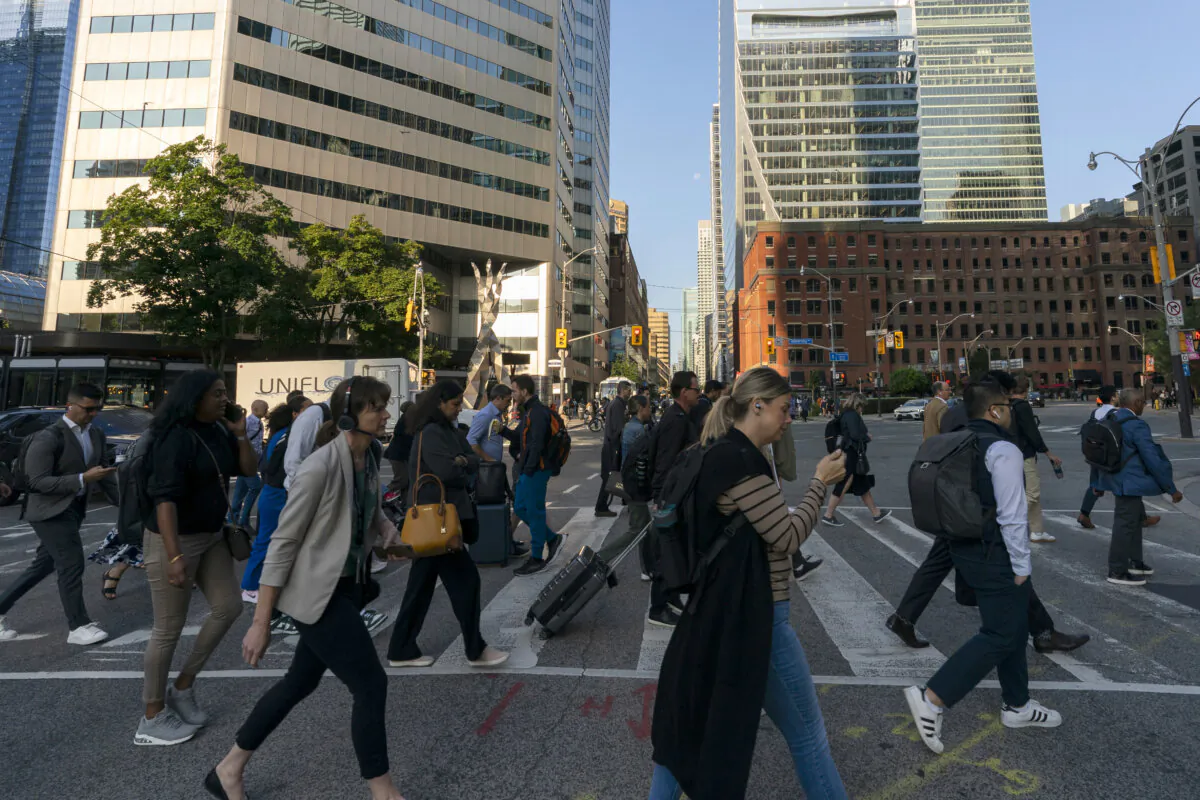

Revenue and spending for local governments have increased faster than inflation and population growth, reaching near record levels, according to a new study.
The study, published by public policy research organization the Fraser Institute, examined municipal revenues and expenditures over a more than 30-year-period, from 1990 to 2023.
It found that in that time, per-capita revenue increased by 32.7 percent, and expenditures also rose by 30 percent. The report examined municipal governments, school boards, and indigenous governments.
The report also found that per-person spending increased by just over 25 percent between 2000 and 2023. In 2021, per person spending reached a high of $5,974. In 2023, that number dropped to $5,851.
Report author Austin Thompson said that, as local government revenue and spending increased over the past three decades, residents should reflect on the value of the municipal services.
“In light of record-high spending in municipalities across Canada, residents should consider whether or not crime, homelessness, public transit and other services have actually improved,” said Thompson, senior policy analyst at the Fraser Institute.
In the report, Thompson said that inflation-adjusted per-capita revenue of local governments increased by about 10 percent between 2008 and 2023. In that same time, expenditures increased by 12.4 percent on average.
During that same period, local governments saw their net worth increase by 88 percent, recording above-inflation increases in annual operating surpluses, Thompson wrote. Revenue increased 34.6 percent from 2000 to 2023.
The report notes that in 2023, Ontario had the highest per-capita revenue of all the provinces, at $4,156. Alberta has the highest per-capita expenditure at $3,750.
Prince Edward Island reported both the lowest per capita revenue and expenditure at $1,635 and $1,186 respectively.
Municipal Spending
When it comes to spending, compensation of employees has always been a major expense category for local governments, according to the report.
In 1990, compensation accounted for $73 billion in expenditure, and it grew to $114.6 billion by 2023, an increase of more than 57 percent.
Expenditure on goods and services was another major expense for municipalities, jumping 175.6 percent between 1990 and 2023, from $24.4 billion to $67.2 billion, Thompson said.
Capital asset depreciation increased 187.2 percent between 1990 and 2023, according to the report, from $12.2 billion to $34.9 billion.
“All other expenditures, which include local government outlays on interest payments, subsidies, grants, and social benefits, as well as all other uncategorized spending, has remained comparatively stable, averaging $18.1 billion over the 1990-to-2023 period,” Thompson wrote.
Revenue Sources
Over the past three decades, municipal reliance on grant money has increased, even though property taxes and other revenue sources have gone up, the report found.
“Inflation-adjusted grant revenue received by local governments increased from $58.5 billion in 1990 to $126.8 billion in 2023, a 116.9% increase,” Thompson wrote.
He also noted that in 1990, local governments collected $51 billion in property tax revenues, when adjusted for inflation. That number jumped to $82.8 billion in 2023, which is a 62.4 percent increase.
Other revenue, which includes licensing fees, investment income, sale of goods and services, and development charges, increased by 99 percent when adjusted for inflation, the report said. In 1990, it was $21 billion, and by 2023, it had increased to 41.9 billion, according to the report.
Thompson’s analysis also noted that in 1990, property taxes represented 39.1 percent of total local government revenue. In 2023, that had dropped to 32.9 percent. During the same time, grant money share of total government revenue increased from 44.8 percent in 1990 to 50.4 percent in 2023.
 Friends Read Free
Copy
Facebook
Tweet
Friends Read Free
Copy
Facebook
Tweet