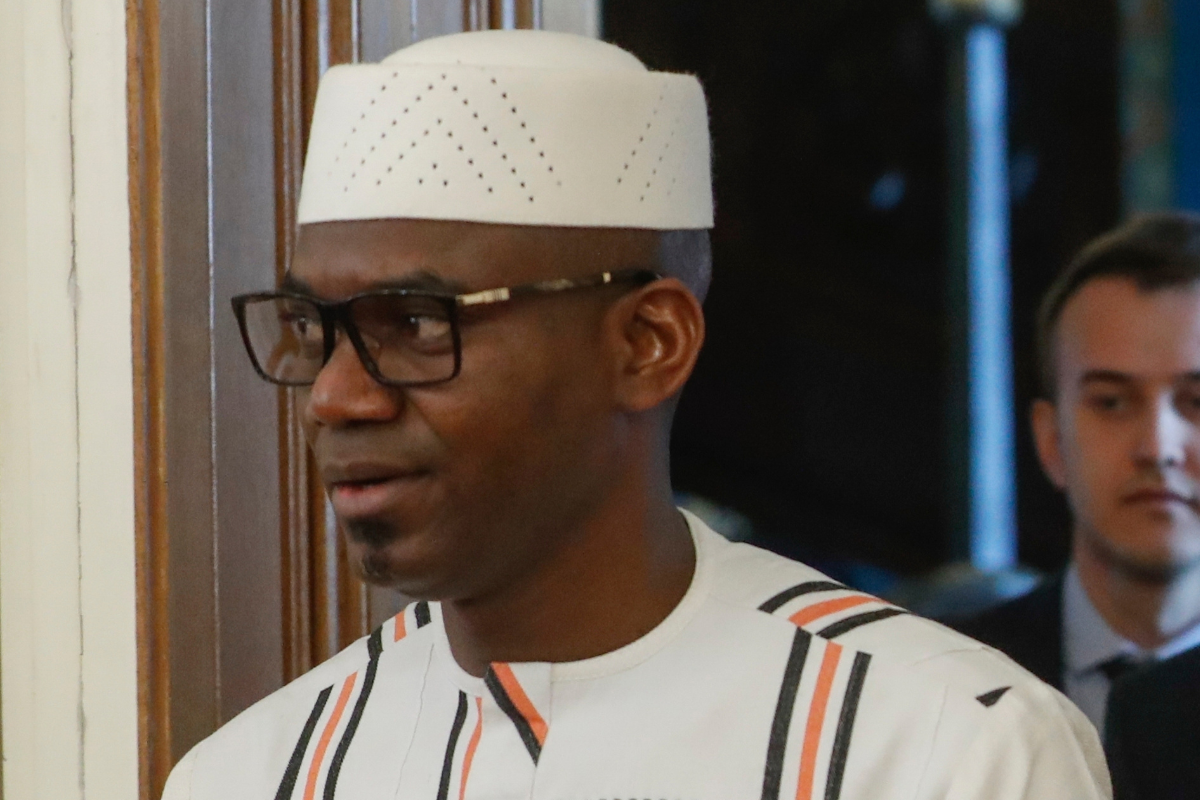

Malian Defense Minister Gen. Sadio Camara was killed in an attack on his residence during a coordinated assault by separatists and Islamist terrorists, the government confirmed on April 26.
The government stated in a post on Facebook that, on April 25, a car laden with explosives and driven by a suicide bomber targeted Camara’s home. The minister “engaged in an exchange of fire with the assailants, some of whom he managed to neutralize.”
During the clashes, the minister was wounded and transported to the hospital, where he succumbed to his injuries, the government stated.
Government spokesman Gen. Issa Ousmane Coulibaly also announced Camara’s death on state-run television.
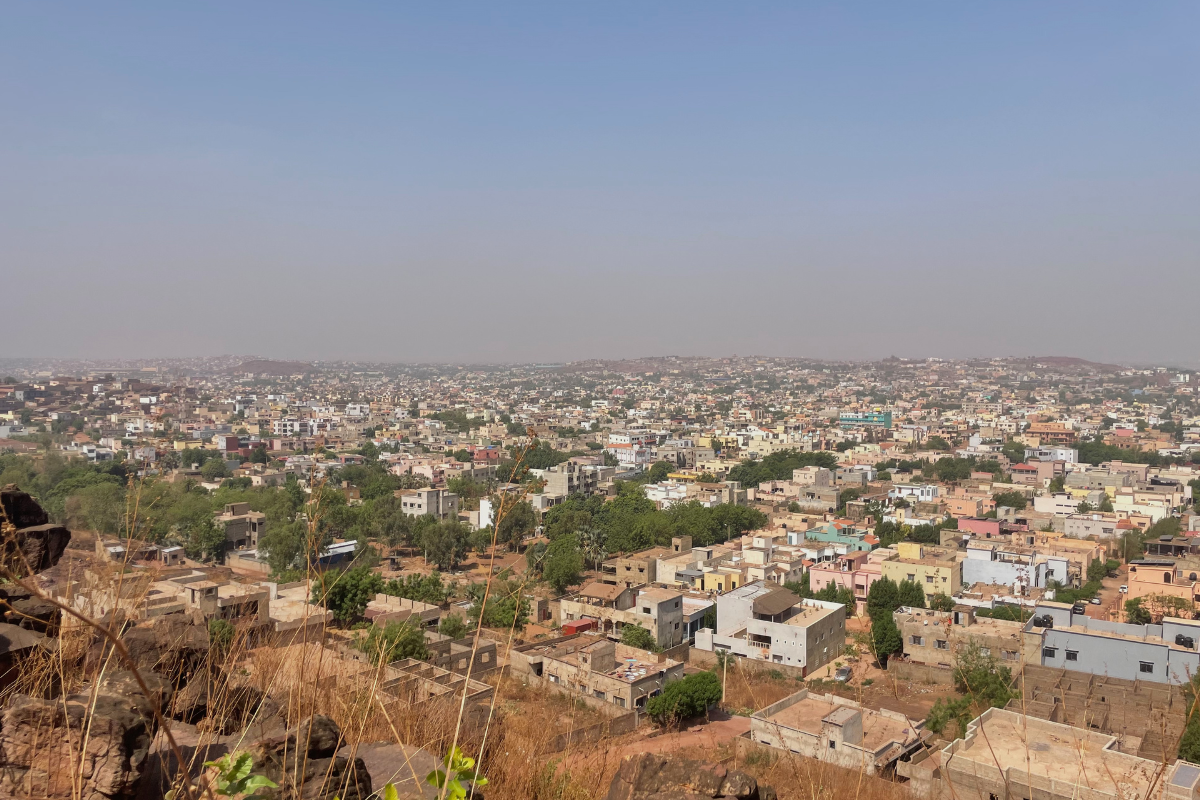
Camara had been killed during an attack in Kati, roughly nine miles north of Mali’s capital, Bamako, where the army’s main base is located.
The attack took place during coordinated assaults across the country staged by insurgents, including the West Africa al-Qaeda affiliate, Jama’at Nusrat al-Islam wal-Muslimin (JNIM), and a Tuareg-dominated rebel group, Azawad Liberation Front, or FLA.
Ethnic Tuaregs, who have sought independence for the country’s Azawad region, have clashed with the government on and off since the 1960s.
In addition to the attacks in Kati, strikes hit near Bamako airport and in localities farther north, including Gao, Mopti, and Sevare.
The government stated on April 26 that the attacks appear to be over.
This is the latest incident of violence in the junta-run West African country that has long battled Islamist terrorists and separatists.
In September 2025, JNIM terrorists blockaded fuel imports into Mali, attacking fuel tankers attempting to reach Bamako.
The terrorist group had also attacked a paramilitary police training school near the Bamako airport in September 2024, killing some 70 people.
UN ‘Deeply Concerned’
The Economic Community of West African States (ECOWAS), of which Mali is a member, condemned the attacks.
“These heinous acts once again demonstrate the barbaric nature of the perpetrators who continue to threaten peace, security, and stability in the West African sub-region as a whole,” ECOWAS stated in an April 26 post on X.
The economic cooperation group called on all states and security forces in West Africa “to unite and mobilize in a coordinated effort to combat this scourge.”
In an April 26 post on X, a U.N. spokesperson said that U.N. Secretary-General António Guterres was “deeply concerned by reports of attacks in several locations across Mali.”
“He strongly condemns these acts of violence, expresses solidarity with the Malian people & stresses the need to protect civilians & civilian infrastructure,” he said.
Malian military officer Assimi Goita led two coups in 2020 and 2021, eventually seizing power and installing a military government.
In 2023, the Goita government requested that U.N. peacekeeping forces—which had been active in the country since 2013—be withdrawn. The U.N. acquiesced to the request.
The Goita government has increasingly relied on Russian mercenary units to bolster its native forces.
Similarly, the juntas in Burkina Faso and Niger turned from Western allies to Russia for help in combating Islamist militants.
Ryan Morgan, The Associated Press, and Reuters contributed to this report.
 Friends Read Free
Copy
Facebook
Tweet
Friends Read Free
Copy
Facebook
Tweet