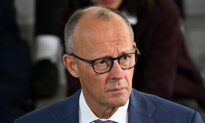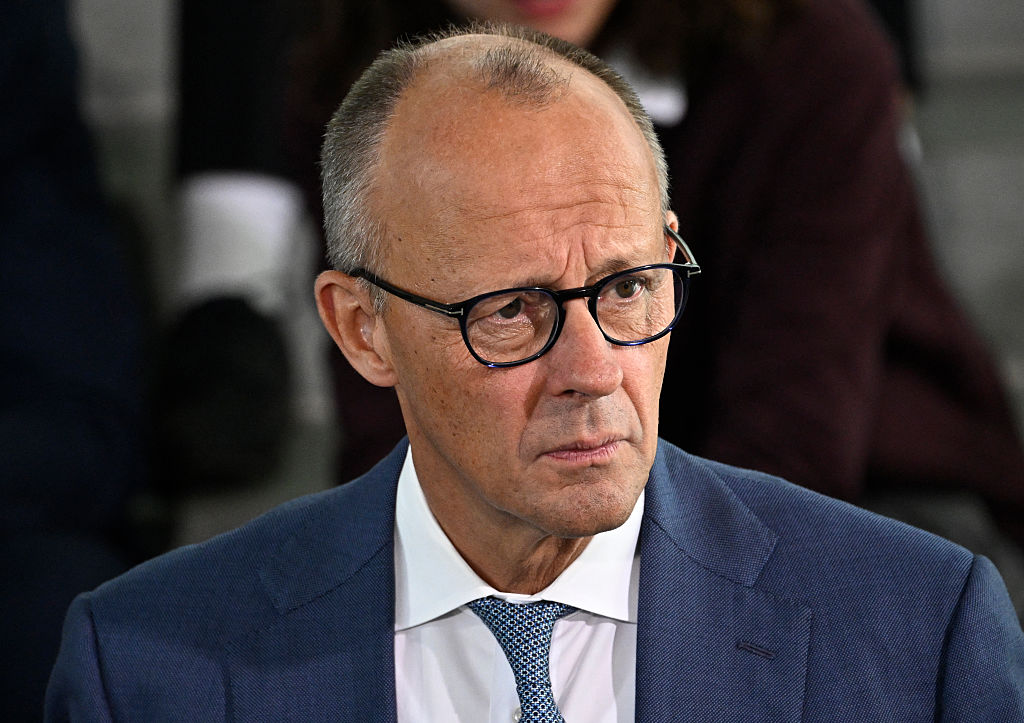

German Chancellor Friedrich Merz urged the European Union to strengthen its trade defenses against China, saying European companies are facing growing pressure from Chinese competition.
Speaking at a business and trade conference on Tuesday, Merz said Europe needs effective instruments to reduce its dependence on Beijing and protect businesses from “unfair competition.”
“Today, the People’s Republic of China deliberately combines its market-economy dynamism with state intervention, overcapacity, aggressive pricing, an undervalued currency, and heavily subsidized exports,” he said. “As a result, our companies are being put under enormous pressure both in the European Union internal market and in third-country markets.”
Merz said all 27 EU states now run trade deficits with China totaling more than $346 billion a year, and that the combined deficit continues to grow.
Recent German trade data illustrate China’s importance to Europe’s largest economy. Germany’s Federal Statistical Office (Destatis) said on Sept. 8 that China remained Germany’s largest source of imported goods in July.
Merz’s comments come as Berlin tries to revive the German economy, which has faced a series of challenges in recent years.
It has struggled with high energy costs, political uncertainty, and weaker competitiveness, pressuring its position as the EU’s industrial powerhouse.
After the economy contracted in 2023, stagnated in 2024, and showed meager growth in 2025, Germany continues to grapple with the loss of cheap Russian gas, the closure of Volkswagen plants, and growing competition from lower-priced Chinese electric vehicles.
The government lowered its economic outlook in April after the conflict in Iran added fresh uncertainty.
Germany’s economy ministry cut its 2026 growth forecast to 0.5 percent, down from 1 percent, and reduced its 2027 forecast to 0.9 percent from 1.3 percent. Against that backdrop, Merz has launched a broader effort to improve Germany’s competitiveness.
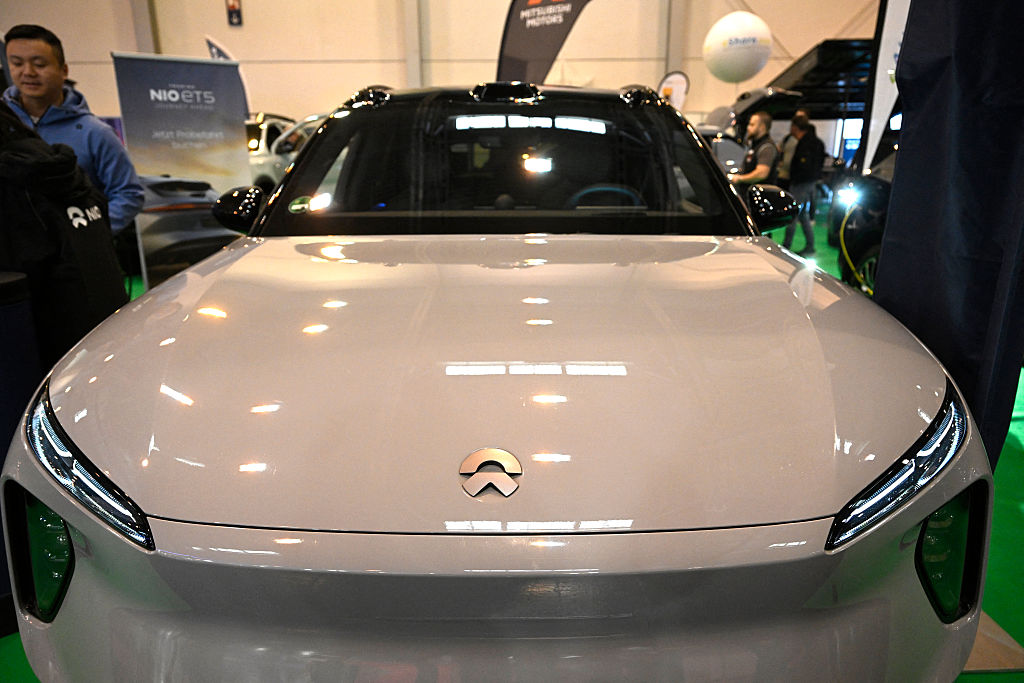 A car of Chinese electric vehicle manufacturer Nio is on display at the Essen Motor Show in Essen, western Germany, on Dec. 3, 2025. (Ina Fassbender/AFP via Getty Images)
The government is aiming to pass the main elements of the reform package by the end of the year.
New Trade Partners
Merz said Germany should expand trade with more countries.
“The key to greater resilience is not isolation, but diversification: more trading partners, more suppliers of the same product, secure transport routes,” he said.
Merz pointed to the provisional entry into force of the trade agreement between the EU and the South American bloc Mercosur after 26 years of negotiations.
Germany also supports closer trade ties with Southeast Asian countries and backed the European Commission’s proposal to build a rules-based trade alliance with like-minded countries beyond the World Trade Organization. Merz said Canada would play an important role in that effort.
He added that political agreements had been reached with Mexico, India, Australia, and Indonesia, while talks continue with Malaysia, the Philippines, Thailand, and the Gulf states.
“We want to win new trading partners, strategically reduce dependencies, represent our interests, and position ourselves as a leading European trading power worldwide,” Merz said.
He noted that the European Union’s market of 450 million consumers remains one of China’s most important export markets.
EU leaders, according to the German chancellor, asked the European Commission in June to strengthen the bloc’s trade policy tools and will discuss the issue in October.
 Friends Read Free
Copy
Facebook
Tweet
Friends Read Free
Copy
Facebook
Tweet