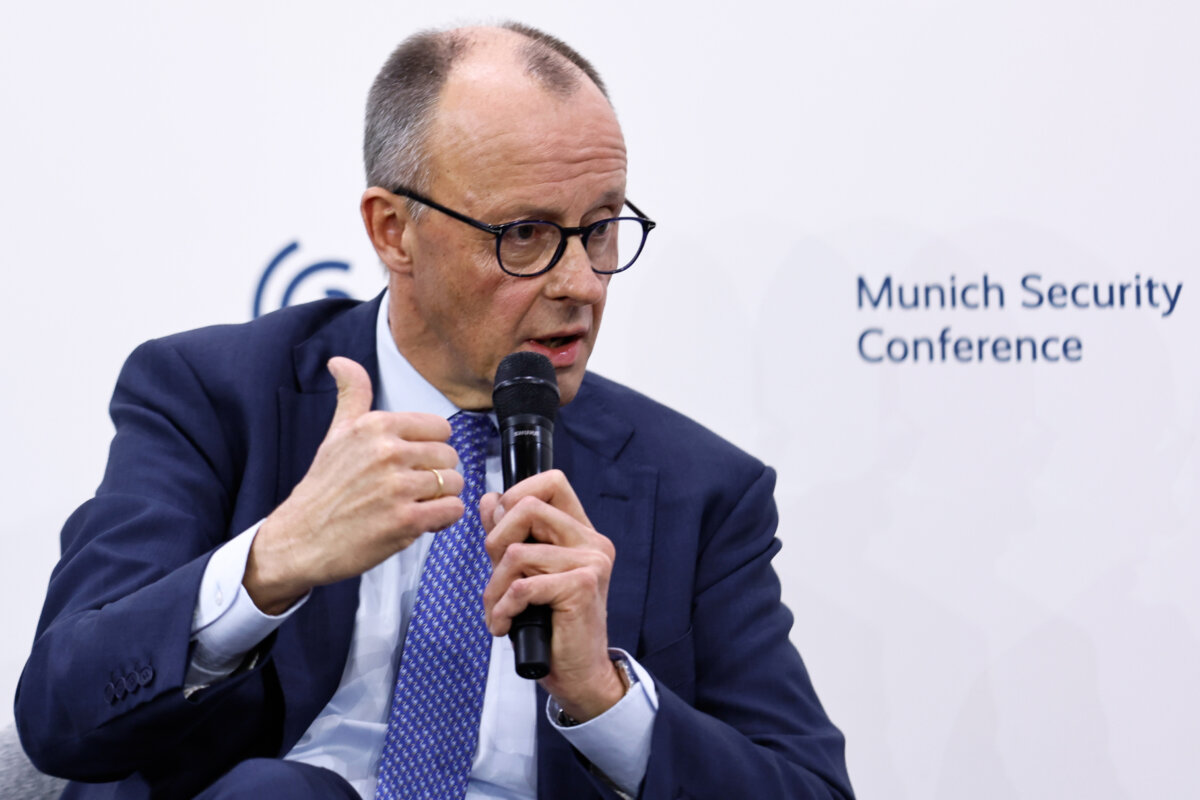
German Chancellor Friedrich Merz, in a forthright speech, told the Munich Security Conference on Friday to beware of trying to “go it alone” and called for Europe and Washington to work to repair transatlantic trust.
Merz said Beijing could, in the foreseeable future, be on an “equal footing” with the United States in military terms.
He said in the age of superpower rivalry, Washington would have to trust Europe and that “the U.S. is reaching the limits of its own power, if it goes it alone.”
“Dear friends, being a part of NATO is not only Europe’s competitive advantage. It’s also the United States’ competitive advantage, so let’s repair and revive transatlantic trust together,” he stated.
Merz said he had also started talks with French President Emmanuel Macron about an independent European nuclear deterrent, but added, “This will be fully embedded in our nuclear sharing within NATO.”
In February 2025, U.S. Vice President JD Vance, in his speech to the same conference, criticized European countries for clamping down on free speech and allowing mass migration.
Vance said the biggest threat to Europe was not Russia or China but “the threat from within, the retreat of Europe from some of its most fundamental values, values shared with the United States of America.”
Referring to Vance’s speech, Merz said “a divide” had opened up between Europe and the United States over differences in policies and worldviews.
“Vice President JD Vance said this very openly here … a year ago, and he was right,” said Merz. “The culture war of the MAGA movement in the U.S. is not ours.”
‘We Don’t Believe in Tariffs’
“The freedom of the word ends here when this word is turned against human dignity and the constitution,” Merz said. “And we don’t believe in tariffs and protectionism, but in free trade.”
He said Germany would stand behind climate agreements and the World Health Organization—which the Trump administration has disparaged—“because we are convinced that we will only solve global tasks together.”
The German leader, who leads the conservative Christian Democratic Union (CDU), said, “We are stronger together.”
Merz said Europeans had shown an “excessive dependency” on the United States, but that they were moving on.
“We won’t do this by writing off NATO—we will do it by building a strong, self-supporting European pillar in the alliance, in our own interest,” he said.
Mike Waltz, U.S. ambassador to the United Nations, told the conference that the Europeans need to do more to shoulder the burden of defense and security.
“There is a cost to the status quo, and the status quo was not sustainable anymore,” Waltz said.
Relations between the United States and other EU and NATO members have been strained during the recent showdown over Greenland, which ended on Jan. 21 with U.S. President Donald Trump agreeing on a framework for a deal with the alliance to improve security in the Arctic Circle.
Earlier, U.S. Secretary of State Marco Rubio, who had arrived in Munich for the conference, warned of the need to adapt to the realities of the modern world.
‘Old World Is Gone’
“The world is changing very fast right in front of us,” Rubio said before he boarded his plane, in a video posted on X, “The old world is gone, the world I grew up in. We live in a new era in geopolitics, and it’s going to require all of us to sort of reexamine what that looks like and what our role is going to be.”
Before boarding his flight, Rubio said, “Most people in this country can trace both their cultural or their personal heritage back to Europe, so we’re deeply tied to Europe and our future.”
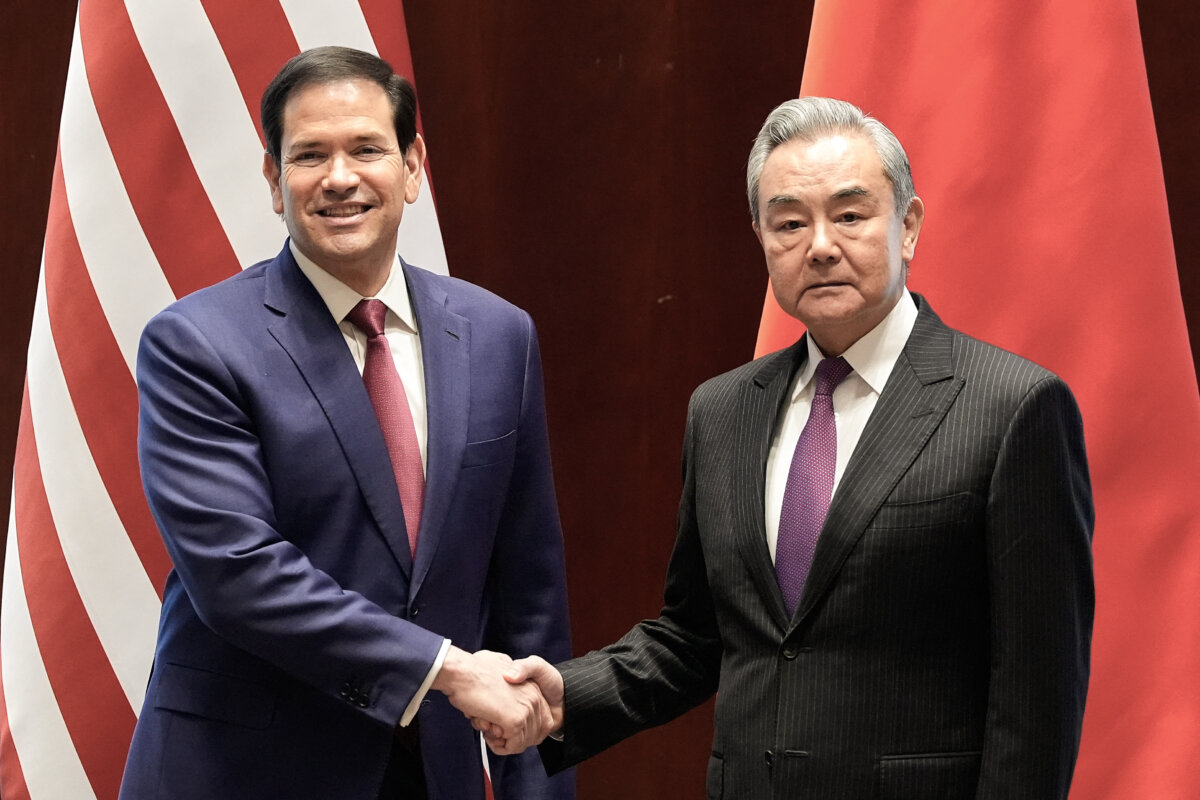
Rubio also met with Chinese Foreign Minister Wang Yi on the sidelines of the conference.
Rubio plans to meet Ukrainian President Volodymyr Zelenskyy during his two-day trip to Munich, after which he will visit Slovakia and Hungary.
The Associated Press and Reuters contributed to this report.
 Friends Read Free
Copy
Facebook
Tweet
Friends Read Free
Copy
Facebook
Tweet