Top U.S. law enforcement officials are raising concerns about Mexican cartels moving their operations to Canada to produce and distribute fentanyl, a synthetic opioid behind an overdose epidemic.
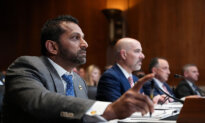
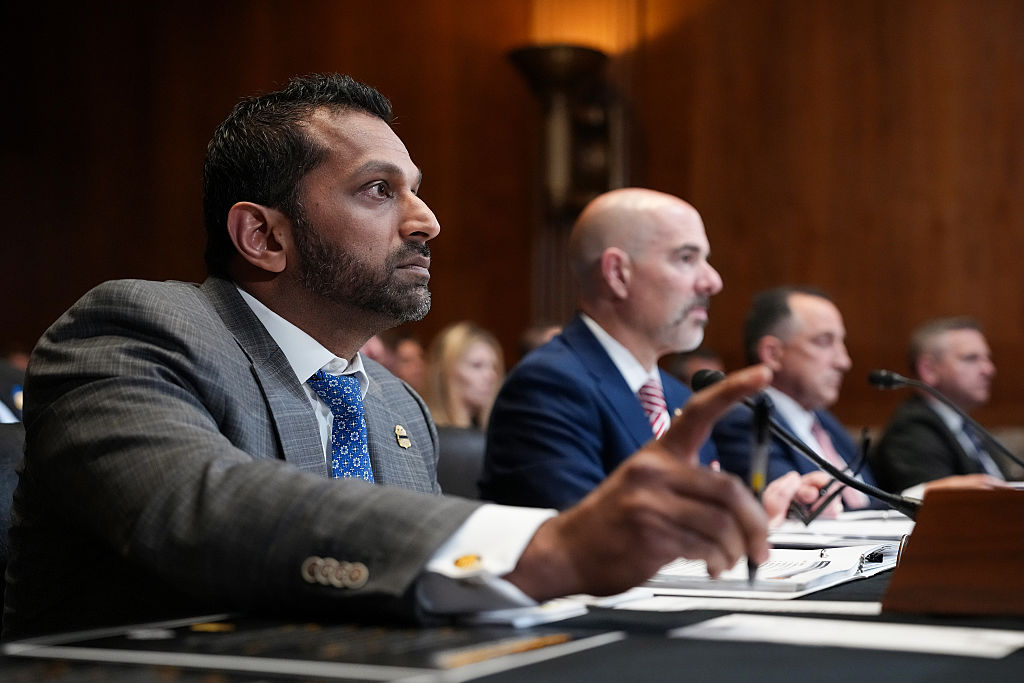
Terry Cole, head of the Drug Enforcement Administration (DEA), and FBI Director Kash Patel told a U.S. Senate committee on May 12 about their efforts to tackle drug trafficking.
Aside from working to prevent source countries like China and India from shipping narcotics ingredients to North America, Patel and Cole spoke of their work to disrupt new drug production facilities in Canada.
“We continue to keep the pressure on China, on India, continue to target the leadership in the cartels, but very conscious of what’s going on in the northern border as well,” Cole said.
“We see more precursors coming into the Port of Vancouver, coming into Canada, and the Canadians, with the Mexican cartels in country, have started producing and manufacturing fentanyl in Canada,” he added.
The DEA administrator noted there have been “significant seizures” of fentanyl in Canada in recent months.
Cole said the precursors are sent to various locations in Canada for drug manufacturing, with production being sent across the border.
In this context, Cole said the DEA is planning on opening two more offices in Canada. The law enforcement outfit responsible for countering drug trafficking currently has offices in the U.S. embassy in Ottawa and the U.S. consulate in Vancouver. The DEA says it works cases jointly with Canadian partners.
The FBI also has a mandate to counter drug trafficking, and Patel said his organization is working with Canadian law enforcement to disrupt the production facilities that criminals have moved north.
“The drug traffickers got smart with the securitization of the southern border and moved it up there [to Canada]. So we’re tackling that with our seize partners,” Patel told senators.
The Epoch Times reached out to the RCMP for comment but the police force was not able to respond by publication time. The Canada Border Services Agency said in a statement that Canada is “not a significant source of fentanyl, be it for the U.S. or abroad.”
The Mounties have disrupted several “superlabs” for the production of fentanyl and other drugs in B.C. in recent years.
Local police in Ontario have also reported multiple smaller fentanyl seizures in recent weeks, including in Ottawa, Sudbury, Orillia, and in Attawapiskat First Nation.
Multiple Canadian law enforcement agencies have been conducting joint “sprints” to crack down on fentanyl trafficking, with the latest effort ending last October.
The RCMP reported the seizure of 386 kilograms of fentanyl and 270 kilograms of precursor chemicals during the enforcement actions, which also resulted in 8,136 arrests and charges.
The CBSA has also reported seizing precursor chemicals for the production of fentanyl. Border agents confiscated 4,300 litres of chemicals shipped from China and en route to Calgary last year. The seizure took place at a container examination facility in Delta, B.C.
Fentanyl Politics
The federal government has pushed back on U.S. accusations that Canada is a major source of fentanyl coming across the border.
“Contrary to speculation, U.S. Customs and Border Protection data consistently shows that seizures at the U.S.-Mexico border far outpace those at the northern border by a wide margin,” Canada’s fentanyl czar Kevin Brosseau said in a January message.
Nevertheless, the Canadian government stepped up border enforcement in late 2024 in a bid to avoid tariffs threatened by then-President-elect Donald Trump. Ottawa first announced a $1.3 billion border plan and later appointed Brosseau as Commissioner of Canada’s Fight Against Fentanyl.
Trump still imposed a blanket 25 percent tariff on Canada in early 2025, accusing the country of not doing enough to secure the border against illegal migration and drug trafficking. The tariff rate was raised to 35 percent in summer 2025. Goods covered by the Canada-United States-Mexico free trade agreement remained exempt, however, and the Supreme Court stuck down the tariffs in February, saying Trump overstepped his authority.
Along with taking measures to bolster the border, Canada listed several Mexican cartels as terrorist organizations last year, following the United States’s lead.
The Trump administration intensified pressure on Mexico to combat the cartels, and several key developments followed earlier this year.
In a U.S.-supported February raid, Mexican authorities killed the leader of the Jalisco New Generation Cartel, Nemesio Rubén Oseguera Cervantes aka “El Mencho. This led to cartel members setting up road blocks and conducting attacks across Mexico in retaliation.
More recently in late April, the U.S. Department of Justice indicted the sitting governor of Sinaloa state Rubén Rocha Moya for his alleged involvement with the Sinaloa Cartel. Rocha Moya, who is part of the ruling party of President Claudia Sheinbaum, denied the allegations and has since temporarily stepped down as the investigation unfolds.
Mexico has so far rejected a U.S. extradition request for Rocha Moya, saying it would first conduct its own investigation into the allegations.
Editor’s note: the article was updated with a comment from CBSA.
 Friends Read Free
Copy
Facebook
Tweet
Friends Read Free
Copy
Facebook
Tweet