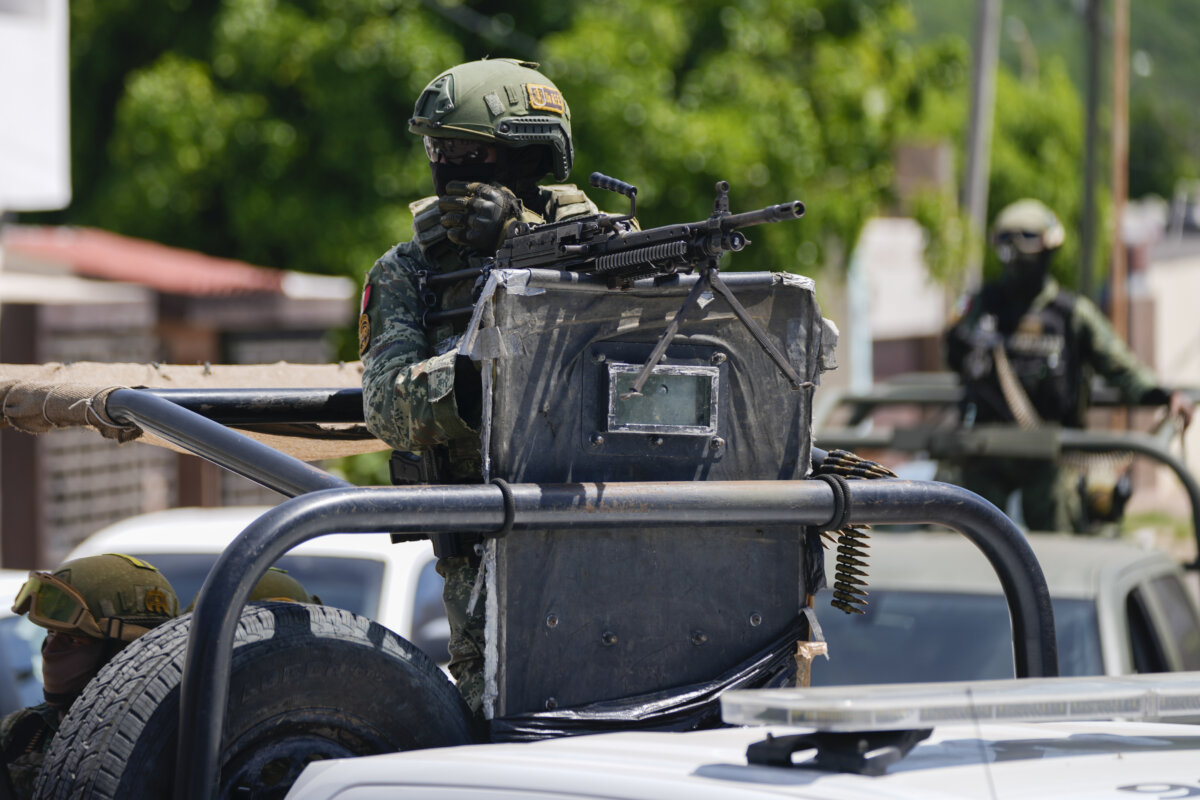

Mexico’s military offensive against drug cartels in the Mexican state of Sinaloa—the country’s fentanyl production hub—has failed to significantly disrupt the supply of the deadly synthetic opioid to the United States despite thousands of arrests and the destruction of numerous drug labs, according to a new report.
The Brussels-based International Crisis Group said in a July 7 report that although Mexican President Claudia Sheinbaum’s government has scored tactical victories against criminal groups under pressure from the Trump administration, the crackdown has done little to reduce the availability of fentanyl in the United States or weaken the cartel networks underpinning the deadly narco trade.
The findings come as U.S. President Donald Trump intensifies his campaign against Mexican drug cartels, designating them as foreign terrorist organizations, expanding military operations targeting narcotics trafficking, and imposing sanctions on cartel leaders and their financial networks.
Military Successes Have Not Curbed Drug Supply
The report states that Sheinbaum has sought to satisfy U.S. demands for tougher action while resisting Trump’s repeated suggestions that the U.S. military should strike cartel targets inside Mexico.
Mexico has deployed thousands of troops to the U.S. border, extradited nearly 100 alleged and convicted traffickers to the United States, and killed or captured several cartel leaders. Much of that effort has centered on Sinaloa, the stronghold of the Sinaloa Cartel terrorist organization and the country’s principal hub for fentanyl production.
According to the report, Mexican military and federal security forces have destroyed numerous clandestine drug laboratories in Sinaloa, arrested nearly 2,500 suspects, and seized more than 68 tons of narcotics while deploying as many as 15,000 troops to the state at various stages of the crackdown.
But although the military campaign has helped suppress the worst urban fighting stemming from an internal war between rival factions of the Sinaloa Cartel, the front lines of the conflict have simply shifted to rural areas and, according to the report, “the drug trade continues to thrive.”
“Neither criminal turf wars nor the government crackdown seems to have made a dent in the fentanyl supply, demonstrating once again the drug market’s extraordinary ability to withstand violent disruption,” the report states.
U.S. officials told researchers at the International Crisis Group that the cartel conflict has had no noticeable impact on fentanyl prices or availability in major American cities and that they continue to believe that most Mexican fentanyl production originates in Sinaloa.
Researchers also found no meaningful change in fentanyl prices in border communities, either, suggesting that trafficking networks have adapted despite the government’s offensive.
The report states that the fentanyl market’s resilience could reflect the emergence of other criminal groups filling production gaps, a shift of manufacturing to other parts of Mexico, or evolving smuggling techniques that have allowed traffickers to continue moving drugs northward.
Pressure From Washington
The findings highlight the challenge facing the Trump administration, which has made dismantling cartel operations one of its top national security priorities.
Trump has pressed Sheinbaum to take stronger action against cartels, saying last year that he would consider military strikes inside Mexico to stop drug trafficking.
“Would I launch strikes into Mexico to stop drugs?” Trump said in the Oval Office on Nov. 17, 2025, comparing the idea to military operations targeting narcotics traffickers in the Caribbean. “OK with me. Whatever we have to do to stop drugs.”
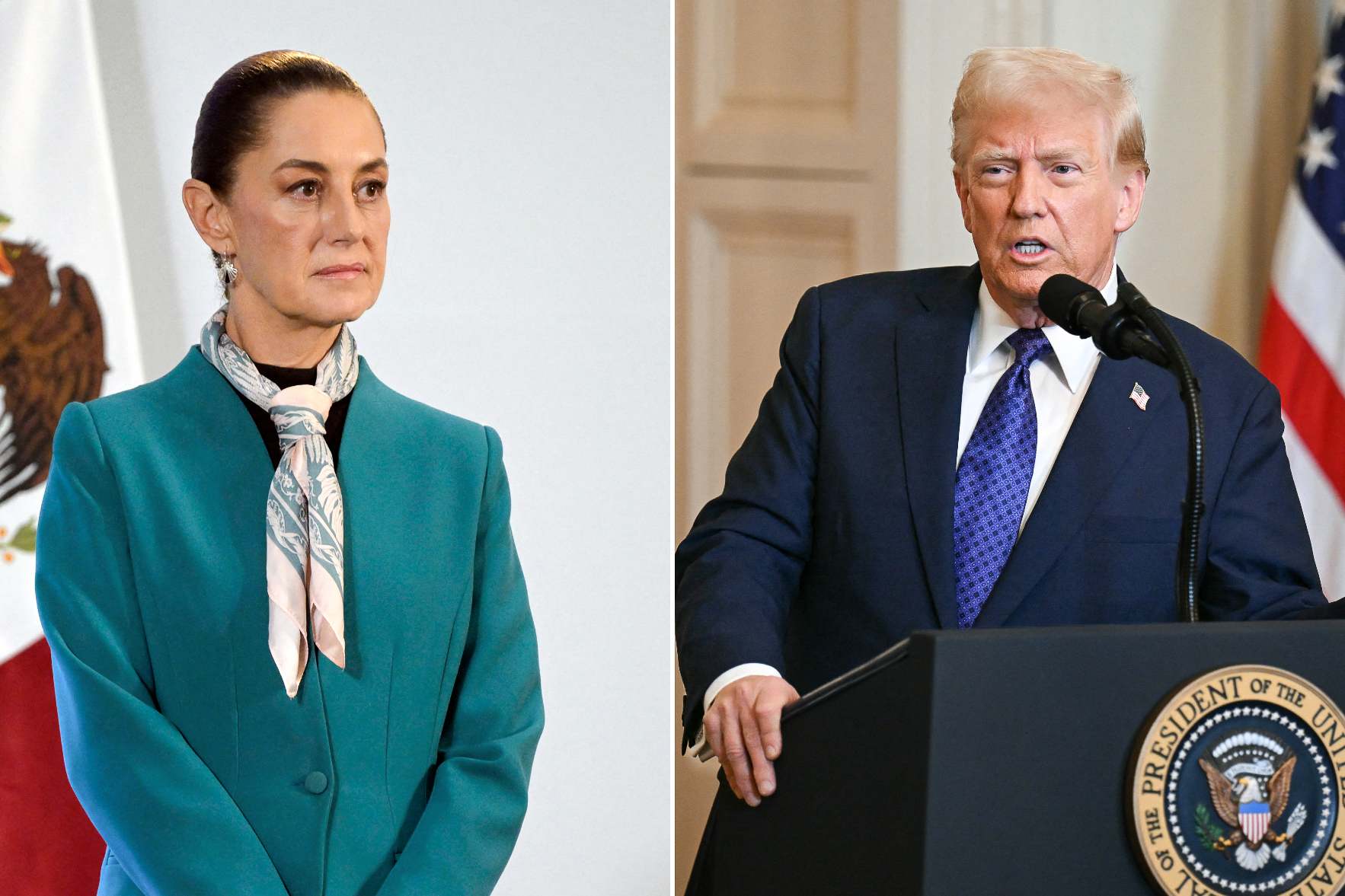 Although Sheinbaum rejected the idea of U.S. military action on Mexican soil, the International Crisis Group report indicates that she has sought to cooperate with Washington in other ways.
“All the while maintaining that Mexico’s sovereignty is inviolable, Sheinbaum’s government has scrambled to appease the Trump administration,” the report states.
“It has deployed thousands of troops to the U.S. border, transferred close to a hundred alleged and convicted drug traffickers into U.S. custody, and killed several criminal kingpins.”
On his first day back in office, Trump signed an executive order directing the designation of major cartels as terrorist organizations. The administration later declared cartel members to be “unlawful combatants” and characterized the campaign against them as a non-international armed conflict.
“The United States has now reached a critical point where we must use force in self-defense and defense of others against the ongoing attacks,” the White House said in a report to Congress in October 2025.
The Trump administration later expanded the use of U.S. military assets to target maritime drug trafficking routes in the Caribbean and Eastern Pacific.
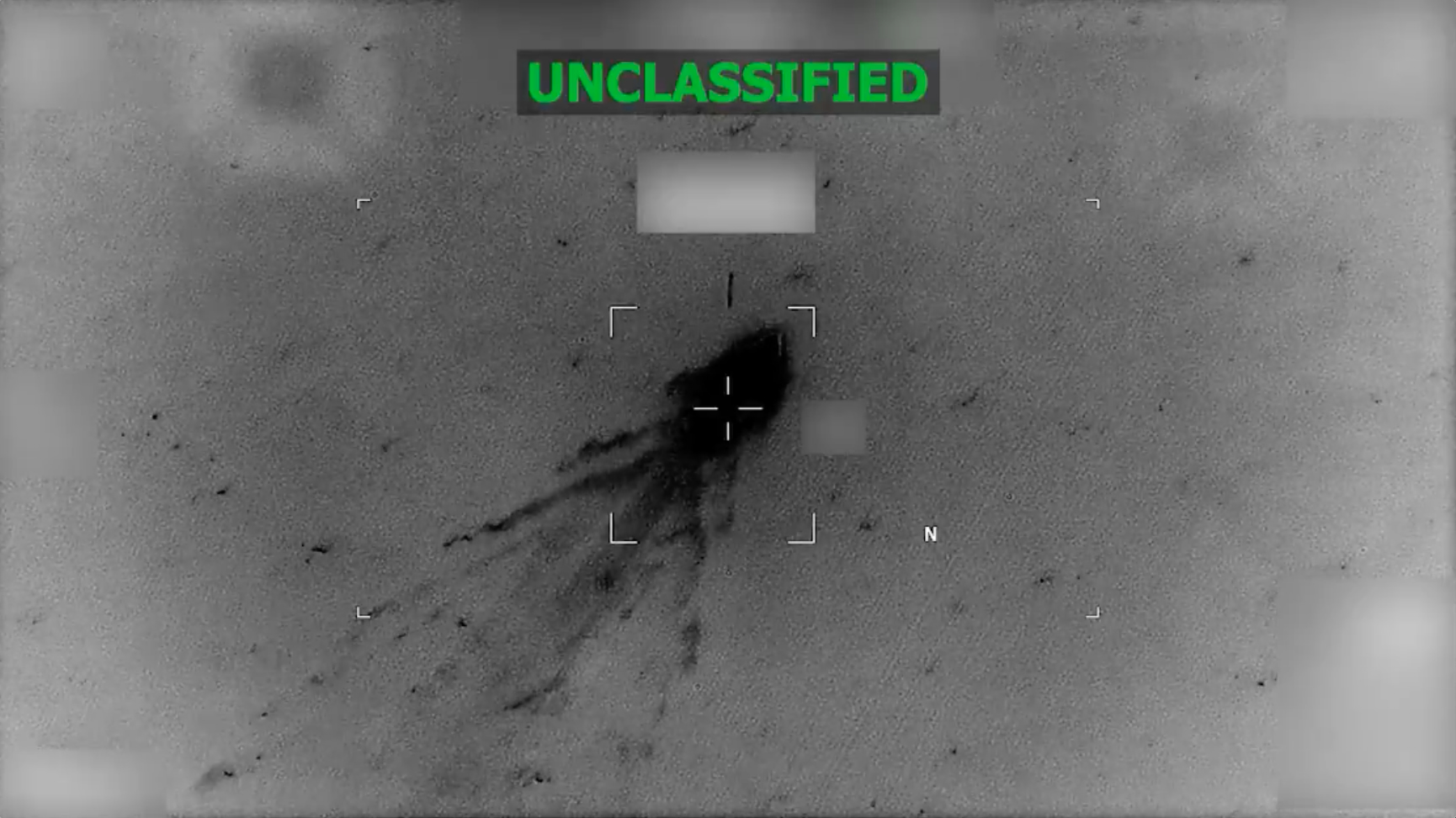
In late June, the U.S. military said it struck a vessel believed to be transporting narcotics toward the United States, killing two people aboard. The incident brought the reported death toll from the campaign against suspected narcotics traffickers since early September 2025 to 213.
The operations have drawn criticism from human rights organizations and some legal experts, who question the legal basis for using military force against suspected traffickers outside traditional armed conflicts.
 Alongside military pressure, the Trump administration has expanded financial sanctions targeting the Sinaloa Cartel.
In May, the Treasury Department sanctioned more than a dozen individuals and entities linked to the cartel’s fentanyl trafficking operations.
The Treasury said the Sinaloa Cartel remains one of the world’s largest producers and traffickers of fentanyl into the United States.
“As President Trump has made clear, this Administration will not allow narco-terrorists to flood our borders with poison,” Treasury Secretary Scott Bessent said when announcing the sanctions.
Meanwhile, U.S. Customs and Border Protection recently said it intercepted record amounts of illicit narcotics under the administration’s tougher border enforcement strategy.
Customs and Border Protection told The Epoch Times in May that its Office of Field Operations had seized more than 100 million lethal doses of fentanyl in May, alongside record quantities of methamphetamine and cocaine in fiscal year 2026.
Troy Myers contributed to this report.
 Friends Read Free
Copy
Facebook
Tweet
Friends Read Free
Copy
Facebook
Tweet