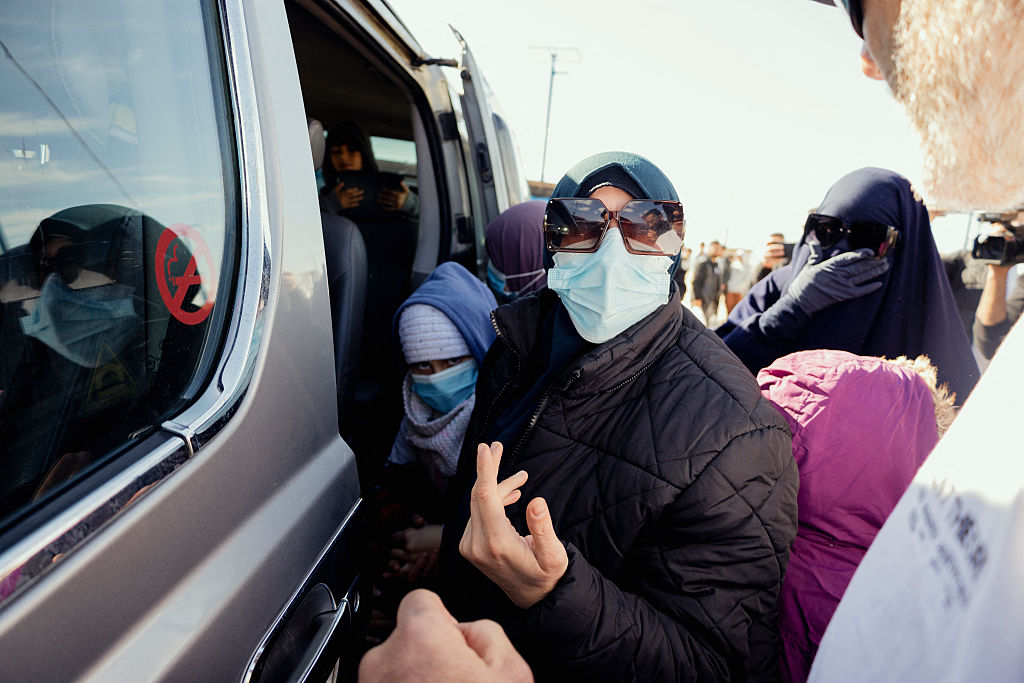

Australia’s state leaders have adopted different positions on the possible return of a group of 34 women and children linked to ISIS.
New South Wales (NSW) Premier Chris Minns confirmed that about one-third of the cohort could resettle in his state if Syrian authorities permit their departure. He said state agencies had been coordinating with the Commonwealth since 2025 to prepare for the possibility of their arrival.
“Most Australians would recognise that they didn’t make this decision to put themselves in harm’s way. A four year old or a three year old hasn’t made a decision to sign up with Islamic State, and if they were to return to New South Wales, then I think we need to be transparent,” Minns told reporters on Feb. 23.
Of the 34 individuals, 11 are women and 23 are children. The group remains in the Al-Roj refugee camp in Syria and is seeking permission to return to Australia.
Minns said the state government would ensure their safety and schooling.
“And we would make sure that they were within an organisation or a group or an education or a school that had Australian values,” he said.
The premier also raised concerns about the long-term impact on the children if they were left without support.
“I worry about where these children will be in the years ahead, and I worry about what the consequences of doing nothing for them if they did return to Australia would be,” he added.
Victoria Urges Careful Handling
Victorian Premier Jacinta Allan struck a more cautious tone, rejecting suggestions that the remainder of the group would automatically be allowed to return to Victoria.
“The assessment of travel applications and travel documents for Australian citizens is a matter for the Commonwealth, particularly so when we are seeing these applications come from citizens who have been involved in foreign conflict,” she said during a press conference on Feb. 24.
When asked whether the women had the right to return, Allan acknowledged that citizenship carries legal entitlements, but emphasised public safety.
“But so too do the citizens of Victoria to have their safety protected, which is why I will work through these matters appropriately, through officials, through the framework of ensuring that the community, the safety of the Victorian community, is first and foremost in the consideration of these matters.”
Allan also noted that she would not “play politics” with the issue.
SA Points to Federal Authority
South Australia Premier Peter Malinauskas also emphasised that decisions about repatriation sit with the federal government and are made on the basis of security advice.
He said community safety must remain the overriding priority in migration matters but drew a distinction between adults and children.
“I think it’s a pretty basic principle that if there are young people in our community who are innocent of any particular ideological extremism by virtue of the fact they’re a young child. And of course, they should be cared for and educated,” he told ABC News on Feb. 23.
Earlier, Home Affairs Minister Tony Burke claimed the government had limited legal powers to block the return of Australian citizens.
“Other than a temporary exclusion order, there isn’t a legislative power to be able to stop an Australian citizen from entering Australia. So effectively that question goes to are we breaking the law, and the answer’s no,” he said.
A temporary exclusion order has been issued against one member of the group, meaning that the remaining 33 would still be able to come back to Australia.
As the prospect of their return draws closer, attention has shifted to how states would manage resettlement and security oversight if the group re-enters the country.
Burke confirmed Labor did not plan to conduct in-person interviews with the women and children in the camp. He also rejected claims of an intelligence gap and noting agencies have monitored the cohort since earlier repatriations in 2022.
Meanwhile, the federal opposition sought to criminalise assistance given to individuals with links to terrorism who attempt to return to Australia.
Shadow Foreign Affairs Minister Ted O’Brien said the move would close what he called a loophole enabling “self-managed returns” through third parties. Labor, however, has rejected the proposal.
 Friends Read Free
Copy
Facebook
Tweet
Friends Read Free
Copy
Facebook
Tweet