The federal government says it has no plans to restart federal funding for dozens of “safer supply” and drug addiction services after funding was cut in March.
From 2017 to March 2025, Health Canada provided $126 million in funding via the Substance Use and Addictions Program (SUAP) to 31 different programs that offered government-sanctioned drugs to opioid addicts, which proponents said decreased drug toxicity and opponents said led to more overdoses and a ballooning drug trade in those reselling the narcotics on the street.
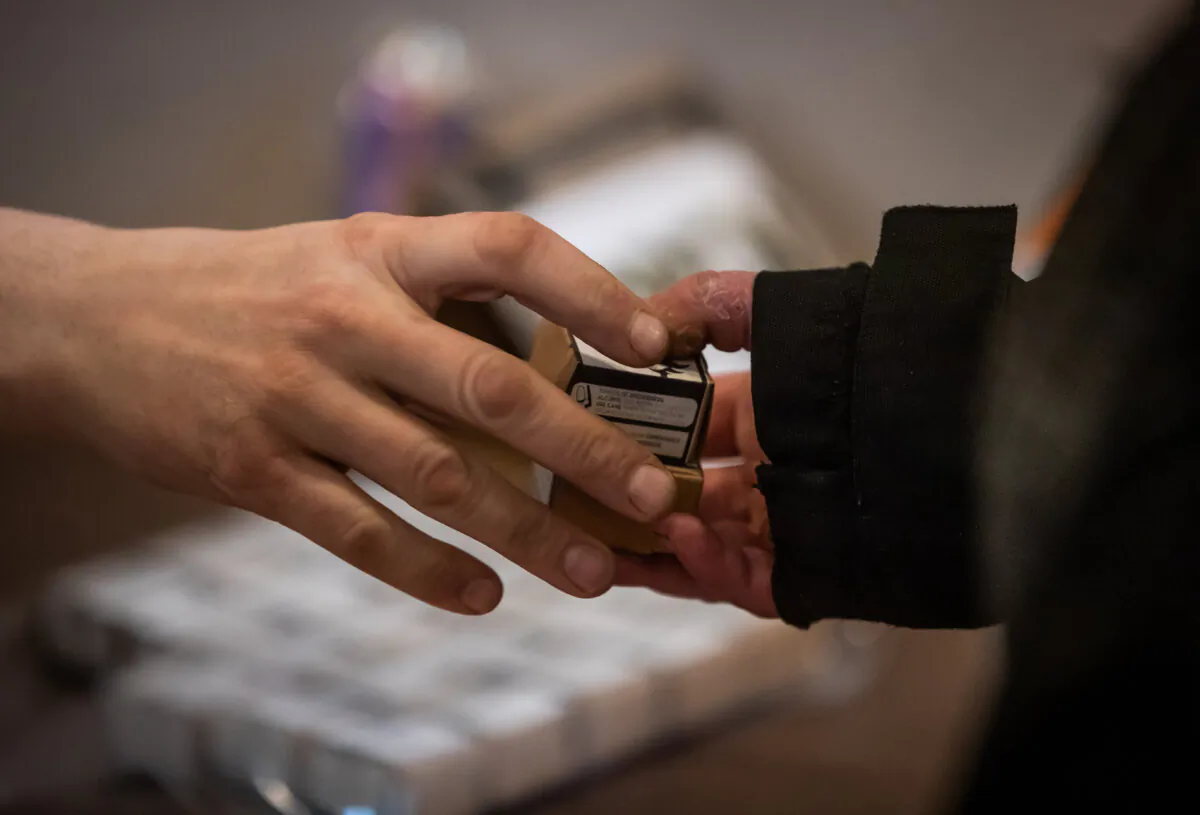
“Safer supply” programs prescribe opioids and stimulant drugs to addicts with the goal of providing standardized quantities and ingredients. The aim of the programs is to give access to regulated drugs that aren’t potentially contaminated with other drugs like xylazine, which could cause overdose deaths.
“Federal funding for projects sunset as planned last March,” said a spokesperson for Health Canada in a July 29 email to The Epoch Times. “Through SUAP, Health Canada continues to fund projects throughout Canada across a continuum of supports, from prevention and education to harm reduction and treatment.”
A March 2025 study published on the JAMA Health Forum said the number of residents hospitalized for overdosing on opioids went up significantly after B.C. decriminalized small amounts of drugs and implemented various of the “safer supply” programs in 2023. The province has challenged the findings of the study, and stood behind its program.
The study found an overall 58 percent increase in hospitalizations in B.C. after the decriminalization and “safer supply” initiatives were introduced, but did not find a corresponding rise in overdose deaths. Study authors said the non-correlation could be due to a decreased stigma for drug users who were more willing to get medical attention when overdosing.
Health Canada maintains that “safer supply” services provide ” an alternative to the toxic illegal drug supply as a way to help prevent overdoses and can connect people to other health and social services.”
“At the discretion of health care practitioners, the medications prescribed by safer supply services may include: opioid medications, stimulant medications, [and] benzodiazepines,” the agency says.
“Health Canada’s Substance Use and Addictions Program (SUAP) is just one of the many ways we are addressing this urgent issue,” said Guillaume Bertrand, director of communications for Minister of Health Marjorie Michel in a July 29 statement to The Epoch Times. “For example, just last week, Minister Michel announced $2.8 million in funding from the Emergency Treatment Fund (ETF) to support four projects in Atlantic Canada. We are using every tool available to connect people to care, address urgent local challenges, and keep our communities safe, including measures at our border to detect and disrupt the fentanyl trade and other toxic drugs.”
This past February, B.C.’s Conservative Party demanded a public inquiry over the trafficking and sale of the “safer supply” drugs after a leaked provincial health ministry document noted that out of 22,418,000 distributed opioids through the province’s “safe supply” program between 2022 to 2024, a “significant” amount were not taken by those they had been prescribed to. Police in various areas of the country have also noted a rise in the street trafficking of safer supply drugs in cities like London, Ont., Niagara, Ont., and Waterloo, Ont.
The federal Conservative Party has also been highly critical of “safer supply” programs as well as supervised injection sites, with Conservative Leader Pierre Poilievre calling supervised injection sites “drug dens” last summer and calling for their closure. The year before, in 2023, Poilievre criticized B.C.’s decriminalization of hard drugs, calling it “a complete disaster.”
B.C. walked back its decision to decriminalize small amounts of hard drugs in 2024, asking the federal government to reverse the province’s pilot program over concerns of drug use in shared public spaces. Possession of small amounts of drugs for personal use in homes, shelters, outdoor areas where homeless people live, and treatment programs remains legal in B.C.
More than 52,000 Canadians have died of drug overdoses since 2016, according to Health Canada, with the majority of the deaths caused by fentanyl.
 Friends Read Free
Copy
Facebook
Tweet
Friends Read Free
Copy
Facebook
Tweet