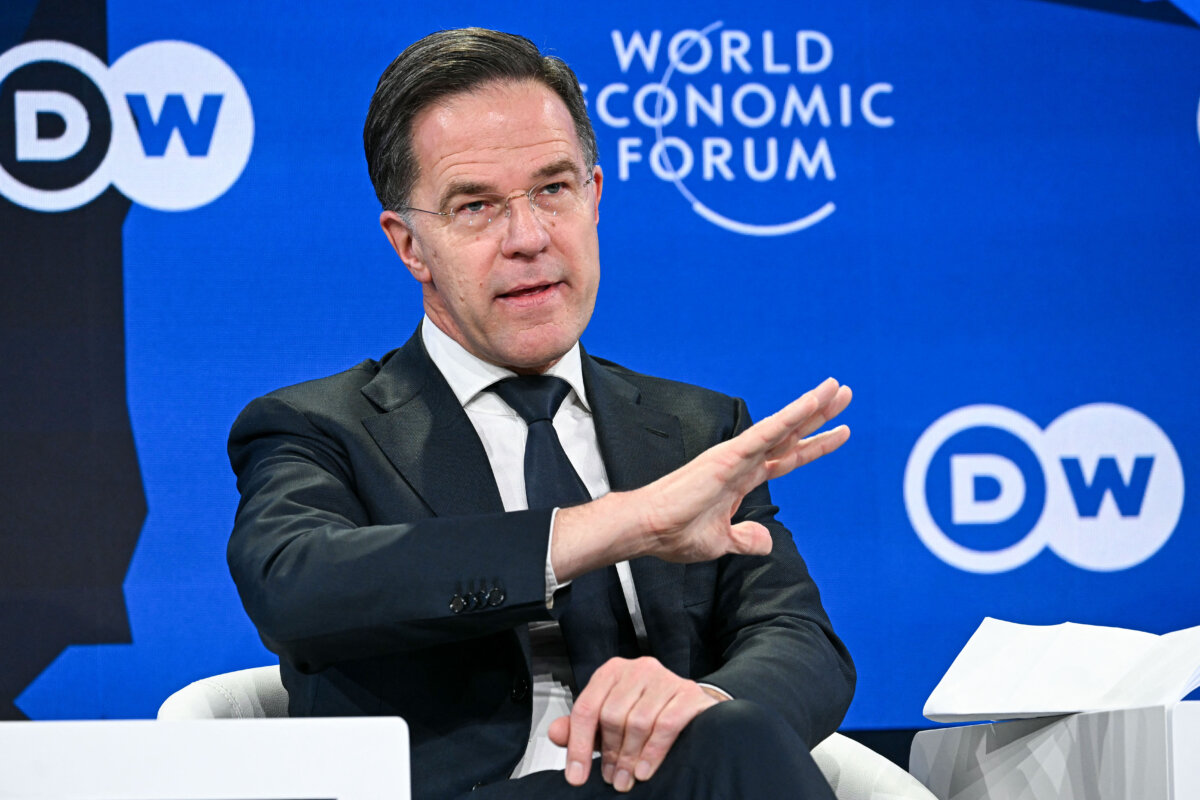

“We live in a more dangerous world” and the dangers that the North Atlantic Treaty Organization (NATO) is facing “are great,” requiring members to boost their defense capabilities to ensure collective security, NATO Secretary General Mark Rutte said on April 22.
Rutte made the remarks in a speech addressed to young engineers at the Aselsan Technology Base in Turkey, emphasizing the need for developing strong defense systems with the “best capabilities” that incorporate the latest technologies.
“The dangers we are facing are great, from the Arctic to the Mediterranean, from outer space to the seabed, from missiles and drones to sophisticated cyber-attacks,” he said.
“Russia’s war against Ukraine rages on. China’s military modernization and nuclear expansion, they continue. And Iran is spreading terror and chaos, and you feel this prominently here in Turkey.”
In June 2025, NATO allies agreed to raise defense spending targets from 2 percent of gross domestic product (GDP) to 5 percent by 2035, split into 3.5 percent for core defense and 1.5 percent on other related areas such as security and infrastructure.
Rutte said that while political leaders had made a commitment to spend more on defense, “money alone … will not keep us safe,” and he highlighted the need for investments to be made in the defense development sector.
“The air defense systems, the drones, the ammunition, the radars, the space capabilities and more: That’s what will keep us safe,” he said.
According to NATO, Turkey has the second-largest army in the union and spends over 2 percent of GDP on defense.
Turkey this summer is set to host the next NATO summit, where rearming would be a central theme, the secretary general later said in a post on X.
“Accelerating defence production and innovation is a top priority for NATO and it will be one of the key themes of our #NATOsummit in Ankara in July,” Rutte said.
“In today’s more dangerous world, we need strong defences to protect our security.”
US Relationship With NATO
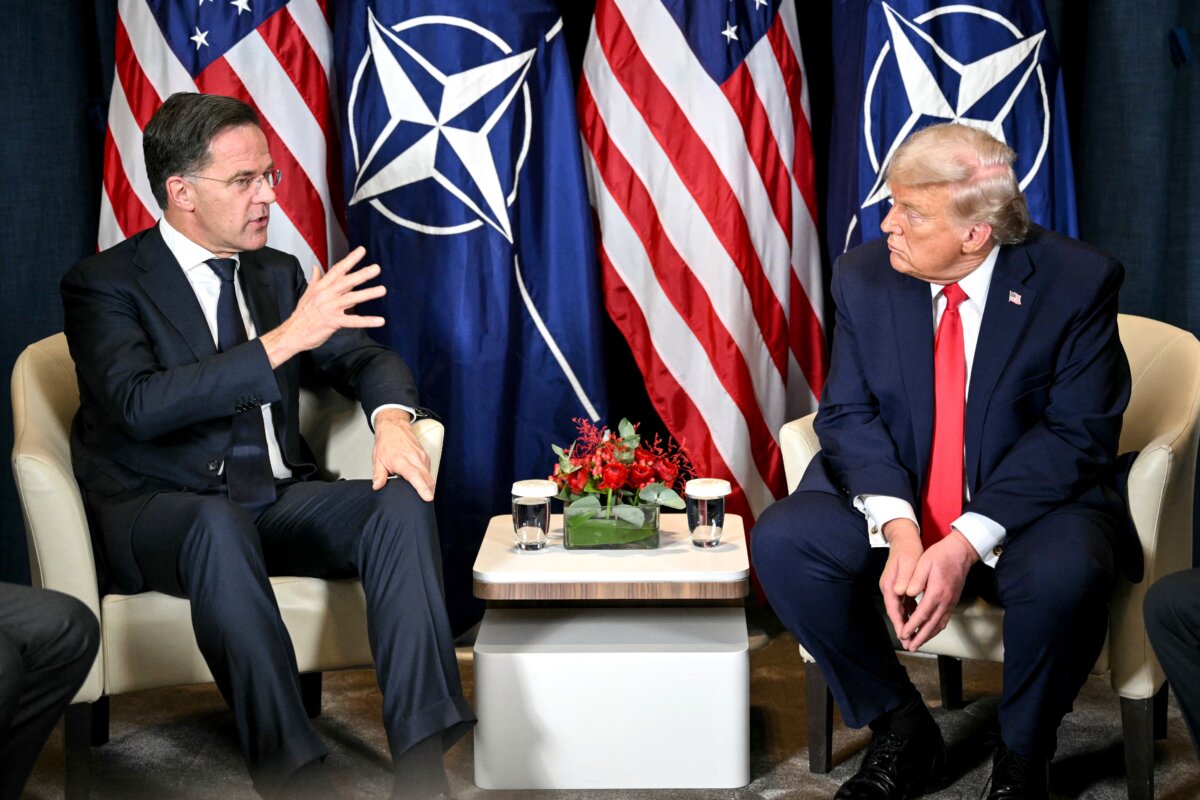
Rutte’s comments signaling the need for allies to rearm for a more dangerous world come after U.S. President Donald Trump said he was strongly considering pulling out of the alliance, which was established in 1949 in the early years of the Cold War.
Trump told the British newspaper The Telegraph in an interview published April 1 that his request for assistance in the Strait of Hormuz was a test that allies did not pass.
Describing the alliance as a “paper tiger,” Trump said removing the United States from the pact is now “beyond reconsideration.”
“I was never swayed by NATO,” Trump said. “I always knew they were a paper tiger, and [Russian President Vladimir] Putin knows that too, by the way.”
The president’s remarks built on comments on March 30 from U.S. Secretary of State Marco Rubio, who said the United States must reexamine its relationship with NATO because members did not help in the Iran conflict.
Rubio said that one of the benefits of U.S. membership in NATO is that it gives Washington access to station troops, aircraft, and arms in other parts of the world, including much of Europe.
However, during Operation Epic Fury, “we have countries like Spain, a NATO member that we are pledged to defend, denying us the use of their airspace and bragging about it, denying us the use of our—of their bases,” Rubio said, adding that “there are other countries that have done that as well.”
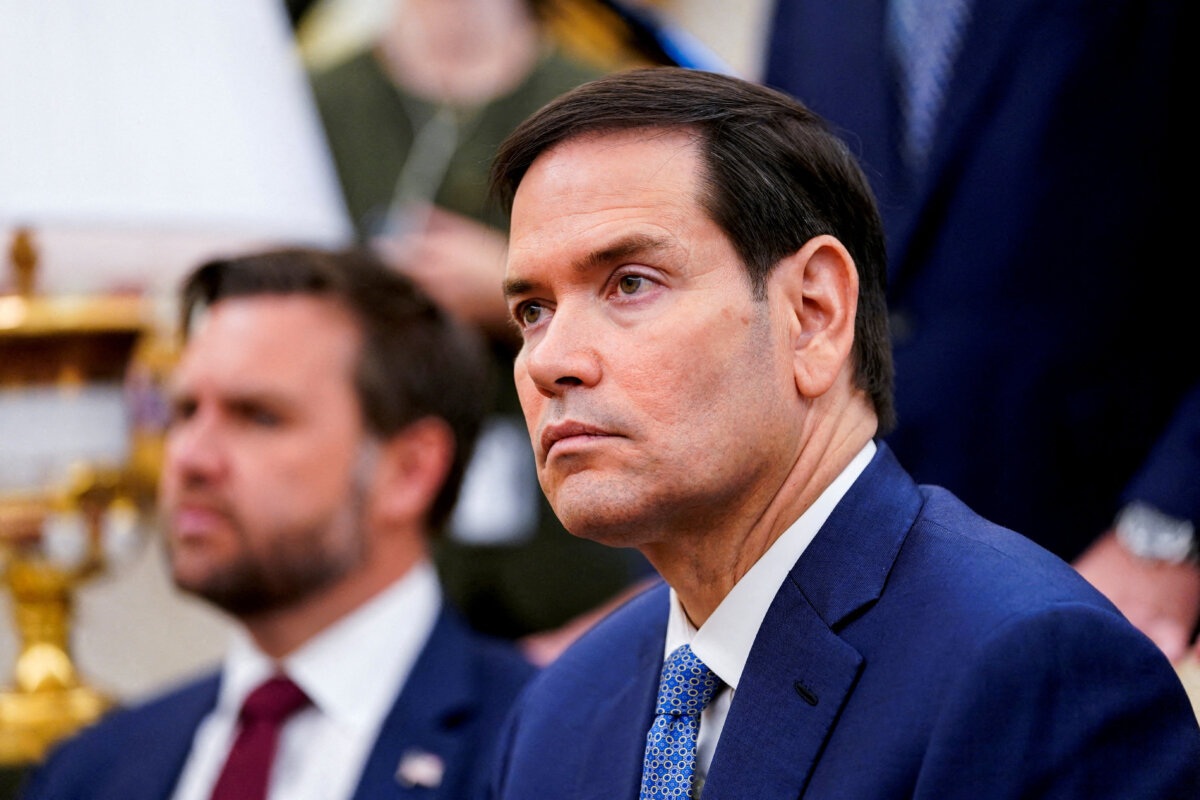
Rubio said that if this is the case, “What is in it for the United States?”
He continued that while he supported NATO, his backing of the alliance was based on the assumption that there are reciprocal arrangements.
“But if NATO is just about us defending Europe if they’re attacked, but then denying us basing rights when we need them, that’s not a very good arrangement,” he said.
Guy Birchall contributed to this report.
 Friends Read Free
Copy
Facebook
Tweet
Friends Read Free
Copy
Facebook
Tweet