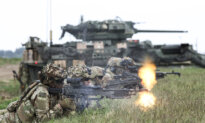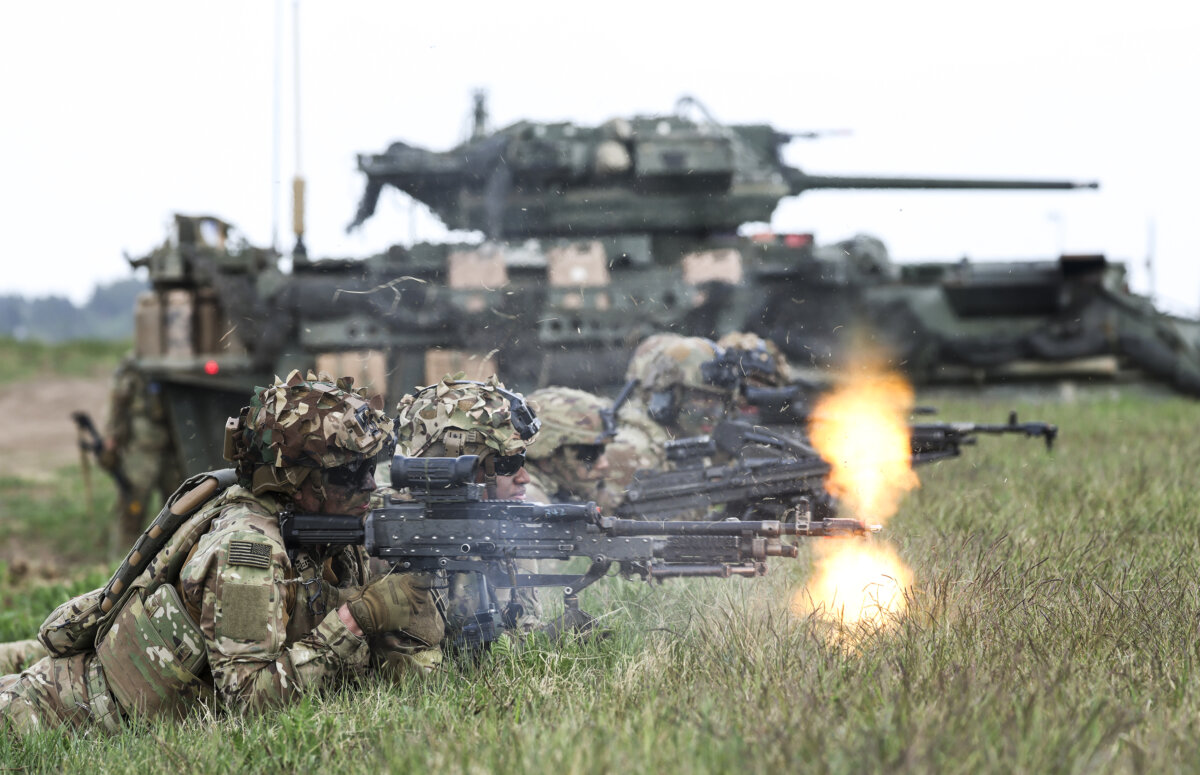

Poland stated on May 6 that NATO members should spend 5 percent of gross domestic product (GDP) on defense and security-related investments by 2030—five years earlier than allies had agreed.
Polish Deputy Prime Minister Wladyslaw Kosiniak-Kamysz made the recommendation during the Defence 24 Days conference in Warsaw, Poland.
“Europe is capable of developing its economic potential on an unimaginable scale, but we must be clear: this is today’s priority,” Kosiniak-Kamysz said.
“There’s no point in waiting until 2035 for 5 percent— it must be achieved by 2030, because later may be too late.”
Poland is NATO’s largest military spender relative to its economy and plans to spend 4.8 percent of its GDP on defense in 2026.
Warsaw was also an enthusiastic and early supporter of then-U.S.-President-elect Donald Trump’s proposal to have NATO members increase their defense spending to 5 percent of GDP, which he announced on Jan. 7, 2025.
The suggestion moved into policy when, in June 2025, allies agreed to raise their defense spending targets from 2 percent of gross domestic product to 5 percent by 2035, with 3.5 percent spent on core defense, such as troops, arms, and equipment.
The other 1.5 percent should be spent on other related areas such as security and infrastructure. This could include protecting energy pipelines and undersea cables, as well as cyber-proofing civilian assets such as airports, computer servers, and banks.
United States Changes Priorities
The calls for Europe to do more to secure its own defense came as the United States reoriented its defense and security priorities.
The Pentagon, on Jan. 23, released its National Defense Strategy, which outlines the U.S. plan to prioritize homeland defense, including by “defending America’s interests throughout the Western Hemisphere.”
It also stated that the United States would encourage partners in other parts of the world, including Europe, to take primary responsibility for their own defense “with critical but limited support from U.S. forces.”
In recent months, the Trump administration has vocalized its frustration with NATO due to members’ lack of support during the Iran war.
U.S. Secretary of State Marco Rubio said on March 30 that one of the benefits of U.S. membership in the alliance is the ability to station troops, aircraft, and arms in Europe.
“[However, during Operation Epic Fury,] we have countries like Spain, a NATO member that we are pledged to defend, denying us the use of their airspace and bragging about it, denying us the use of our—of their bases,” he said. “There are other countries that have done that as well.”
Rubio said that while he supported NATO, his backing of the alliance was based on the assumption that there are reciprocal arrangements.
“But if NATO is just about us defending Europe if they’re attacked, but then denying us basing rights when we need them, that’s not a very good arrangement,” he said.
Stronger European Element
NATO Secretary-General Mark Rutte said earlier this week that members have “gotten the message” about agreements allowing the United States to access European bases.
“Yes, there has been some disappointment from the U.S. side, but Europeans have listened,” Rutte told reporters at a European Political Community summit in Armenia on May 4.
“They are now making sure that all the bilateral basing agreements are being implemented.”
At the same summit, British Prime Minister Sir Keir Starmer said that there needs to be a “stronger European element in NATO.”
Starmer said that while Europe needed to take more of a security lead, it has “been behind the curve for too long: over dependencies, over reliance, and assumptions about the world that we live in—they’ve gone.”
“We now need to lead out of this, and we need to do it at pace because these impacts are real,” he said.
Reuters contributed to this report.
 Friends Read Free
Copy
Facebook
Tweet
Friends Read Free
Copy
Facebook
Tweet