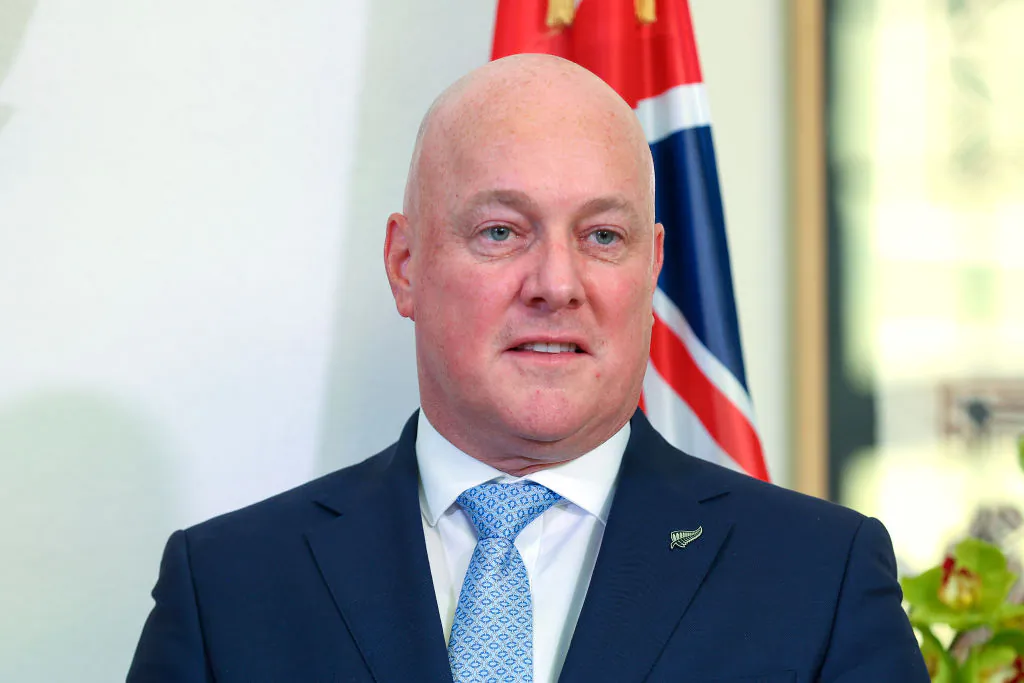

New Zealand’s Prime Minister, Christopher Luxon, will visit China next week for meetings with Chinese Communist Party (CCP) leaders, including President Xi Jinping and Premier Li Qiang.
The three-day visit, from June 18 to 20, will focus on growing trade, which was worth over NZ$38 billion ($22.87 billion) last year, as well as strengthening education and tourism links and maximising opportunities for New Zealand businesses.
China is New Zealand’s largest source of international students and its third-largest tourism market, but numbers are still not back at pre-pandemic levels.
It will be Luxon’s first visit to China as Prime Minister, although he has previously met both leaders: Li during his visit to New Zealand in June last year and Xi on the sidelines of the APEC Economic Leaders’ Meeting in Peru five months later.
“The challenging global outlook makes it vital that we are sharing perspectives and engaging China on issues that matter to New Zealand,” Luxon said in a statement.
He will spend time in Shanghai and Beijing, before travelling to Europe for meetings in Brussels and The Hague, and to attend the NATO summit in the Netherlands.
Former Leaders Warn of Strained China Ties
Luxon’s trip comes amid criticism from former New Zealand leaders who warn that recent foreign policy decisions may have damaged relations with Beijing.
Former Labour leaders and Prime Ministers Helen Clark and Sir Geoffrey Palmer, along with former National Party leader Don Brash, signed a letter last week questioning the coalition government’s foreign policy.
They argued that the government was “positioning New Zealand alongside the United States as an adversary of China.”
They cited several actions that they said would have caused upset in Beijing—including authorising a New Zealand naval vessel to sail through the Taiwan Strait, “despite knowing that would antagonise China,” strengthening military ties with the Philippines “at a time when it is in a low-level military standoff with China in the South China Sea,” and sending delegations of MPs to Taiwan “knowing that the visit would cause offence.”
These actions and recent statements by Luxon and Foreign Minister Winston Peters may lead China to conclude that “the special relationship, which New Zealand has had with it since becoming the first developed country to have a free trade agreement with it, is no longer so valued by New Zealand,” the former leaders wrote.
Business Delegation and Europe Trip to Follow
Luxon will be accompanied on the China leg of his trip by a delegation of businesspeople and an award-winning kapa haka (Māori dance) group.
He will then travel to Europe from June 21 to 25 to hold bilateral meetings, including talks with European Union leaders on trade, security, and the shifting geopolitical landscape.
New Zealand has been invited to the NATO Summit alongside other members of the “Indo-Pacific Four”—Australia, Japan, and South Korea. New Zealand has attended the NATO event as a partner country every year since 2022.
After that first visit, the Chinese embassy in Wellington made clear that Beijing disapproved, issuing a statement opposing “all kinds of military alliances, bloc politics, or exclusive small groups.”
“Prosperity is only possible with security, and our discussions will focus on connections between the Euro-Atlantic and Indo-Pacific security environments,” Luxon said.
“I look forward to building our positive relationship with our European friends, and to forging stronger links with businesses and investors as part of our wider plan to rebuild New Zealand’s economy.”
 Friends Read Free
Copy
Facebook
Tweet
Friends Read Free
Copy
Facebook
Tweet