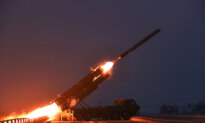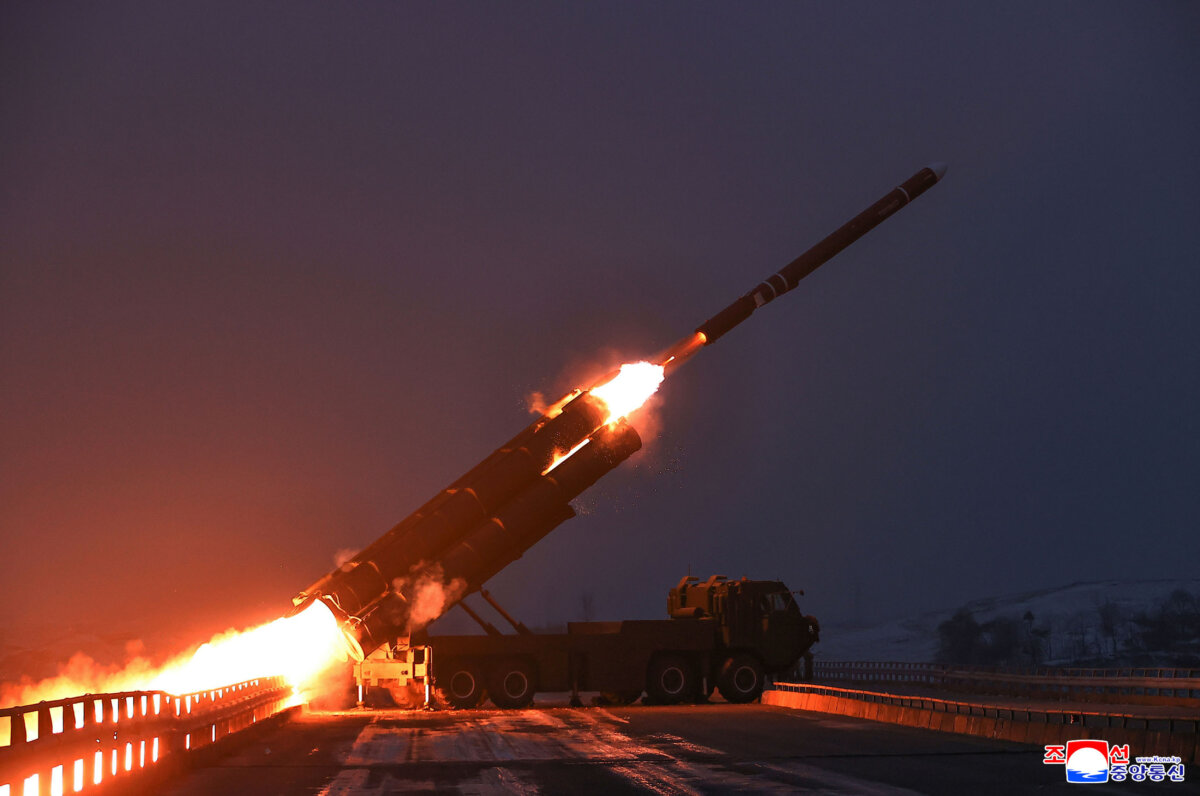

North Korea said on Dec. 29 that it had fired long-range strategic cruise missiles into the sea to test its nuclear deterrence capabilities, just days after state media reported the regime’s progress in constructing its first nuclear-powered submarine.
The Dec. 28 missile launches off North Korea’s west coast came ahead of the communist country’s ruling Workers’ Party congress early next year, the first such meeting in five years.
The congress is expected to consider whether North Korean leader Kim Jong Un should respond to Washington’s calls and resume talks with the United States.
Calls to Resume Talks
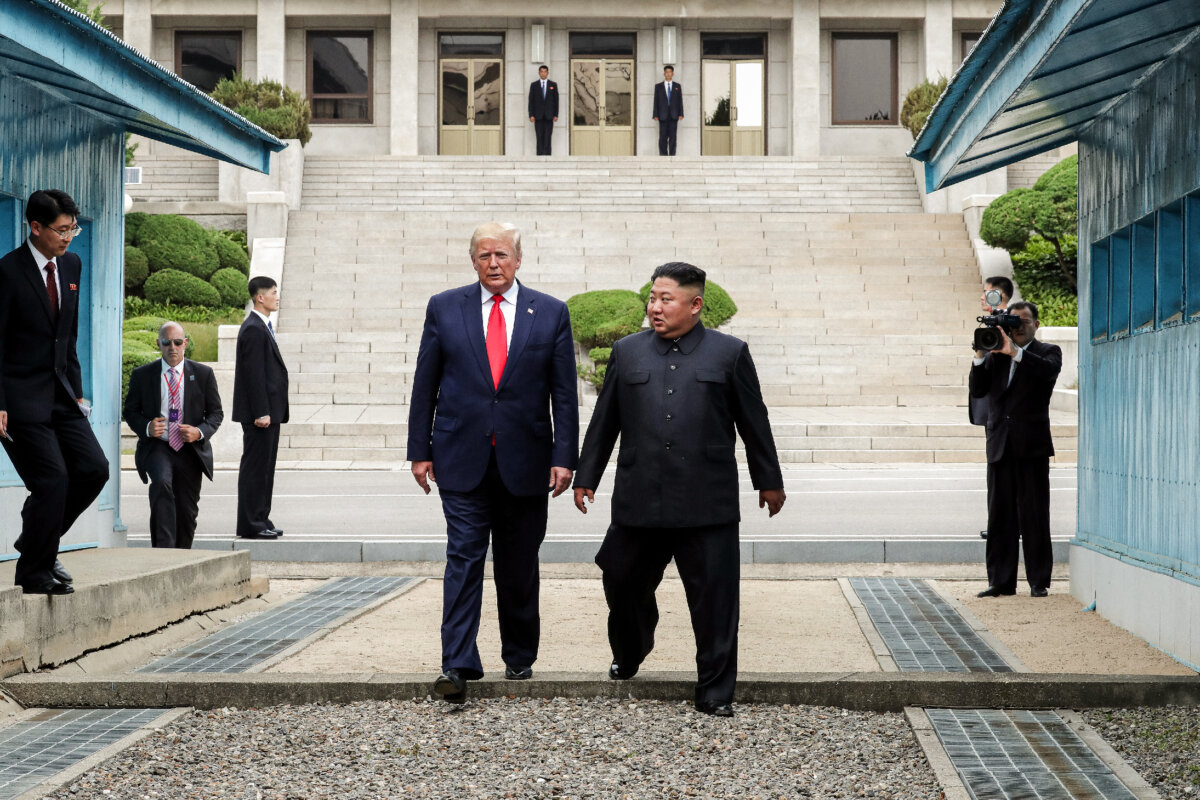
North Korea has focused on weapons-testing activities to expand its nuclear arsenal since Kim’s nuclear diplomacy with the United States collapsed in 2019.
Kim suggested in September that he could return to talks if Washington were to drop what he termed “its delusional obsession with denuclearization” of North Korea.
The state-controlled Korean Central News Agency (KCNA) reported that Kim expressed his “great satisfaction” over the latest missile launches, describing them as “just a responsible exercise of the right to self-defense and war deterrence” in the face of external security threats.
South Korea’s Joint Chiefs of Staff said it was aware of the Dec. 28 missile launches made from the region of the North Korean capital, Pyongyang. The statement said that South Korea remains ready to repel any potential provocations from its neighbor through its alliance with the United States.
United Nations Security Council resolutions prohibit North Korea from launches involving what is said to be its huge stockpile of ballistic missiles.
Although the non-ballistic cruise missile tests are not banned under international law, they are considered to pose a threat to both the United States and South Korea because they fly at low altitudes to avoid radar detection and are highly maneuverable.
Nuclear Submarine Development Displayed
The communist country last week test-launched new anti-air missiles off its east coast and displayed photos showing a largely completed hull of a developmental nuclear-powered submarine.
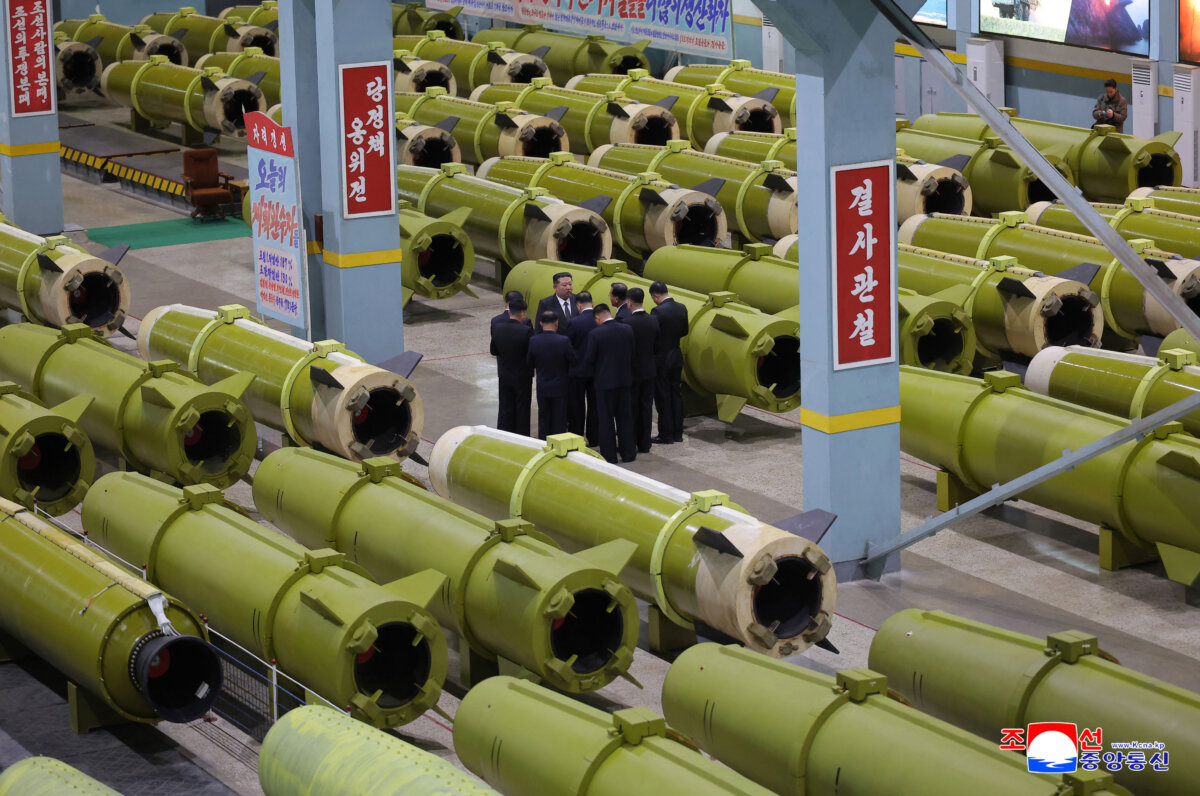
A nuclear-powered submarine is among an arsenal of sophisticated weapons systems that Kim has said he plans to introduce to counter what he describes as United States-led security threats.
In state media photos, Kim was seen viewing construction at a site building an 8,700-ton nuclear-powered submarine with the capacity to fire surface-to-air missiles. KCNA did not reveal the visit’s location or when it happened.
Kim has stated that his program is a response to South Korea’s plan for developing a nuclear submarine in an agreement with Washington.
Alliance With Russia
North Korean soldiers are helping defend Russia’s Kursk region against a Ukrainian incursion under a pact signed by Kim and Russian President Vladimir Putin to come to each other’s defense if either side is attacked.
Ukrainian intelligence has said that between 8,500 and 13,000 North Korean troops are currently stationed in the Kursk region, allowing Moscow to redeploy its own forces to the front lines in Ukraine. There are also about 6,000 North Koreans engaged in construction work in parts of Ukraine under Russian occupation.
Neither Russia nor North Korea has publicly disclosed the scale of any deployment or casualties. In April, however, South Korean lawmakers cited a briefing by Seoul’s National Intelligence Service estimating about 4,700 North Korean casualties, including roughly 600 deaths.
Bill Pan and The Associated Press contributed to this report.
 Friends Read Free
Copy
Facebook
Tweet
Friends Read Free
Copy
Facebook
Tweet