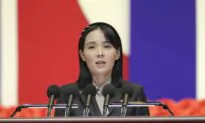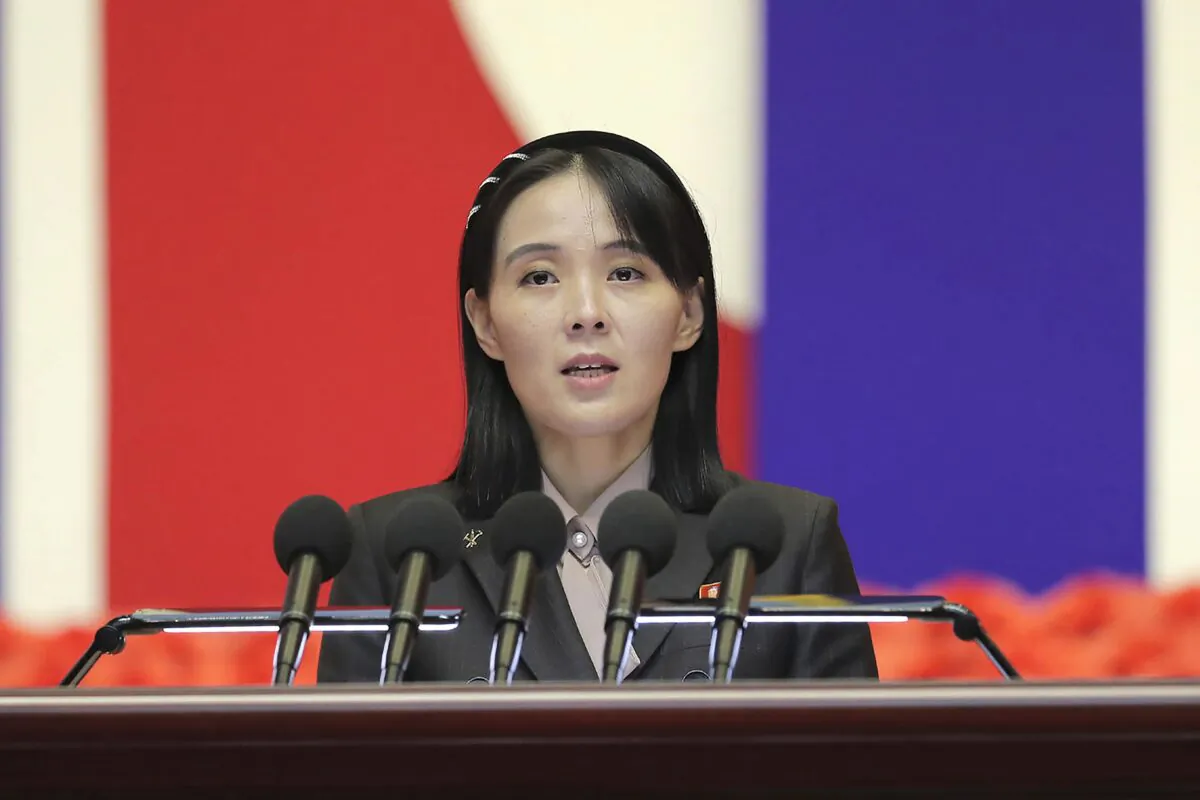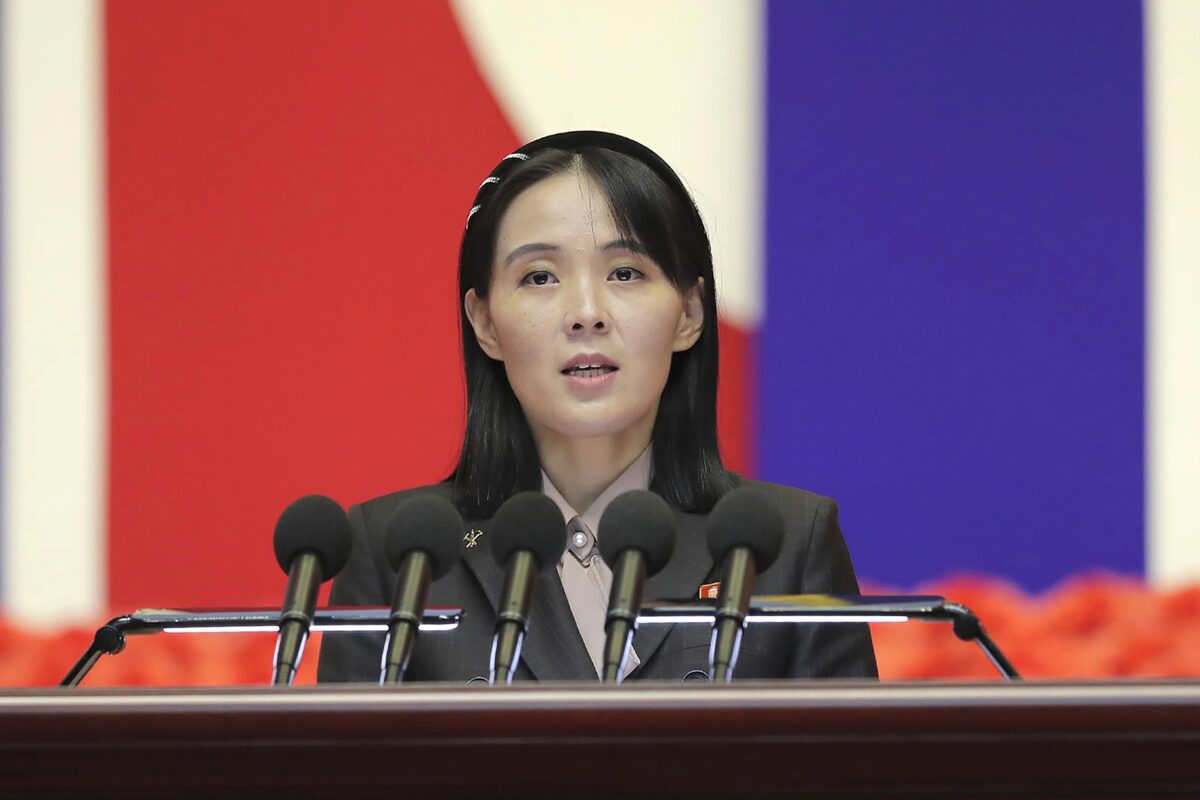

North Korean official Kim Yo Jong condemned a G7 call for the country’s denuclearization, saying North Korea’s nuclear weapons status is protected by its constitution and cannot be reversed.
Kim, the sister of North Korean leader Kim Jong Un and director of the General Affairs Department of the ruling Workers’ Party of Korea, said demands for denuclearization violate North Korea’s sovereignty and ignore what she described as irreversible political and security realities.
The remarks, reported on June 18 by South Korea’s Yonhap News Agency and citing North Korean state media outlet KCNA, followed a joint statement in which G7 leaders expressed concern over North Korea’s nuclear and ballistic missile programs.
“We express deep concern about North Korea’s nuclear and ballistic missile programs and reaffirm our commitment to the complete denuclearization of North Korea in accordance with U.N. Security Council resolutions,” leaders of the United States, Canada, France, Germany, Italy, Japan, and the UK said in the June 17 statement.
According to Yonhap, Kim Yo Jong dismissed those calls and said North Korea’s nuclear status was no longer subject to negotiation.
Denuclearization is the “line of no retreat that can never be crossed,” she was quoted as saying. She said that any attempt to undermine the interests of a nuclear-armed state would amount to “the worst option of inviting disaster.”
Kim Yo Jong also said Pyongyang’s nuclear arsenal serves as a defensive deterrent against what she described as ongoing nuclear threats from hostile countries.
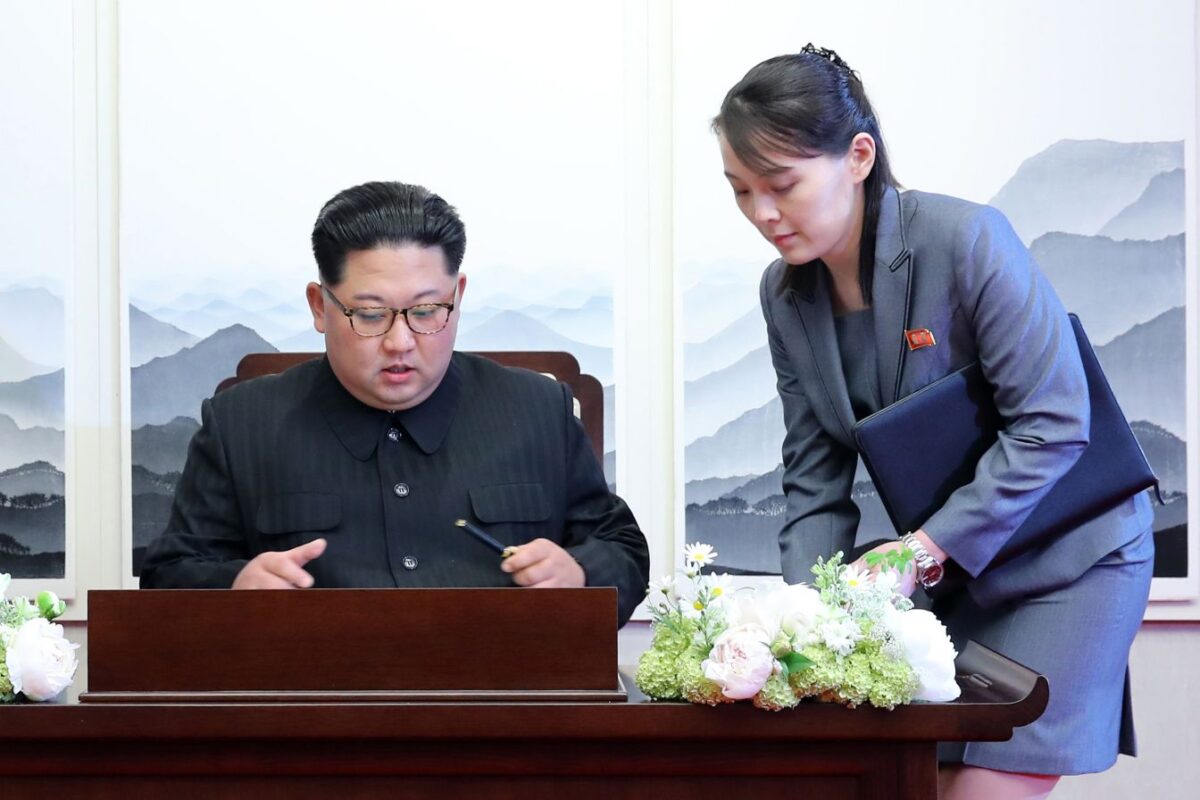
She called the weapons a “cornerstone for ensuring peace” and said criticism of North Korea’s nuclear program was outdated and ineffective.
The Federation of American Scientists estimates North Korea possesses about 60 nuclear warheads, and the nuclear inventories of three nuclear-armed G7 members—the United States, France, and UK—exceed 5,000 warheads combined.
Abductions Issue
G7 leaders also urged North Korea to resolve the long-running abduction issue involving Japanese citizens and called for greater international cooperation against North Korean cybercrime and cryptocurrency theft.
“We urge North Korea to resolve the abductions issue immediately,” the leaders said.
The abductions issue remains a major concern for Japan. Tokyo says at least 17 Japanese citizens were kidnapped by North Korean agents during the 1970s and 1980s.
North Korea admitted in 2002 that it had abducted Japanese nationals but maintains that some died and others returned home. Japan disputes those claims and says some victims may still be alive in North Korea.
Japanese Prime Minister Sanae Takaichi has made resolving the issue a priority. In November 2025, she said her government wanted a summit with Kim Jong Un to break the diplomatic deadlock.
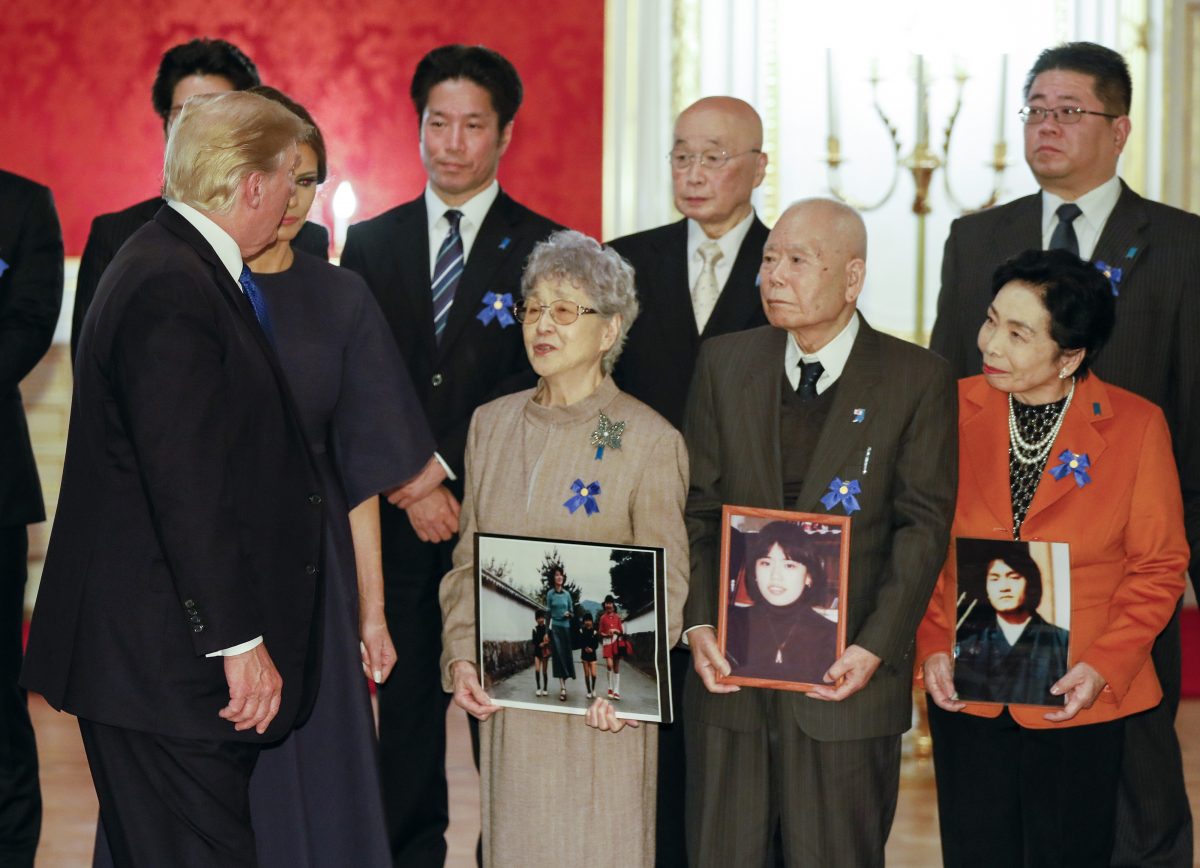
U.S. President Donald Trump met with families of Japanese citizens abducted by North Korea during visits to Japan in November 2017 and again in 2025, when he said he would raise the issue with the North Korean leader.
Allies Coordinate Policy
Kim Yo Jong’s statement came days after senior officials from the United States, Japan, and South Korea met in Tokyo on June 12.
They reaffirmed the commitment to North Korea’s denuclearization, enforcement of U.N. sanctions, and efforts to curb Pyongyang’s nuclear and missile programs.
The diplomatic exchanges came amid growing military cooperation between Washington and Seoul. The U.S. State Department approved on June 5 a potential $106 million sale of Joint Direct Attack Munitions to South Korea.
U.S. officials said the sale would improve South Korea’s ability to respond to current and future threats and strengthen interoperability with U.S. forces.
Also in early June, Washington approved a separate potential $292 million sale of AIM-120C-8 Advanced Medium Range Air-to-Air Missiles to South Korea. The State Department said the package would help expand South Korea’s air defense capabilities and deter regional aggression.
South Korea seeks to balance military preparedness with diplomatic engagement.
During their first in-person conversation at the G7 summit on June 16, South Korean President Lee Jae-myung asked Trump to help pursue a peaceful solution to the North Korean issue. Trump responded that he would work toward addressing the challenge.
The exchange took place as North Korea expands its nuclear weapons program and increases production of weapons-grade nuclear material.
North Korean state media reported that Kim Jong Un called for increasing the country’s nuclear forces at an “exponential rate,” and International Atomic Energy Agency Director General Rafael Grossi said on June 8 that the agency had identified signs of expanded nuclear material production at Yongbyon.
 Friends Read Free
Copy
Facebook
Tweet
Friends Read Free
Copy
Facebook
Tweet