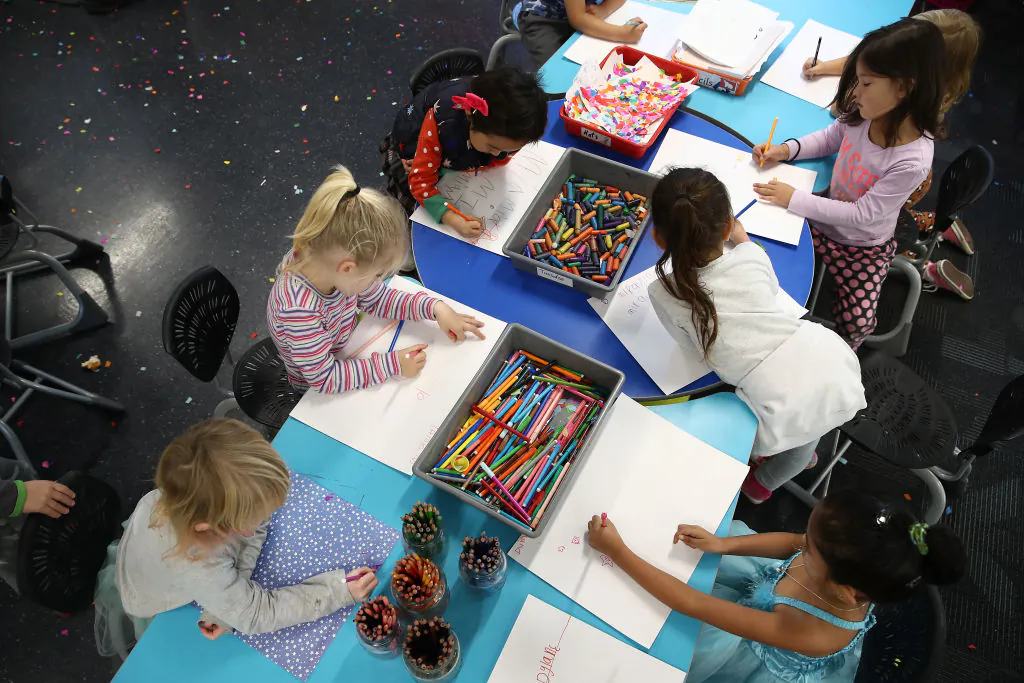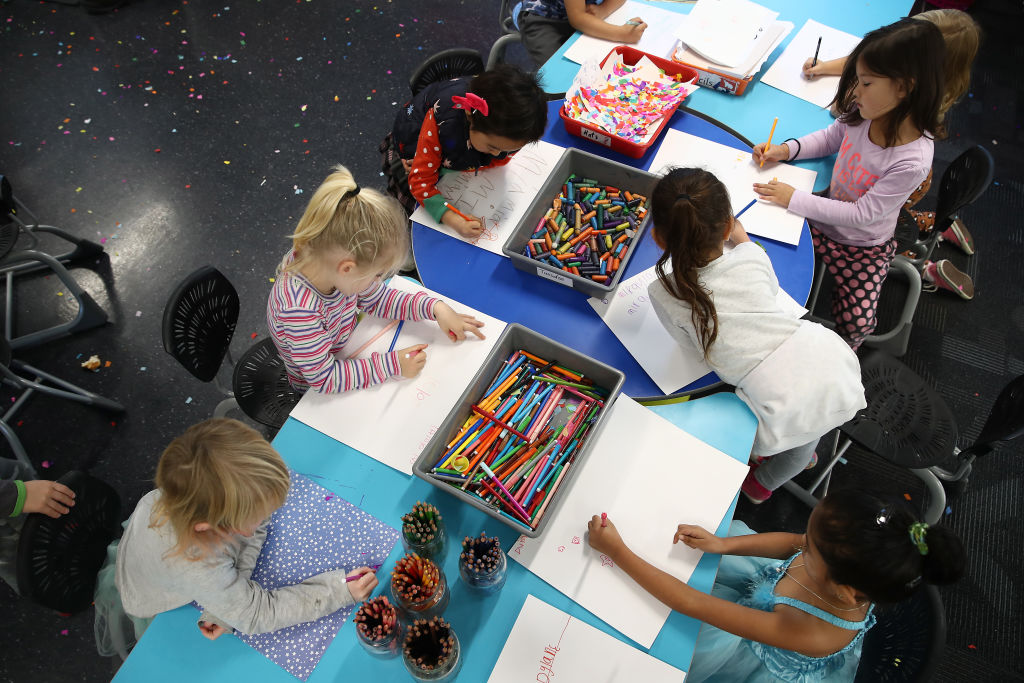

New Zealand will phase out open-plan classrooms, hailed just over a decade ago as a modern alternative to traditional teaching environments, after growing criticism from educators and evidence that the model may hinder student learning.
Education Minister Erica Stanford announced the change in response to widespread concerns from principals and teachers, confirming that no new open-plan classrooms will be built, and existing ones will be subdivided for phased out at the end of their natural life.
“While open-plan designs were originally intended to foster collaboration, they have often created challenges for schools, particularly around noise and managing student behaviour,” Stanford said in a statement.
“In many cases, open-plan classrooms reduce flexibility rather than enhance it.”
Research Lags Behind Policy
Spillover noise has been one of the most persistent issues of the open-plan design.
A 2015 Australian study comparing speech perception in open-plan and traditional kindergarten classrooms found that noise coming from other classes in open settings significantly impacts students’ ability to understand their teacher.
The study found that traditional classrooms were the only learning layout to be within or close to recommended noise levels.
Open-plan designs became popular in the 2010s, and from 2011, the then-National government announced a plan to convert all 38,000 primary and secondary classrooms in the country to the new design by 2021.
Despite the scale of that shift, international research on the impact of physical learning spaces has been limited.
A 2018 University of Melbourne systematic review found only 21 relevant studies since the 1960s evaluating how educational spaces affect student outcomes.
Policy Reversal and New Design Standards
Under the revised policy, all future builds will follow standard designs that promote flexibility.
Existing open-plan layouts could be adapted by incorporating sliding glass partitions to shift between open and closed settings as needed, Stanford said.
The government has not built an open-plan classroom since it came to power in 2023, except where schools had specifically requested them.
“Multiple governments over multiple years have been flip-flopping around without evidence,” she said. “But the evidence is clear, these classrooms are not optimal.”
She said she had been thinking about “calling time” on open-plan classrooms for a considerable time, and that doing so will help raise achievement and decrease the equity gap.
“My message to parents is that your children will be learning in classrooms that are modular … but when they are learning the curriculum, they will be learning in single-cell classrooms,” Sanford said.
“We know for our children those environments allow for quieter, structured learning.”
Cost Savings and Classroom Shortages
The government is currently under pressure to build enough new classrooms to cope with demand.
Stanford said moving to modular, single-cell designs will reduce both construction time and cost, the latter by 28 percent, allowing the government to deliver 30 percent more classrooms than in previous years.
The National-led government allocated $1.4 billion over four years for school property in the 2024 Budget, and topped it up by a further $711.9 million in capital funding this year.
In 2025, new classrooms cost on average $870,000 compared to $1.2 million at the end of 2023.
 Friends Read Free
Copy
Facebook
Tweet
Friends Read Free
Copy
Facebook
Tweet