
Oil prices climbed above $110 a barrel and global stocks wavered on April 28 as investors assessed an impasse in the U.S.–Iran conflict amid uncertainty over a new Iranian proposal and continued Strait of Hormuz disruptions.
Brent crude rose by 2.7 percent to $111.20 a barrel, a three-week high, while U.S. crude increased by 2.9 percent to $99.10.
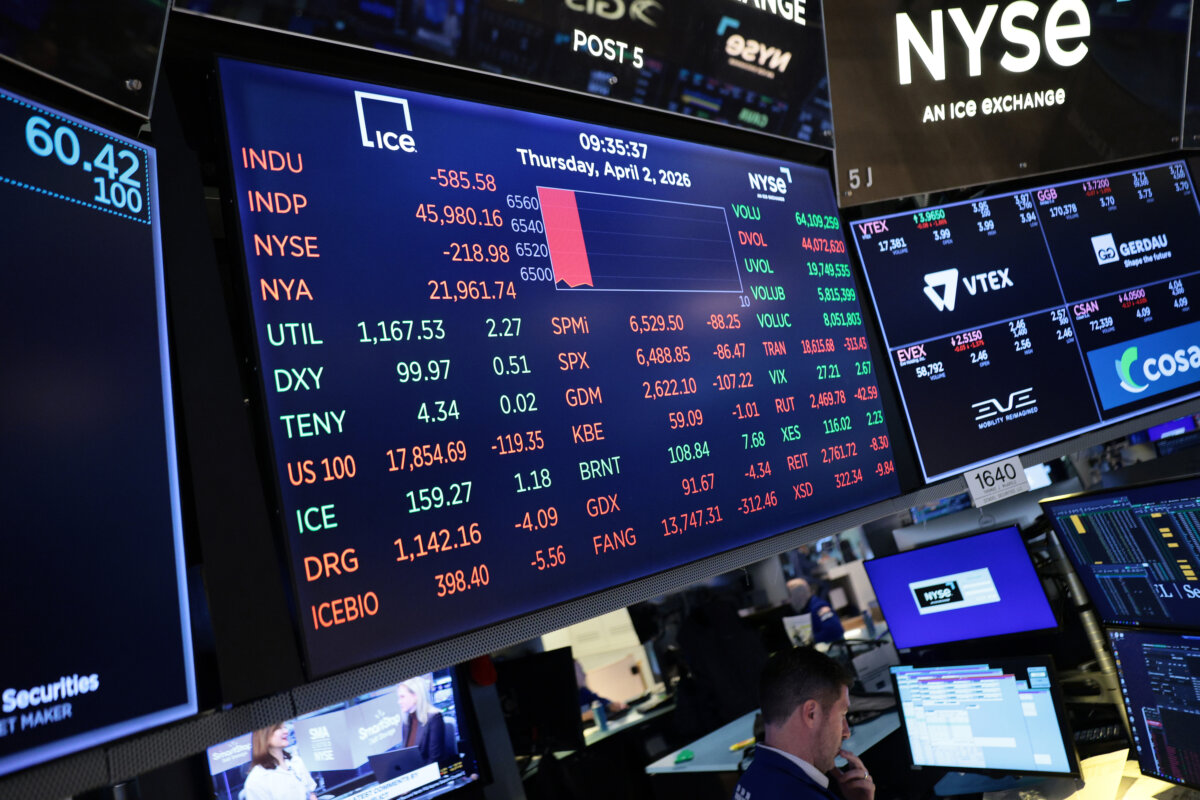
Futures tied to the S&P 500 fell by 0.1 percent, and Nasdaq futures declined by 0.4 percent, while Europe’s STOXX 600 was little changed after early losses.
A U.S.–Iran ceasefire announced earlier this month has largely held, but a U.S. military blockade of Iranian ports remains in place, and key energy flows through the strait have remained constrained.
The White House said on April 27 that President Donald Trump met with national security advisers after Iran submitted a new proposal aimed at resolving the conflict.
White House press secretary Karoline Leavitt, responding to questions during a briefing, confirmed the proposal was under discussion but declined to provide details.
Leavitt said Trump’s “red lines” remained unchanged, referring to the administration’s stated demand that the Strait of Hormuz remain open and that Iran surrender its uranium stockpiles to the United States.
Secretary of State Marco Rubio said in an April 27 interview with Fox News that a reported Iranian offer to reopen the strait under conditions was not acceptable.
Rubio said Iran’s view of the waterway diverged from broader international expectations and said Tehran could not be allowed to restrict transit through the route.
Those comments reinforced investor concerns that the conflict may remain unresolved despite active diplomacy.
Focus on Supply Risk
Oil has risen steadily in recent sessions as hopes for a quick peace agreement have diminished, pushing up global bond yields and reviving fears that a prolonged supply disruption could feed broader inflation pressures.
The Strait of Hormuz has remained central to those concerns because even partial restrictions can ripple through shipping and energy markets.
Matt Britzman, senior equity analyst at Hargreaves Lansdown, said on April 28 that markets had so far absorbed the shock, though risks were rising.
“Earnings season has helped markets look through the disruption, but the longer key oil flows remain constrained, the greater the risk that higher energy costs begin to bite,” he said. “We are not there yet, but markets are edging closer to a point where a prolonged supply shock could start to weigh more meaningfully on sentiment.”
Despite oil’s rise, major equity benchmarks remained relatively stable.
U.S. stocks entered the session near record highs following a strong earnings-driven rally, particularly in large technology shares linked to spending on artificial intelligence.
Britzman said the resilience reflected continued confidence in corporate earnings even as geopolitical risks increased.
“US markets look set for a softer open, with futures edging lower, but that comes after a strong session which saw both the S&P 500 and Nasdaq close at fresh all-time highs,” he said.
Britzman added that semiconductor companies continued to outperform while weaker software results were being punished more sharply, suggesting investors remained selective rather than broadly defensive.
Jack Phillips and Reuters contributed to this report.
 Friends Read Free
Copy
Facebook
Tweet
Friends Read Free
Copy
Facebook
Tweet