
News Analysis
The review of the North American free trade deal is less than a month away, and Canada and the United States have yet to schedule formal bilateral talks.
The deal saw some movement this week after months of quiet, however. Canada formally told the United States and Mexico it wants to renew the Canada-United States-Mexico Agreement (CUSMA) for 16 years, and the cabinet minister overseeing U.S. ties visited Washington hoping to iron out differences.
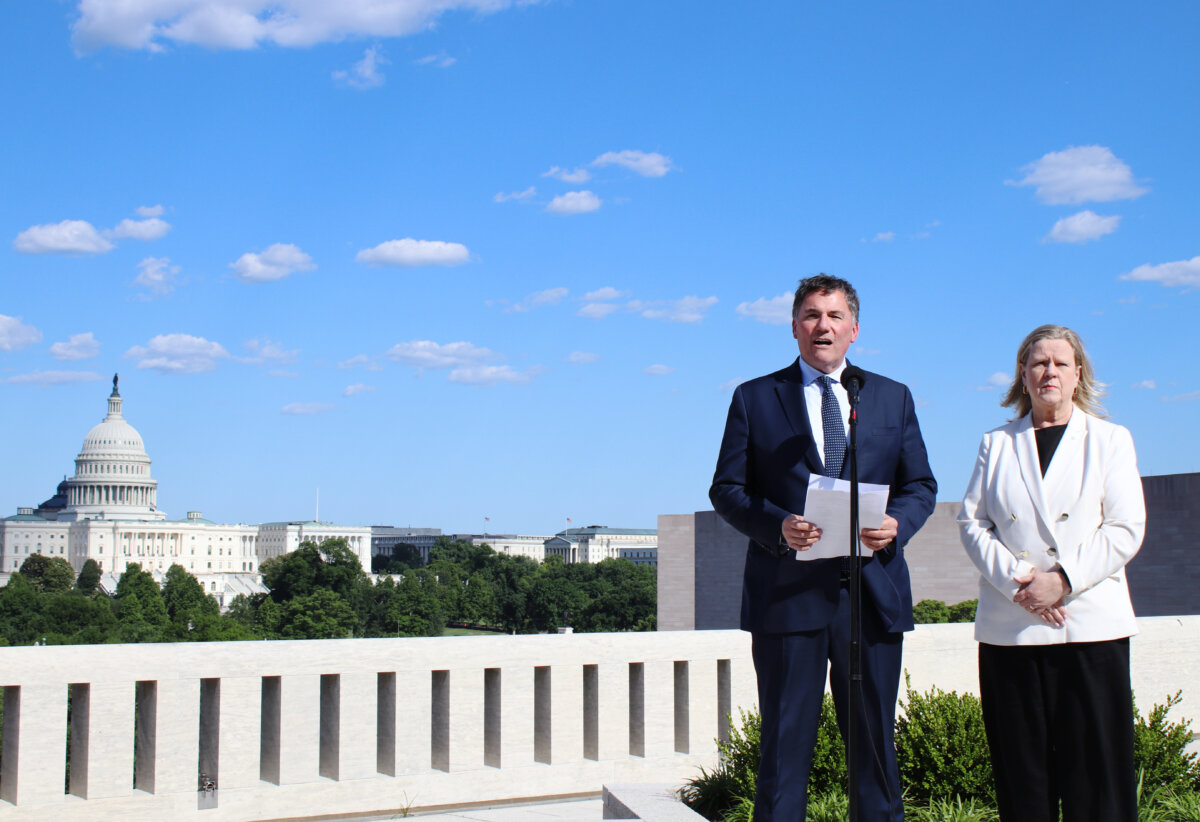
Canada-U.S. Trade Minister Dominic LeBlanc had few details to offer after his meeting with U.S. Trade Representative Jamieson Greer on June 2. He called the meeting “positive” while noting “turbulence” in the discussions, and said he made “specific proposals” to the Americans, without elaborating.
LeBlanc didn’t announce upcoming formal talks with the U.S. side, while saying that issues are being addressed.
Hours before LeBlanc’s meeting with Greer, Prime Minister Mark Carney offered new information on what Canada is facing ahead of the July 1 CUSMA review. He said the United States has around 30 “technical” issues on trade with Canada, whereas Mexico faces about 60 such issues.
“We’re making progress on a few of these issues,” Carney told reporters on June 2, adding that the key issues for Canada pertain to industries facing U.S. sectoral tariffs such as steel, aluminum, autos, and forestry products. “So we’re trying to find a new partnership with the United States in the strategic sectors,” Carney said in French.
Messaging
The prime minister’s messaging in recent months has been that close ties with the United States have become “weaknesses” that need to be corrected by diversifying trade partnerships.
While not diverging from this message of building a more independent Canada, Carney appeared to extend somewhat of an olive branch to the Trump administration when he visited New York City last week.
“Let’s be absolutely clear: Canada strong will help make America great again,” Carney said in an address at the Economic Club of New York, referencing U.S. President Donald Trump’s campaign slogan.
This opening followed several episodes of intense criticism between officials from the two neighbours in recent weeks.
The chief negotiator on the American side for CUSMA, Trade Representative Greer, has been critical at every turn. Last week he said it’s “hard to see” where Canada’s current trade approach to the United States will end as his administration wants to keep some tariffs.
The month prior, Greer said the Canadian and U.S. economies are not a good fit because of Ottawa’s pursuit of “globalization” at a time when Washington seeks to counter this phenomenon. Trump’s tariff agenda aims to reshore manufacturing.
Greer’s comments, though, have not been as harsh as those of his deputy Rick Switzer, who accused Carney in April of “political malpractice” for his strategy toward Trump and the United States, arguing that he has made the issue “personal.” Switzer said this would affect CUSMA negotiations.
Mexico
Recent developments suggest Mexico is a step ahead in its CUSMA talks with the United States. Mexico adopted a less confrontational approach on trade than Canada, but it also deals with different circumstances, including a labour force heavily dependent on U.S. market access.
The United States and Mexico concluded on May 29 a first bilateral round of negotiations for the upcoming CUSMA review. The next two rounds of U.S.-Mexico negotiations have been set for mid-June and mid-July.
Before this week, Minister LeBlanc’s most recent trip to Washington was in early March. That trip had marked the unfreezing of trade talks, LeBlanc said, after Trump had cancelled them last October in response to Ontario’s anti-tariff TV ad campaign in the United States.
Pressed by reporters on when formal talks like those involving Mexico could begin, LeBlanc said, “We’re doing a lot of that work now.”
“The Americans have decided to publicly say that they’re doing that work with the Mexicans. That doesn’t surprise us,” he said. “In a sense, we always knew there would be these bilateral conversations.”
The CUSMA review will officially begin on July 1 and the three signatories will have to decide on a path forward for the agreement. They could decide to renew the deal for a certain number of years, or a failure to update the pact for the long term could lead to annual reviews. A member could also decide to pull out of the pact.
LeBlanc recently sent a letter to Greer and Mexican Economy Secretary Marcelo Ebrard advising of Canada’s interest in renewing CUSMA for 16 years. LeBlanc said Canada received letters from his counterparts but he doesn’t want to divulge their content.
Given the integration of the North American market, termination of the agreement seems unlikely. The U.S. administration has at times floated the idea of pulling out, but U.S. Ambassador to Canada Pete Hoekstra said this week he’s optimistic a deal will be reached.
What appears unlikely is that CUSMA will be renewed without Canada and Mexico making concessions.
One sign pointing to Ottawa being potentially responsive to U.S. trade concerns came on June 3 when Culture Minister Marc Miller said he’s directing the broadcasting regulator CRTC to review its decision to triple the tax on large online streamers meant to support Canadian and indigenous content.
Hoekstra last week called on Ottawa to repeal the legislation underpinning the CRTC’s decision, the Online Streaming Act, after meeting with affected U.S. streaming firms.
Miller noted U.S. concerns around the matter when explaining his decision to reporters on June 3. “It’s no secret to anyone that’s been paying any attention to this that the USTR has identified these issues as a trade issue,” he said, using the acronym for the United States Trade Representative.
Autos
U.S. concerns about the Online Streaming Act are not new, but the issue does not appear to be a priority among the broader continental matters the Trump administration is seeking to address.
Greer’s office said the priority issues that were discussed with Mexico during the first round of talks last week include rules of origin for autos, steel, and aluminum.
A concrete demand around autos emerged from the talks, according to several media reports citing sources, with the U.S. administration asking that Mexico increase the level of North American content in the cars it produces to 82 percent to qualify for low tariffs. CUSMA currently requires a level of 75 percent. The new rule would also reportedly require that all autos contain 50 percent U.S. content.
Carney commented on this development this week, saying the request would be harder to fulfill for Mexico than Canada.
“The 50 percent U.S. content which has been floated is actually the average level of Canadian exports,” he said. “I’m not endorsing that in any way, but it gives you a sense it’s a much bigger issue in the structure of Mexico.”
With U.S.-Mexico CUSMA talks already underway, there is a chance they could come to an agreement on the auto sector and others that leaves Canada with little room to manoeuvre. A similar scenario played out during the initial CUSMA negotiations in 2018.
 Friends Read Free
Copy
Facebook
Tweet
Friends Read Free
Copy
Facebook
Tweet