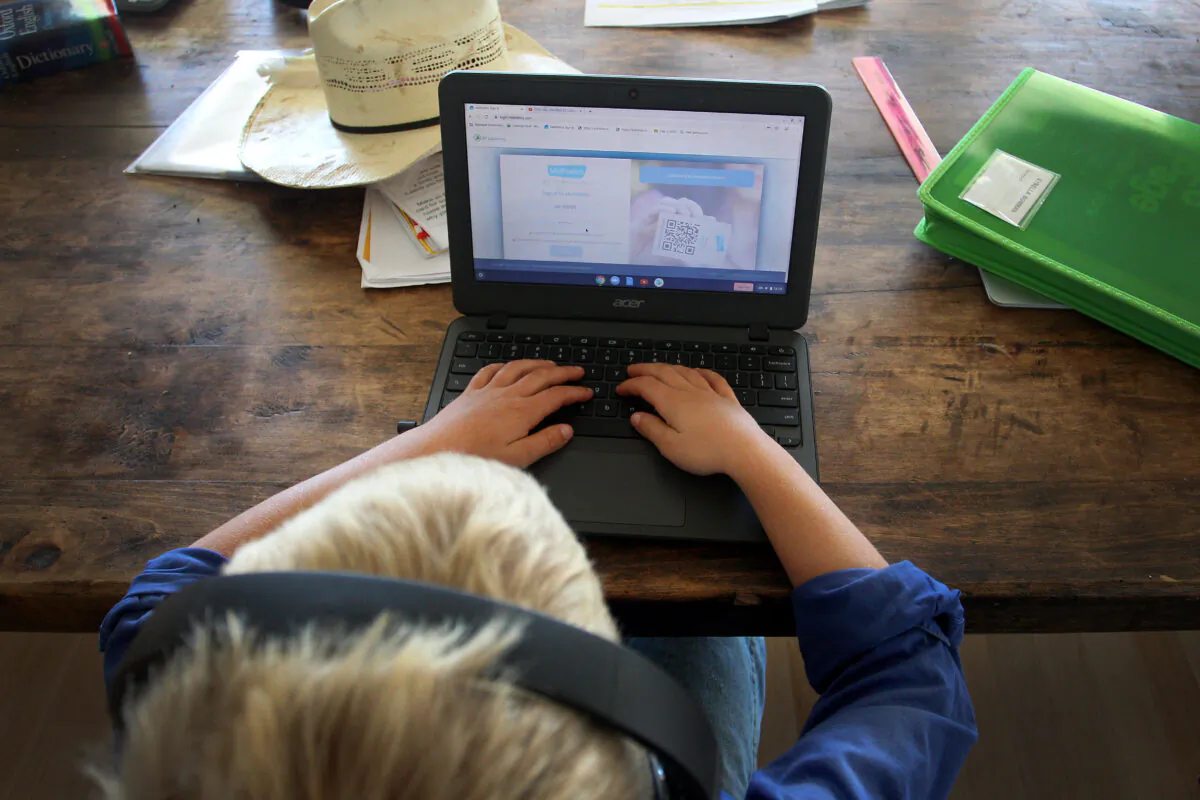

A new code that will impose a duty on tech companies to protect children from pornographic websites and certain online games could come into effect in 2025. Still, there is no indication of how the technology would work.
The Draft Online Safety Codes were designed by five Australian communications, digital, and video game industry associations, that will seek public feedback before submitting them to the eSafety Commissioner.
They’re designed to protect children from explicit material, so this could mean messaging services automatically detect and blur nude images, and dating services expressly prohibit sexual extortion attempts.
However, the technology that would implement such restrictions remains unclear since the federal government has yet to reveal the results of a $6.5 million trial.
The safety proposals come four months after the eSafety Commissioner issued notices to digital firms under the Online Safety Act, directing the companies to protect children from Class 1C and Class 2 material.
That includes pornography, simulated gambling in computer games and “high-impact material” depicting nudity, violence, drug use, crime, suicide, racism or family breakdowns that would otherwise receive an R18+, X18+ or RC classification.
Digital Industry Group Inc (DIGI) regulatory affairs and research policy director Jennifer Duxbury said keeping children safe online was a key priority for industry, parents and government and required effort from everyone involved.
“The draft codes are a joint effort between companies committed to online safety and the government to strengthen safeguards for minors when it comes to online pornography and age-inappropriate content,” she said.
“The key principles of these codes are to protect and support children, provide all end users—including parents—with more control over what their children see, read and hear, and to protect privacy and online safety.”
Tools to let users block pornographic images sent to them would be required under the codes, as well as ways to report breaches. Terms and conditions for using the various services would include prohibitions on sexual extortion, grooming, and non-consensual intimate image sharing.
Under the measures, people would be forced to use age-assurance technology to access “high-impact pornography” and to play games that feature “simulated gambling material.”
But Duxbury said the industry does not yet know what technology it will be expected to use and is still awaiting the outcome of the government’s test.
“We don’t know exactly when that is going to finish, but we were told that we should take into account the results of that trial or that the trial would inform how the measures would be implemented,” she told AAP.
“What we decided to do was to leave the door open a little bit as to how providers would go about implementing the age-assurance requirements.”
The government issued a tender for its age-assurance technology trial in September and wants to evaluate current technology’s effectiveness in estimating an internet user’s age.
Public Feedback Open
The five groups behind the Draft Online Safety Codes, including the Communications Alliance and Australian Mobile Telecommunications Association, will seek feedback from the public on the proposed changes until Nov. 22.
The final codes will be delivered to the eSafety Commission in December and, if implemented in their current form, Duxbury said, could significantly change what children see online.
They would apply across all eight industry sections, including social media providers, messaging services, search engines, and app distribution services.
Internet providers, hosting services, manufacturers, and suppliers of any equipment that connects to the internet—including smart devices and computers—would also be required to comply.
“The [measures] will really improve the current situation because they apply to everyone—it’s not just providers that choose to implement measures to protect children; everyone is subject to these codes,” Duxbury said.
“eSafety has very strong enforcement powers; they’re very well-resourced as a regulator, so I think it will make a difference.
“We encourage all stakeholders, including consumer organisations, civil society groups, academics, industry, parents and community members, to have their say on the draft codes and provide feedback.”
Development of the codes was triggered by a directive from the eSafety Commissioner earlier this year to key players in the online industry. They were given six months to establish enforceable codes designed to shield children from exposure to explicit pornography and other high-impact materials.
Last year, the Albanese government in Australia decided against implementing a mandatory age verification system for online pornography and other adult content, citing the underdeveloped state of existing technology solutions.
AAP contributed to this story.
 Friends Read Free
Copy
Facebook
Tweet
Friends Read Free
Copy
Facebook
Tweet