
Ontario Premier Doug Ford said Canadians should boycott Chinese-made electric vehicles (EV) after Prime Minister Mark Carney struck a deal with Beijing to allow 49,000 vehicles to enter Canada at a lower tariff rate.
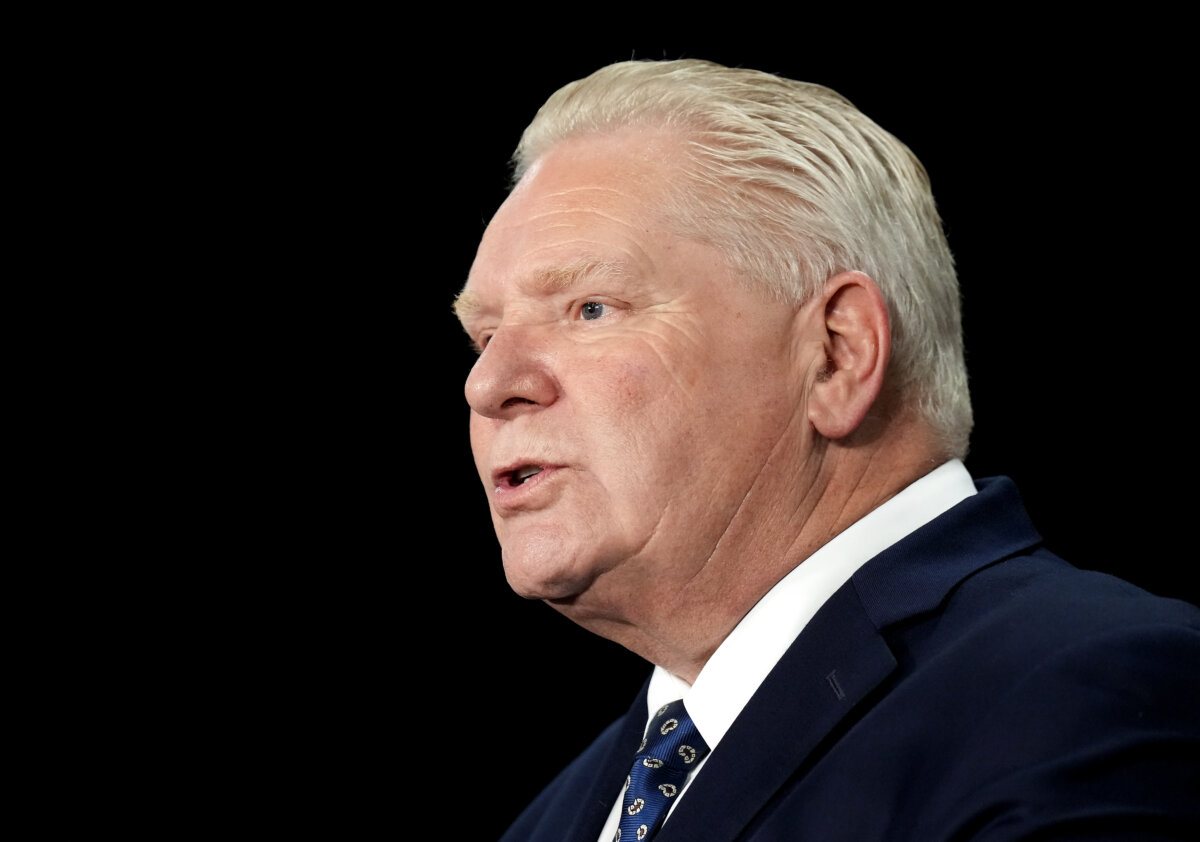
“Boycott the Chinese EV vehicles. Support companies that are building vehicles here. It’s as simple as that. This is a Team Canada approach,” Ford told reporters during a press conference in Toronto on Jan. 21.
Ford said Canadians choosing to buy Chinese EVs may be doing so at the cost of Canadian automotive jobs. When asked by a reporter if he would be open to tabling legislation to protect Ontario’s EV industry, Ford said “everything is on the table,” and that he wanted to support the sector and auto workers.
Ford made the comments while flanked by representatives from the Canadian Vehicle Manufacturers’ Association, Automotive Parts Manufacturers’ Association, and National Unifor, who said Ottawa’s deal with China would harm the province’s auto industry.
The Canadian government announced on Jan. 16 that Canada would reduce its tariffs on Chinese EVs from 100 percent to the “most-favoured-nation” tariff rate of 6.1 percent on 49,000 EVs per year. The announcement came following Carney’s meeting with Chinese officials in Beijing.
The Prime Minister’s Office said it expects this will “drive considerable new Chinese joint-venture investment in Canada” within three years. It also said it expects China will lower tariffs on Canadian canola from 85 percent to 15 percent, and that anti-discrimination tariffs on lobsters, crabs, and peas will not go into effect from March 1 to the end of 2026.
However, there was no announcement about China’s 25 percent tariff on Canadian pork. Beijing imposed tariffs in March 2025 in retaliation for Canadian tariffs on Chinese EVs, steel, and aluminum, following similar measures implemented by the United States.
Ford had told reporters on Jan. 19 that he was not informed by Carney about the deal on Chinese EVs, and would have liked a “quick text or a little bit of communication” before the deal was announced.
“I’m disappointed because we had such a great relationship, and I look forward to continuing a great relationship, but it’s all about communication and collaboration and partnership,” Ford added.
Saskatchewan Premier Scott Moe, whose province has been severely impacted by Chinese tariffs on canola, welcomed the agreement between Ottawa and Beijing. “This deal is a very positive signal that will restore existing trade volumes and open avenues for further opportunities for Canadians,” he said.
Automotive Representatives Criticize Deal
On Jan. 21, Canadian Vehicle Manufacturers’ Association president and CEO Brian Kingston said Canada’s automotive industry is under “enormous pressure” due to U.S. tariffs. Kingston said Ottawa’s trade deal with Beijing “has the potential to undermine Canada’s auto sector and presents risks to the future of our integrated North American automotive supply chain.”
Kingston called for the federal government to boost competitiveness by repealing the “costly and redundant” EV sales mandate that requires all new automobiles sold in Canada to be EVs by 2035. He also called for Ottawa to lower the cost of investing in factories and research and development.
Automotive Parts Manufacturers’ Association President Flavio Volpe said that letting 50,000 EVs into Canada would be equivalent to wiping out a full auto plant shift, which would impact thousands of Canadian jobs directly and indirectly.
“The concession is directly to the market prospects of the companies that we’re trying to bolster, at a time when we’re under unprecedented pressure,” he said.
Volpe also raised concerns that the software technology inside EVs is updated from China, which poses a cybersecurity risk for Canada. “The Chinese are kind of on the forefront of this. They’ve been able to use their own regulations to make sure that Teslas aren’t spying on the Chinese government. We shouldn’t be naive about the reciprocal arrangement,” he said.
National Unifor President Lana Payne, representing 40,000 auto sector workers in Ontario, said jobs have been put “on the chopping block.” Payne said the Canadian government had made a deal to give Beijing market access without “guarantees or any real commitments.”
“Even if investment were to materialize, experience in other parts of the world shows the core supply chain remains in China,” she said.
 Friends Read Free
Copy
Facebook
Tweet
Friends Read Free
Copy
Facebook
Tweet