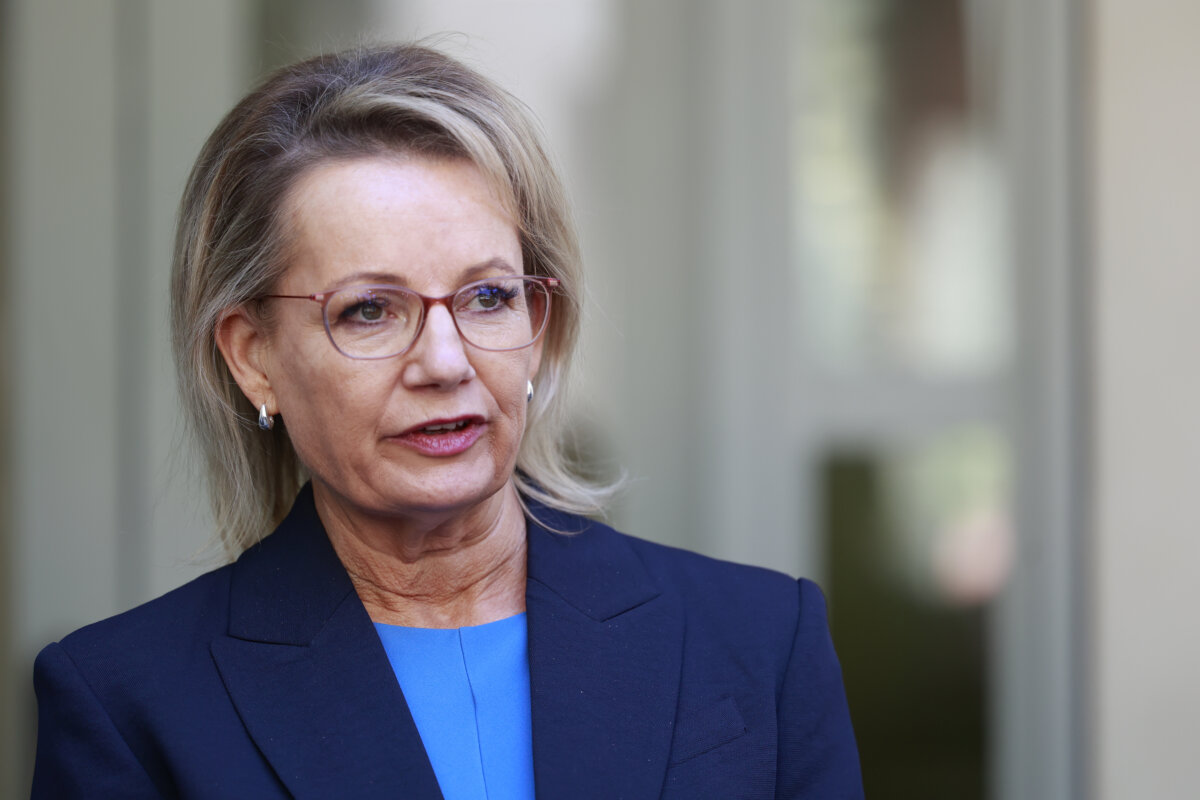

Opposition Leader Sussan Ley is pressing Prime Minister Anthony Albanese to recall Parliament before Christmas to fast-track legislation targeting anti-Semitism.
“Jewish Australians and Australians do not feel safe, and we should not rest until we have done everything in our power to keep them safe,” Ley said in a press conference on Dec. 18.
Ley outlined a list of initiatives saying the Coalition would move to strip citizenship from terrorists and hate preachers and block extremists from entering Australia.
The proposal would expand the Australian Citizenship Act to allow courts to cancel the citizenship of dual nationals for a broader range of terrorism-related conduct, including overseas military-style training and hate crimes under the Criminal Code.
She said this would create a clear legal pathway to deport radicals and terrorist affiliates.
In the interim, Ley called for an immediate ministerial direction preventing visas from being granted to anyone from terrorist-controlled enclaves unless authorities are positively satisfied of an applicant’s identity after enhanced security and character checks.
The Coalition would also end Labor’s policy of self-managed returns for ISIS brides. It plans to introduce legislation making it an offence to provide repatriation assistance to people who travelled to declared conflict zones without ministerial approval.
Last October, two Australian women and four children left Syria’s al-Hawl camp via Lebanon and returned to Australia on commercial flights with embassy-issued passports. More than 40 Australians are believed to remain in Syrian detention camps.
In 2024, then-Home Affairs Minister Clare O’Neil planned to take a repatriation proposal to cabinet, but it stalled amid fears of political backlash.
Blocking Funding for Anti-Semitic Content
The Coalition also pledged to back the Special Anti-Semitism Envoy Jillian Segal’s recommendations to combat anti-Semitism, including making the envoy a statutory office backed by legislation.
Ley also called for the immigration minister to have the power to refuse visas for for those engaging in anti-Semitic behaviour or hateful rhetoric, including those involved in the arts.
The Coalition would also look to introduce “no-funding triggers” to cancel or block public funding for projects or organisations linked to anti-Semitic activity. These would apply under the Creative Australia Act 2023, the Commonwealth Grants Rules, and the Australian Research Council Act 2001.
Citing complaints raised by Jewish students, Ley said universities would face tougher accountability.
She flagged amendments to the Tertiary Education Quality and Standards Agency Act 2011 to make combating anti-Semitism a condition of registration.
School curricula would also be reviewed to strengthen education on Jewish history, identity and culture, including comprehensive teaching on anti-Semitism and the Holocaust, a move promised by the prime minister hours earlier.
More Counter-Terror Powers and Policing
The Coalition said it would also modernise counter-terrorism laws to give agencies stronger powers to disrupt extremists before attacks occur.
This includes a new electronic surveillance bill to enhance digital monitoring, alongside tougher prosecution of offences
Ley said the Attorney-General should immediately direct the Commonwealth Director of Public Prosecutions to take a firmer stance on such cases. She also called on the Home Affairs Minister to instruct the Australian Federal Police to adopt a stronger policing posture against those spreading violent extremism.
“Counter-terrorism action has been neglected by Labor despite multiple warnings,” Ley said.
The Coalition wants immediate funding boosts to address staffing shortages in the AFP’s Counter-Terrorism Command and the Home Affairs Counter-Terrorism Coordination Centre.
Ley’s formal announcement came hours after Prime Minister Albanese unveiled tougher security and education measures in response to the Bondi terror attack.
His package includes proposed new criminal offences, expanded visa cancellation powers, increased online regulation, education reforms, and the activation of national disaster recovery funding—the first time it has been used for a terrorist attack.
 Friends Read Free
Copy
Facebook
Tweet
Friends Read Free
Copy
Facebook
Tweet