
The Liberal government has introduced regulations aiming to reduce Canada’s methane emissions by 75 percent from 2014 levels by 2035.
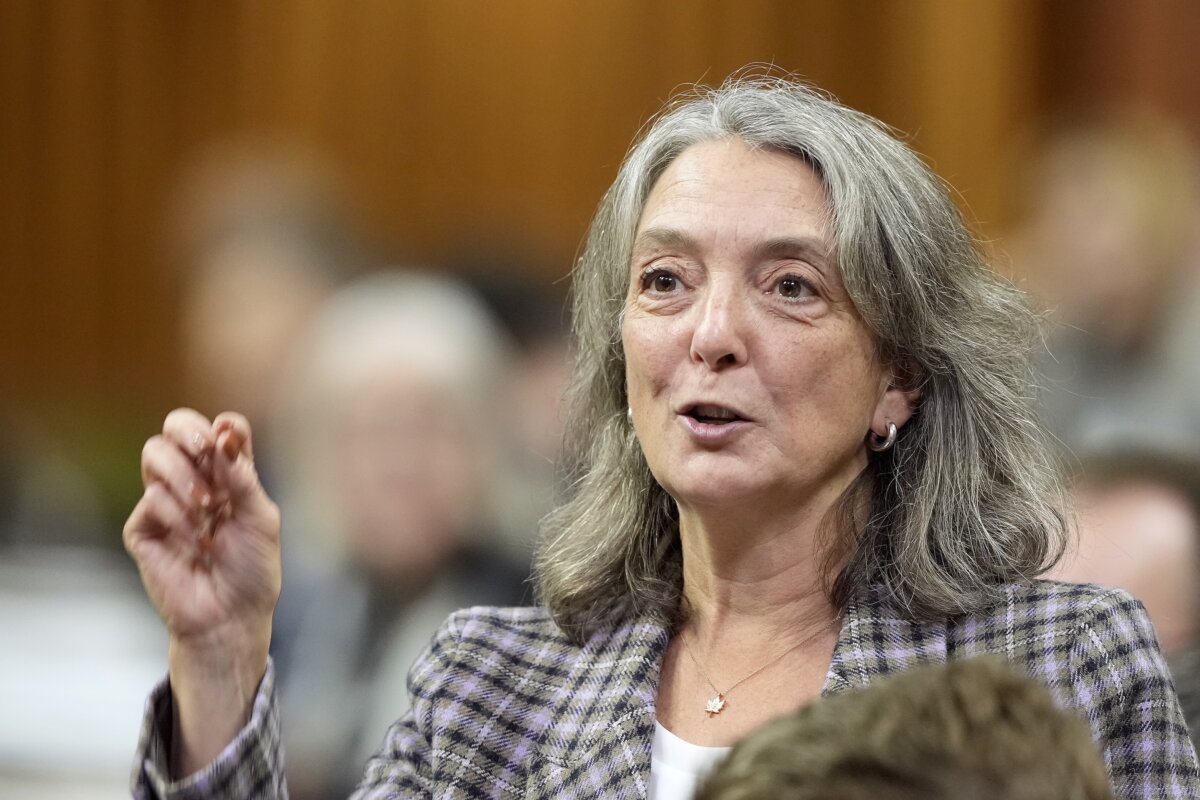
“Clear, predictable regulations give industry certainty, attract investment, and ensure Canadian energy remains competitive in a world that is moving towards lower carbon production,” Environment and Climate Change Minister Julie Dabrusin told reporters on Dec. 16.
The new rules are more lenient than what was previously announced by former Prime Minister Justin Trudeau. Those rules, which never came into effect, had called for a 75 percent reduction in methane emissions from 2012 levels by 2030.
The new Enhanced Methane Regulations expand on the 2018 methane regulations, giving oil and gas operators two ways to comply. They can either implement practices to prohibit methane venting and establish an inspection schedule to find and repair leaks, or they can design their own approaches to control methane emissions that meet federal standards. Dabrusin said this second pathway would require oil and gas companies to engage in “quite a bit of reporting and monitoring” of methane levels.
The federal government will also allocate $16 million in funding for technologies across Canada to reduce methane emissions. Eight projects will receive the funding, and Carleton University in Ottawa will receive further funding to develop measurement-based inventories of methane emissions in the upstream oil and gas sector.
New methane regulations have also been separately introduced for landfills, which Dabrusin said account for 17 percent of Canada’s methane emissions. Methane from food, yard waste, and paper products must now be monitored and captured in some cases, and Dabrusin said landfill regulations are expected to reduce greenhouse gas emissions by 100 million tonnes between 2026 and 2040.
Environment and Climate Change Canada (ECCC) said the regulations will be phased in at the start of 2028, and will “spur investments to reduce methane emissions that will help position the Canadian oil and gas industry amongst top performers for producing low-methane intensity products.”
ECCC said the oil and gas sector’s production is expected to grow by more than 17 percent from 2019 to 2030 with the methane regulations in effect. The regulations will reduce oil and gas production by 0.2 percent from 2025 to 2035, and reduce Canada’s GDP by 0.01 percent during the same timeframe.
The regulations are expected to remove 304 megatonnes of carbon dioxide from 2028 to 2040, and cost oil and gas companies an average of $48 per tonne of CO2 reduced, which ECCC said is “one of the lowest cost opportunities to drive significant progress on our climate goals.” ECCC also said the net benefits of the regulations are expected to be $23.9 billion over the 2028 to 2040 period from “avoided climate change impacts and by cutting air pollutant emissions” that negatively impact Canadians’ health.
Prime Minister Mark Carney and Alberta Premier Danielle Smith signed a memorandum of understanding on Nov. 27 that paved the way for a new West Coast pipeline and a Pathways Alliance carbon capture project. As part of the deal, Alberta committed to reduce methane emissions from the oil patch by 75 percent from 2014 levels by 2035.
Alberta and Saskatchewan had previously opposed the federal government’s methane emissions cap, with Saskatchewan Premier Scott Moe saying in 2023 that the cap and other measures “will have serious economic impacts on Canadians and limit our sustainable Canadian energy products from providing heat and electricity to the world.”
 Friends Read Free
Copy
Facebook
Tweet
Friends Read Free
Copy
Facebook
Tweet