
The Parliamentary Budget Officer (PBO) says it will be challenging for Ottawa to combine spending cuts with increased investment as the prime minister has promised.
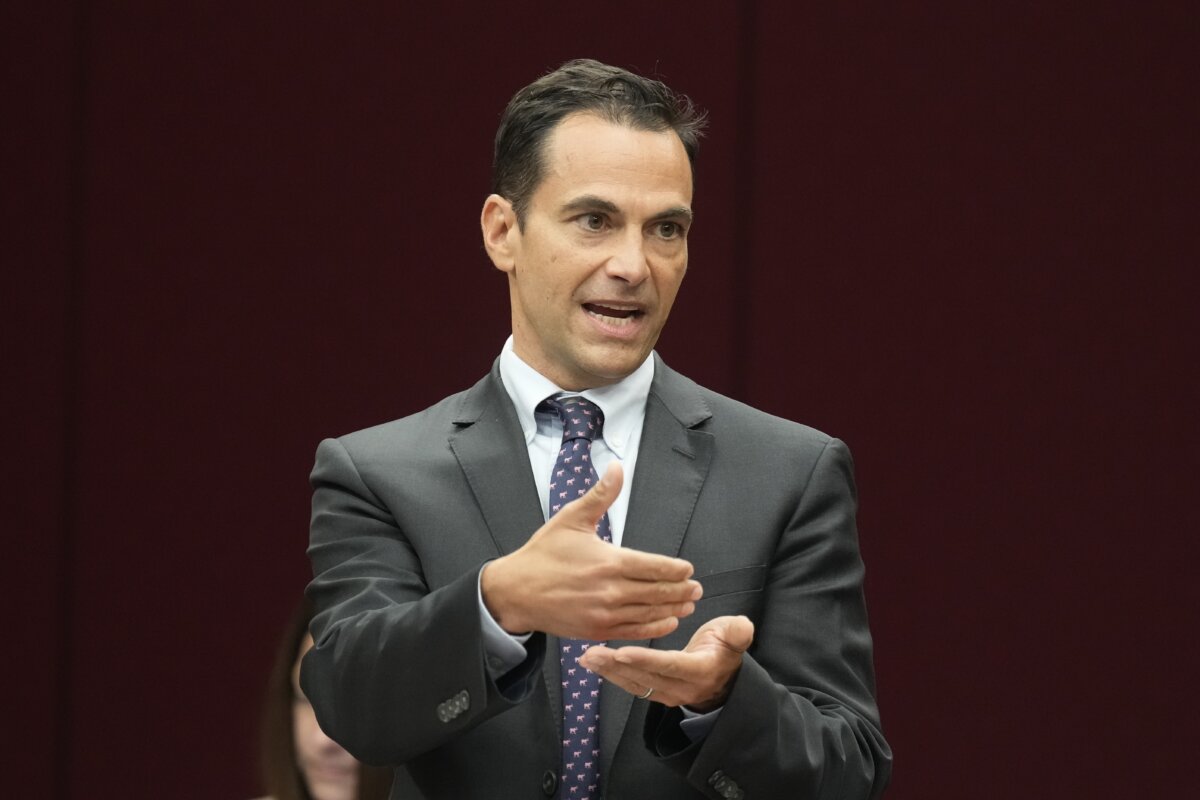
Interim PBO Jason Jacques told the Senate committee on national finance that he couldn’t remember a time when the prime minister has said Canada needs to engage in both “austerity” cuts and increased investment spending at the same time, and noted that combining the two will be challenging.
“The foot is on the gas and the foot is on the brake and the wheels are on the car,” Jacques told senators on Oct. 1. “They’re hopefully navigating a very narrow road at 100 kilometres an hour, and I think that challenge of doing both at the same time—that definitely stands out.”
Prime Minister Mark Carney has said his first budget would bring austerity, but has remained vague on the planned cuts. Carney has also vowed his government will “spend less to invest more.”
The PBO published his economic and fiscal outlook on Sept. 25, which estimated Ottawa’s upcoming budget will reach $68.5 billion in 2025-26. Meanwhile, the C.D. Howe Institute projected a $92 billion deficit.
The reason for the discrepancy is that C.D. Howe’s forecast included Ottawa’s pledge to meet the NATO defence spending target of 5 percent of GDP as well as all the planks in the Liberal Party’s election platform, Jacques told senators.
He said the PBO report didn’t include the increased NATO spending target because it is “still not clear enough.” Instead, his office worked only with official announcements that have been made by the Liberal government.
The PBO outlook also doesn’t include the expenditure review launched by Ottawa, with most departments, agencies, and Crown corporations being asked to find savings of up to 15 percent over three years, with 7.5 percent cuts in fiscal 2026-27, rising to 10 percent by 2027-28, and 15 percent by 2028-29.
Jacques told the committee “there is no magical figure” for determining when the deficit would become unmanageable.
“But at a certain level, it is impossible to maintain a high deficit while managing an economy of a particular size, continuously,” he said. “We can’t borrow ongoing without paying back. You have to pay back your debt if you want to go on spending.”
Jacques also told senators that, based on the PBO outlook, there will be “a risk to the sustainability of the economy and fiscal management” by the federal government. However, he expressed confidence in those handling fiscal issues within the government, saying they will “surely have plans drawn up to manage the situation.”
Jacques also told MPs at a House of Commons government operations committee meeting on Sept. 25 that it was the first time in 30 years the PBO released a fiscal outlook in which the debt-to-GDP ratio is climbing over time. He noted this is “definitely a cause for concern.”
However, the PBO said he didn’t project a recession to take place, which typically is defined by two consecutive quarters of negative GDP growth.
Jacques replaced Yves Giroux as PBO in early September and was appointed to a six-month term as the interim PBO.
The Liberal government is set to release its first budget under Carney on Nov. 4. Ottawa’s last official fiscal update was the Fall Economic Statement on Dec. 16, 2024.
Finance Minister François-Philippe Champagne has said the upcoming budget will be a “generational investment” in Canada’s future to make the country the strongest among G7 nations. He said Ottawa would be “rigorous” in its expenses so it can be “ambitious” in it investments.
Noé Chartier contributed to this report.
 Friends Read Free
Copy
Facebook
Tweet
Friends Read Free
Copy
Facebook
Tweet