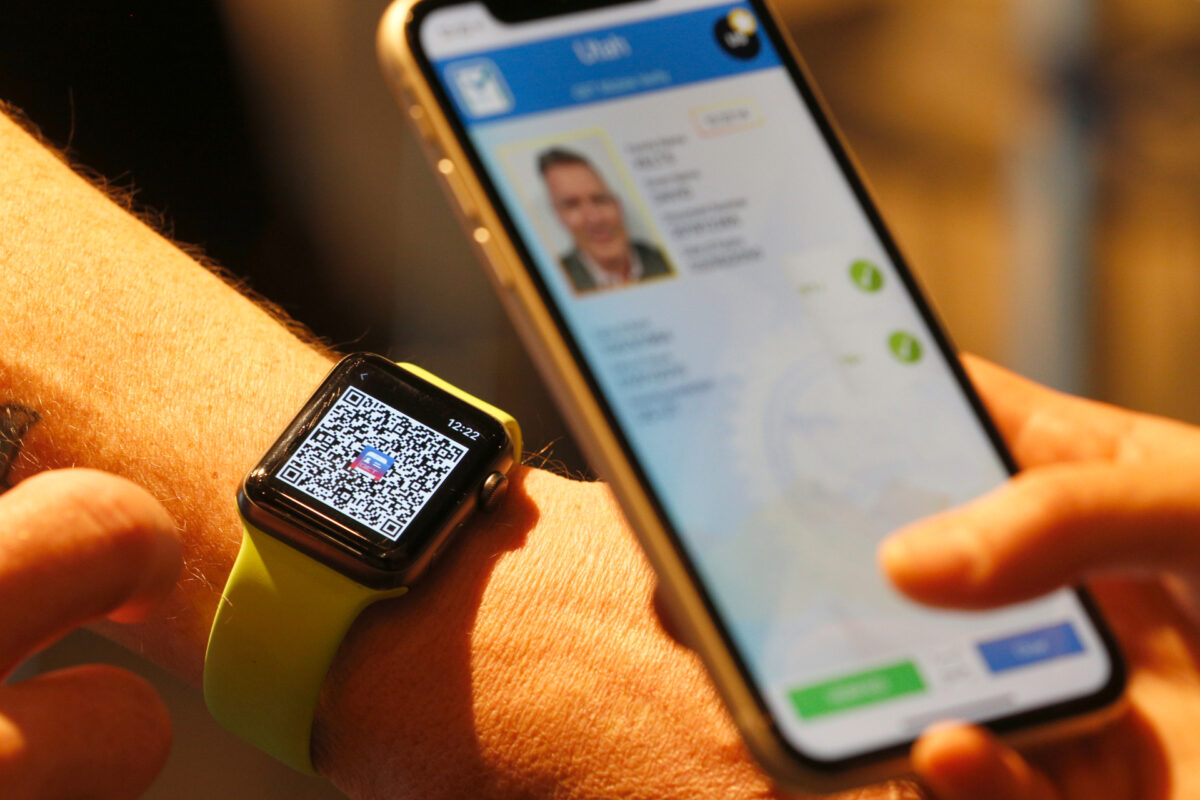

Ottawa says it has no plans to introduce a mandatory national digital identification system and is instead prioritizing a billion-dollar project to modernize how Canadians access federal benefits and government services online.
The commitment came in the federal government’s Aug. 19 response to a House of Commons e-petition sponsored by Conservative MP Leslyn Lewis, which called on Parliament to reject current and future proposals for a national digital ID.
“The Government is not developing a mandatory national digital identification system or a centralized database of Canadians’ personal or biometric information,” the government said in a note first reported on by Blacklock’s Reporter.
“Rather, the government is modernizing how Canadians securely access government services online through digital infrastructure.”
The government also said Canadians will continue to access federal services “through the channel of their choice,” including by telephone or in person at Service Canada centres.
The petition, initiated by Edmonton resident Terri-Lyn Vocioni, expressed concern about the federal government’s interest in developing or implementing a digital ID system.
Vocioni wrote that such a system could allow for “extensive collection, storage and linking of personal and biometric data” across government agencies and private organizations.
“Canadians are concerned that a digital ID system could infringe upon the right to privacy guaranteed under the Canadian Charter of Rights and Freedoms,” Vocioni wrote.
The petition closed March 20 with 5,360 validated signatures.
Government’s response
Liberal MP and Employment and Social Development Canada Parliamentary Secretary Annie Koutrakis said in a note that Ottawa is not developing a mandatory national digital ID or a centralized database containing Canadians’ personal or biometric information.
Instead, Koutrakis said, the government is modernizing how Canadians securely access government services online through digital infrastructure intended to improve security, usability and privacy.
The Canadian Digital Service is developing CanadaLogin, a sign-in service intended to allow Canadians to use a single secure method to access participating federal digital services.
Koutrakis said CanadaLogin will replace multiple sign-in methods but will not establish a mandatory digital ID or database.
She said the government is also developing GC Issue and Verify, which will allow participating organizations to issue and verify digital versions of existing government-issued credentials, such as work permits and boating licences.
“The use of digital credentials will remain voluntary and optional,” the government said.
The government has been testing the systems in pilot projects, such as licensing air traffic controllers and issuing temporary resident permits to visitors from Morocco.
$6.64B Benefits Modernization
The digital identity and sign-in initiatives are being developed alongside the much broader Benefits Delivery Modernization (BDM) program, a multi-year overhaul of federal systems used to deliver old age security, employment insurance and Canada pension plan benefits.
Federal documents put the total estimated cost of BDM at $6.64 billion through 2030-2031. The figure covers the broader modernization program, rather than a national digital ID project.
The modernization includes replacing aging systems with a common delivery platform and modernizing service delivery and contact-centre capabilities. The program also includes identity and access-management technology.
Federal briefing material says Canadians currently interact with more than 60 federal systems requiring separate usernames and passwords. CanadaLogin is intended to reduce that fragmentation by providing a common sign-in method for participating services.
 Friends Read Free
Copy
Facebook
Tweet
Friends Read Free
Copy
Facebook
Tweet