
Conservative Leader Pierre Poilievre is proposing legislation that he says will kickstart the construction of pipelines by next year and make up for a lack of progress on major nation building projects.
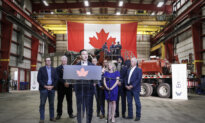
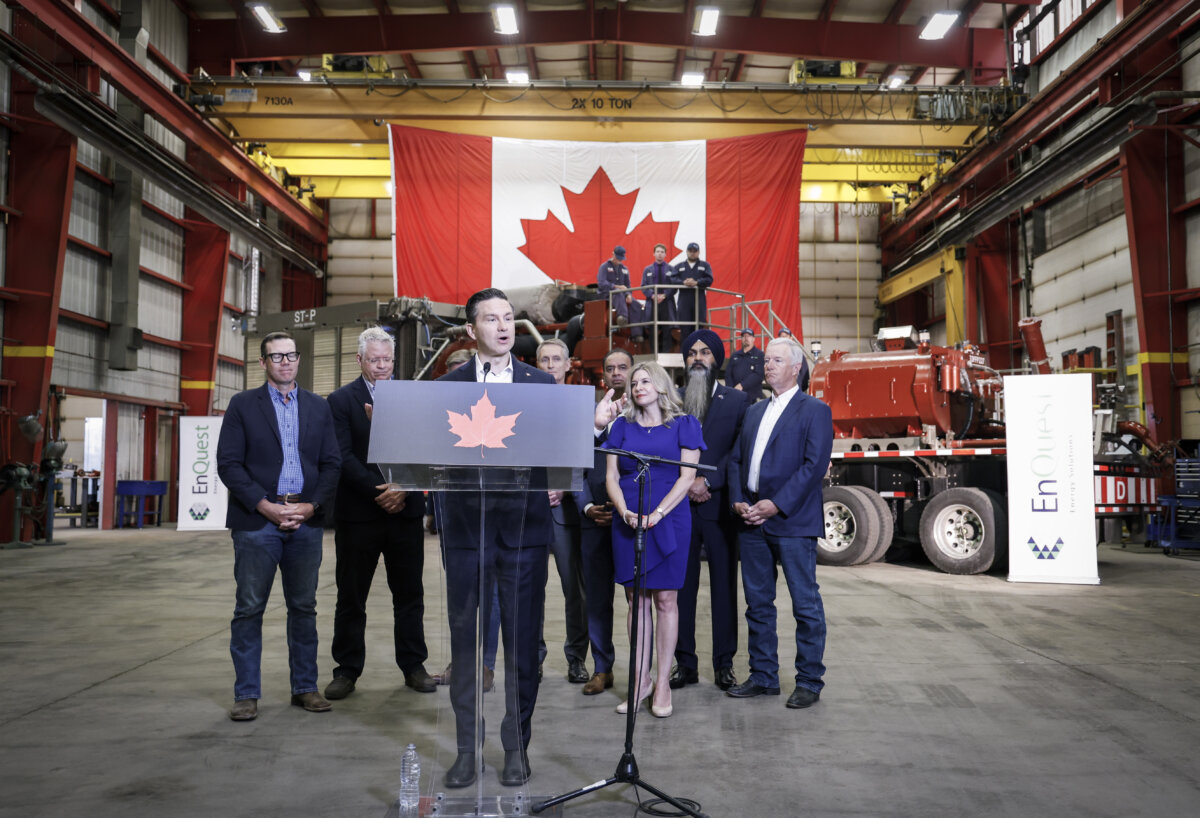
Poilievre unveiled his party’s Canadian Sovereignty Act during an Aug. 7 press conference in Calgary. If passed, the legislation would guarantee construction starts on two pipelines, an LNG project, and a road to Ontario’s Ring of Fire by March 14—the first anniversary of Mark Carney becoming prime minister.
The Canadian Sovereignty Act would also require the industrial carbon tax be scrapped, the oil tanker ban lifted on B.C.’s north coast, the Impact Assessment Act (C-69) repealed, and the emissions cap for the oil and gas sector removed.
Poilievre said Carney and his government “haven’t done anything other than hold a lot of meetings and make a lot of bold statements.”
“Conservatives will ensure Prime Minister Carney’s actions meet the ambition of his words,” Poilievre said during the press conference.
“We have the biggest and best supply of resources anywhere on earth. We should be the richest nation on earth, and yet here we are.”
The Canadian Sovereignty Act also calls for the reversal of the electric vehicle (EV) mandate, and elimination of the capital gains taxes on reinvestments in Canada, along with paying out trade bonuses to provinces that establish free trade with other provinces. The legislation would also protect Canadian inventions and innovations from being sold to foreign nations.
Poilievre said the new bill will be put forward when Parliament reconvenes next month, citing the need to act urgently in the face of U.S. President Donald Trump’s tariffs on Canadian goods, which he described as “unjust, illegal, and deeply damaging to workers, businesses and economies on both sides of the border.”
Trump increased tariffs on Canadian products from 25 to 35 percent on Aug. 1, while still allowing goods under the United States-Mexico-Canada Agreement (USMCA) to be traded without duties. However, Canada is still subject to higher sectoral tariffs, including a 50 percent levy on aluminum, steel, and copper, and 25 percent on auto parts.
The tariffs were imposed after Ottawa failed to reach a trade agreement with Washington before the Aug. 1 deadline.
Carney has said he is still negotiating the best possible deal for Canada, adding that Ottawa “will act to protect Canadian jobs, invest in our industrial competitiveness, buy Canadian, and diversify our export markets.”
Carney announced more than $1.2 billion on Aug. 5 in additional support for Canada’s softwood lumber industry after Washington raised duties on Canadian softwood lumber to 20.56 percent July, and as high as 35 percent tariffs on some lumber exporters.
Carney said that “Canada is in a strong position,” with “over 85 percent” of its trade remaining tariff-free under the USMCA, and has numerous industries and companies which are essential to the complex U.S. supply chain. The Bank of Canada said earlier this week that 95 percent of Canada’s goods exported to the U.S. are currently tariff-free.
Poilievre said Carney’s promises to stand up for Canada against Trump’s tariffs “have not been kept,” and said that the Liberal’s One Canadian Economy Act, does not go far enough to fast-track projects in the national interest and tap into Canada’s industrial and energy potential.
Poilievre said the Conservatives are ready and willing to help the Liberal government get “the best deal for Canada” in tariff negotiations and move forward united, but said more needs to happen to get Canada’s economy moving.
Once the Tories present the proposed bill, Poilievre said they will work with all parties in Parliament to secure its passage.
 Friends Read Free
Copy
Facebook
Tweet
Friends Read Free
Copy
Facebook
Tweet