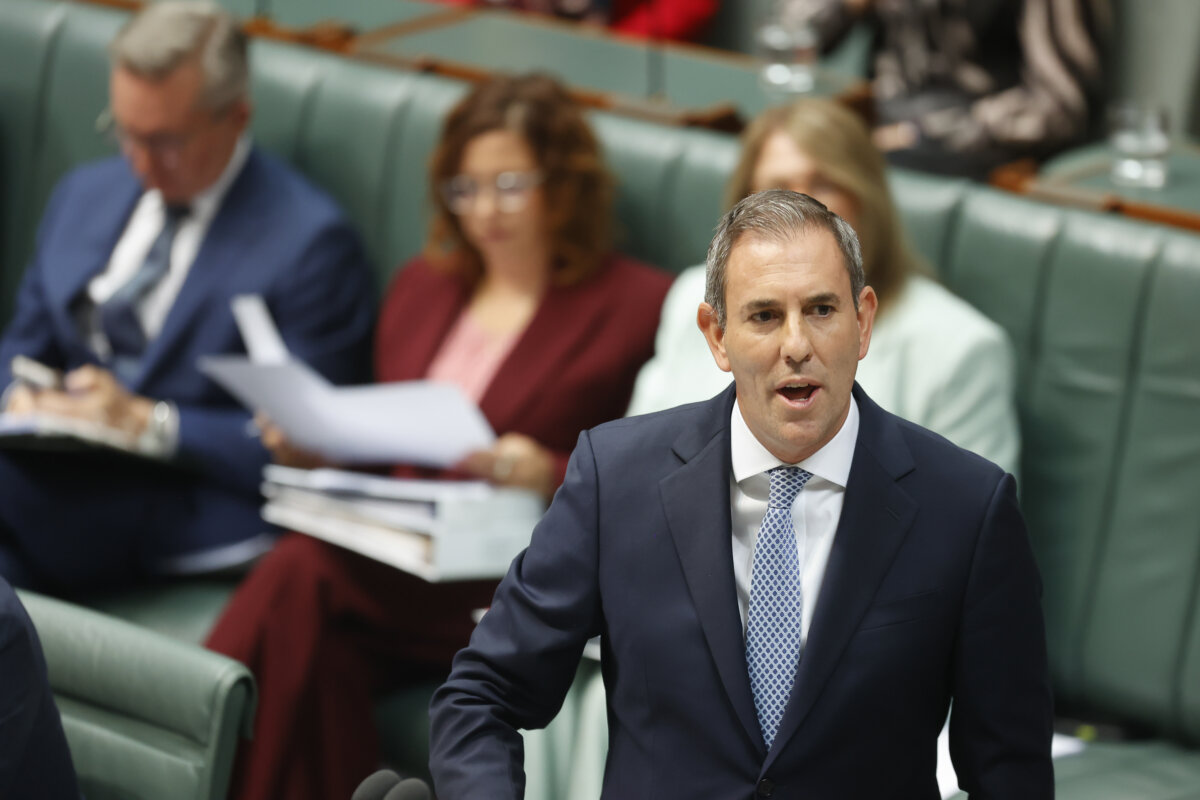

The Reserve Bank’s decision to lift interest rates landed squarely on the first Question Time of parliament this week, shifting the chamber’s focus to mortgages, inflation and responsibility.
Opposition Leader Sussan Ley took aim telling Prime Minister Anthony Albanese the average mortgage holder was already paying about $21,000 more a year in interest costs under Labor.
“The prime minister promised Australians we had, quote, turned the corner on inflation, and that his government had it, quote, under control … When will the treasurer’s reckless spending end?” she said.
Prime Minister Anthony Albanese pushed back, insisting inflation had eased significantly since Labor took office.
“When we were elected … inflation had a six in front of it. It’s now got a three in front of it,” he said, pointing to budget surpluses and debt reduction.
“And as the Reserve Bank has said, the budget is not the main game when it comes to inflation.”
Yet a few minutes later, the Reserve Bank of Australia officially lifted the cash rate by 25 basis points to 3.85 per cent after last cutting and holding them at 3.6 percent in August.
Questions Hone in on Inflation
This emboldened the opposition and crossbench.
Shadow Treasurer Ted O’Brien pressed Treasurer Jim Chalmers on whether he would take responsibility for, what he called, the 13th interest rate rise under Labor.
Chalmers urged the opposition to read the RBA’s statement, insisting it “does not mention government spending at all,” saying it makes clear inflation pressures are coming from stronger-than-expected private demand, not public spending.
Public demand, he argued, has eased, inflation remains higher than desired, and cost-of-living relief is still required despite improved budget conditions.
Nationals leader David Littleproud, now seated on the crossbench, probed Chalmers on when he would “apologise to all mortgage holders in Australia.”
Chalmers pivoted to the recent Coalition split.
“I thank the leader of one of the three far-right parties in this country for his question,” he said.
“They all desperately wanted interest rates to go up today. It’s the only thing that they can agree on right now, Mr. Speaker. So they should spare us their confected outrage. They left us [with] much higher inflation.”
Deputy Nationals leader Kevin Hogan followed with a question citing economists, including Shane Oliver, who have argued government spending is adding to inflation.
Chalmers responded by again pointing MPs to the Reserve Bank’s statement.
O’Brien returned to the dispatch box, quoting another economist and pressing the same line of attack.
Chalmers deflected.
“One of the problems with them not talking to each other over there is his mate over asked the same question,” the treasurer said.
O’Brien later asked whether Chalmers could guarantee there would be no further rate rises this year. Chalmers replied that he should know the Reserve Bank sets rates independently.
“They want to pretend the government sets interest rates,” he said.
The opposition stayed on the same train of thought, with O’Brien asking whether Chalmers would take responsibility for “high inflation, rising interest rates, plummeting consumer confidence and falling real wages.”
Chalmers said he took responsibility “for all aspects of my job”—before turning the criticism back on the Coalition.
“I think what makes it especially galling to get this question from those opposite, Mr Speaker, is because they left us with inflation north of six percent and absolutely galloping,” he said.
 Friends Read Free
Copy
Facebook
Tweet
Friends Read Free
Copy
Facebook
Tweet