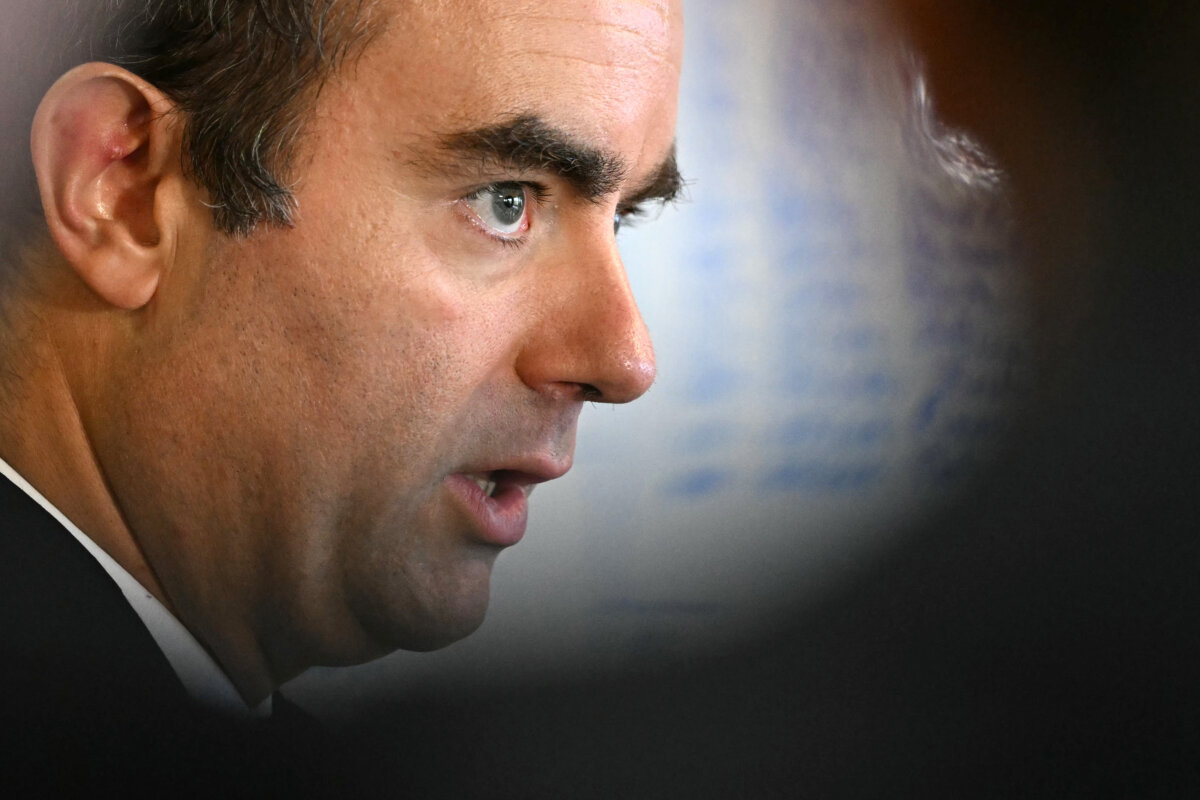

France’s freshly reappointed Prime Minister Sébastien Lecornu began installing his government on Oct. 12 under pressure to produce a budget to steady the political crisis that is worsening the country’s economic troubles.
Lecornu, 39, regarded as a centrist and an ally of President Emmanuel Macron, resigned from his position as prime minister on Oct. 6 after just 27 days, but was reappointed by Macron on Oct. 10.
The new Cabinet includes several familiar faces from previous governments, drawn from Macron’s camp. It also includes allied conservatives and fresh faces from outside the political sphere.
The prime minister will now have to seek compromises to avoid an immediate vote of no confidence in the deeply fractured National Assembly. The president lacks a working majority, with support from within his own ranks fading. This has led to an impasse over key legislation, including a budget.
Lecornu, a former defense minister, is France’s fourth prime minister in barely a year and was initially appointed by Macron on Sept. 9.
Both the right-wing National Rally and the left-wing France Unbowed have said they will put forward a vote on Oct. 13 calling for Macron to resign, which will leave the president dependent on the Socialist Party to avoid a vote of no confidence.
Immediately after the president’s office announced the new Cabinet, the conservative Republicans Party stated that it was expelling its six party members who agreed to join the government.
Familiar and Fresh Faces
Among new appointments is Defense Minister Catherine Vautrin, who previously served as minister for work, health, and families. She will help oversee French military support for Ukraine in its ongoing conflict with Russia.
Paris police chief Laurent Nuñez, who was in charge of security for the 2024 Olympics, will become interior minister, in charge of national security.
Roland Lescure has been appointed finance minister, responsible for immediately producing a budget that will pass through Parliament.
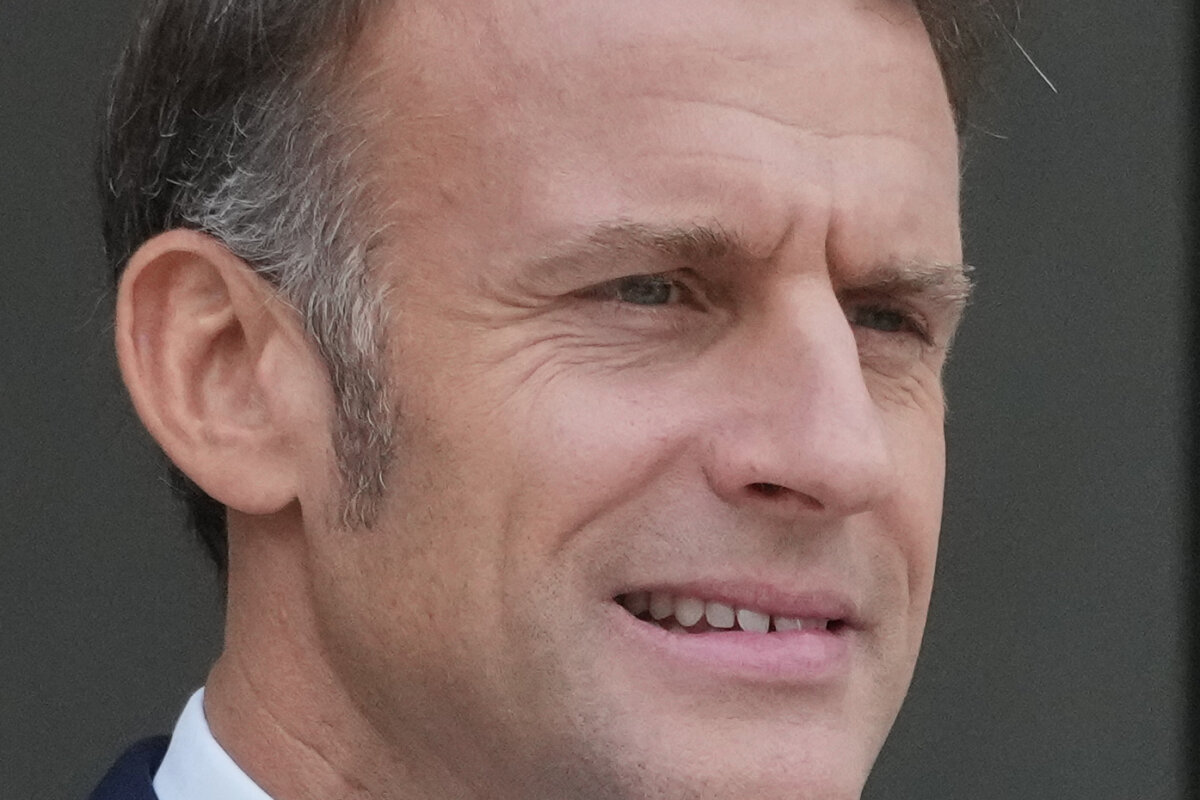
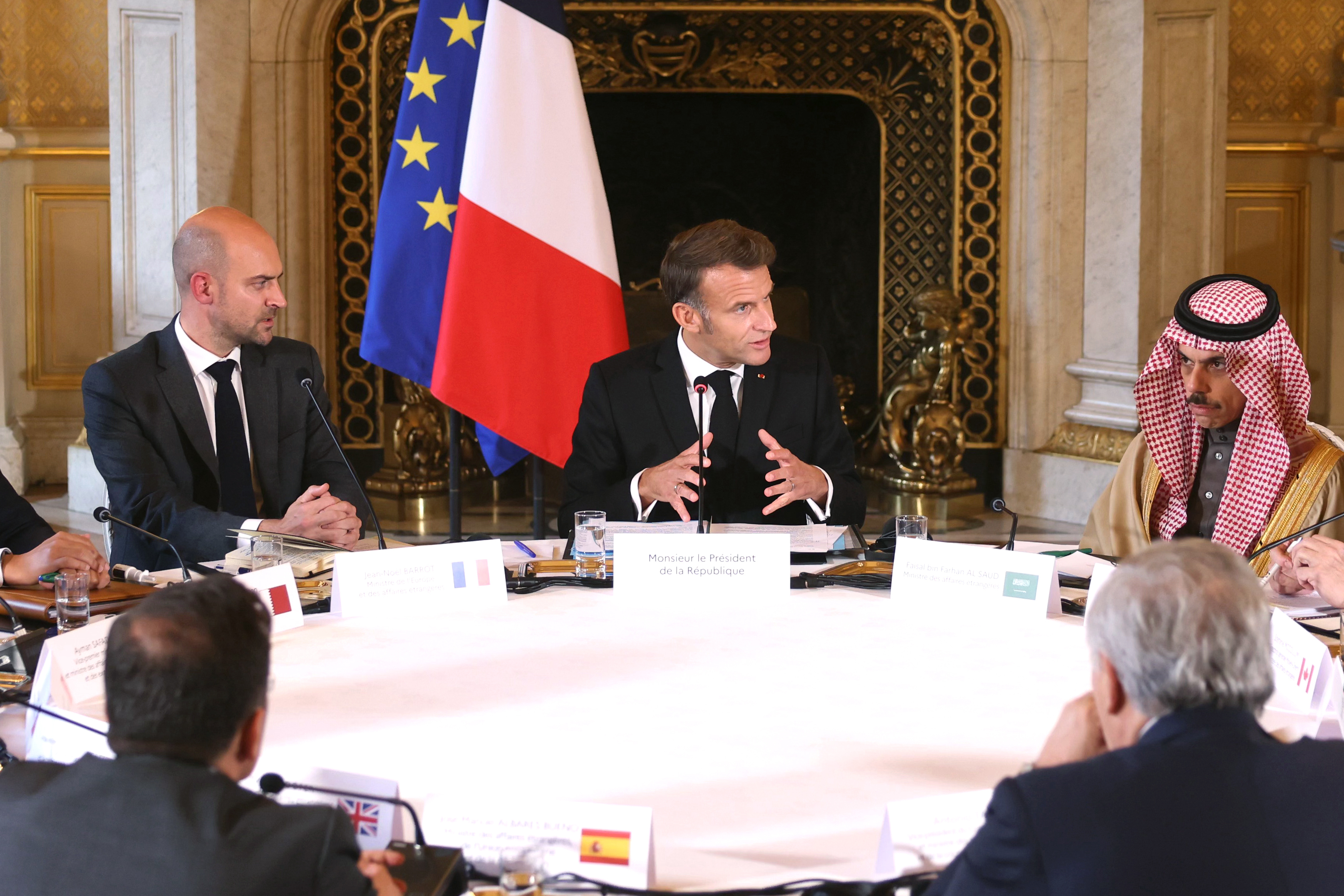
Those keeping their jobs include Foreign Minister Jean-Noël Barrot, who accompanied Macron to Egypt on Oct. 13 for an international ceremony welcoming the cease-fire in the Gaza Strip.
Lecornu appointed his first government a week ago, but resigned hours later amid protests by a key conservative coalition member, unleashing days of political uncertainty.
Unions and left-wing activists protesting planned cuts to public services had staged three days of nationwide protests since Lecornu’s initial appointment, including one that shut down the Eiffel Tower on Oct. 2.
Unpopular Pensions Reform
Lecornu could now be forced into a U-turn over a deeply unpopular pension reform that was a signature policy of Macron’s second presidential term. Rammed through Parliament without a vote in 2023 against a backdrop of mass protests, it is intended to gradually raise the retirement age from 62 to 64.
Macron’s predicament is based on his decision in June 2024 to dissolve the National Assembly, the French Parliament’s lower house, in the hope of gaining a stronger hand. The gamble failed, with his Ensemble pour la République coalition losing 86 seats, placing government bills at the whim of the opposition parties.
The Nouveau Front Populaire coalition is now the largest party in the National Assembly. The National Rally, led by Jordan Bardella, also gained a significant number of seats in the 2024 election.
Former National Rally leader Marine Le Pen, who finished a close second to Macron in the last presidential race, wrote on X, “The President of the Republic must announce the dissolution of the National Assembly as quickly as possible to allow the French people to express themselves and choose a new majority of rupture, which, without a doubt, will be led by Jordan Bardella.”
Economic Troubles
Macron was elected for his second term in 2022, with another presidential election not due to take place until April 2027. No French president has been removed from office since the start of the Fifth Republic—the modern era of French politics—which began in 1958.
France has been plunged into crisis in recent years, as a series of minority governments have struggled to pass deficit-reduction measures through Parliament, which is split between three ideological blocs.
The eurozone’s second-largest economy faces a mounting debt crisis that has worried domestic businesses, global financial markets, and European Union partners.
Lecornu’s predecessor, François Bayrou, was ousted in a no-confidence vote on Sept. 8, after being appointed to the job by Macron in December 2024.
The prime minister acknowledged on Oct. 11 that there were not “a lot of candidates” for his job and that he might not last long in the post, given the country’s deep political divides.
“If the conditions were no longer met again, I’d leave,” he told La Tribune Dimanche. “I’m not going to just go along with whatever.”
Lecornu signaled potential flexibility on the issue of the pensions bill on Oct. 11, saying that “all debates are possible as long as they are realistic.”
If he fails to secure parliamentary support, France would need emergency stop-gap legislation to authorize spending after Jan. 1, 2026, in the hope that a budget could be voted through by then.
The Associated Press, Reuters, and Chris Summers contributed to this report.
 Friends Read Free
Copy
Facebook
Tweet
Friends Read Free
Copy
Facebook
Tweet