
Immigrants who file an asylum claim today won’t receive a decision from the Immigration and Refugee Board for nearly four years, the board’s chair says.
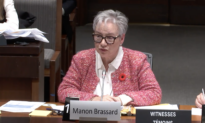
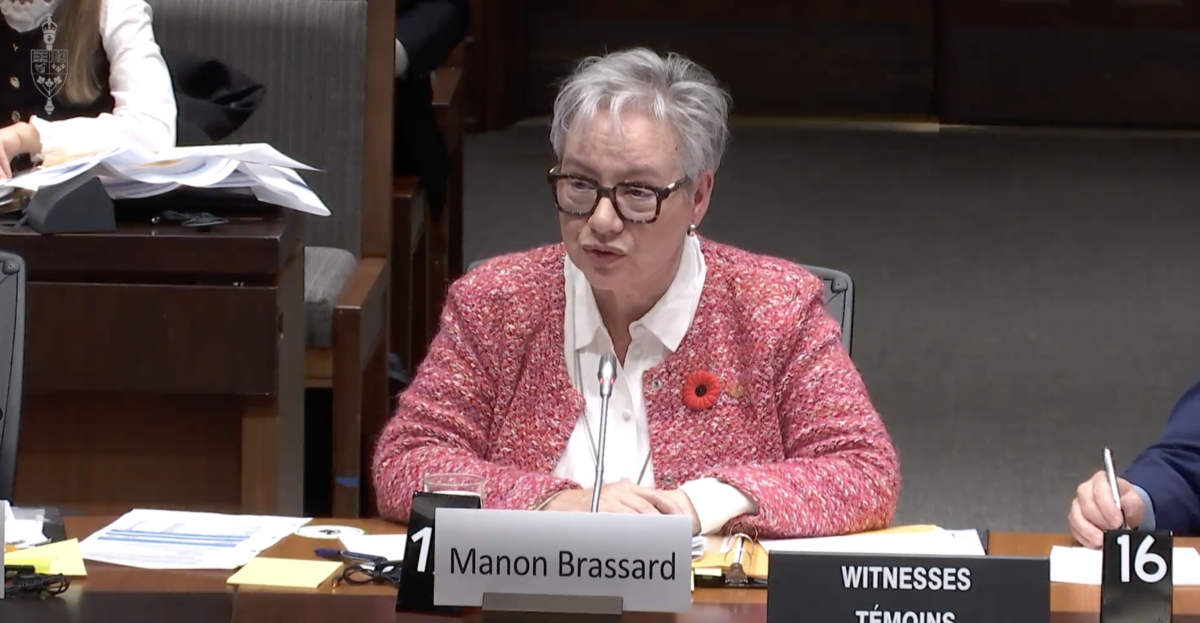
Immigration and Refugee Board (IRB) chair Manon Brassard told the House of Commons immigration committee on Nov. 6 that “two years of historically high level intake” led to a backlog of asylum claims. She said the backlog has increased by more than five times since 2022, rising from 54,000 claims to 290,000 claims, and will take nearly four years to process.
“Given our ability to finalize about 80,000 a year, it would be about 44 months,” Brassard told MPs on the committee, which was first covered by Blacklock’s Reporter.
There were 154,000 claims in fiscal year 2022-23 and 176,000 claims in 2024-25, Brassard said. She noted that last year the IRB was funded for 60,000 claims and it finalized 78,000, much higher than the average over the previous 10 years when the IRB finalized an average of 26,000 claims annually.
Bloc Québécois MP Mario Simard cited a 2017 tweet by then-Prime Minister Justin Trudeau, saying it contributed to the “record number” of asylum claims in Canada from 2022 to 2025.
“To those fleeing persecution, terror & war, Canadians will welcome you, regardless of your faith,” Trudeau tweeted in January 2017.
Simard said the tweet likely influenced the volume of asylum applications at a time when people obtain much of their information from social media. He illustrated this point with his own experience after helping a family from El Salvador to remain in Canada in 2023. He said his office experienced “a snowball effect” from that and was flooded with claims.
“My riding office ended up with an absolutely uncountable number of asylum seekers asking for help,” Simard said.
Security Screenings
Brassard also told the immigration committee that preliminary security screening for individuals crossing the border and for asylum seekers typically requires six to eight months.
Conservative MP Costas Menegakis questioned the impact this has on the country, calling it “astonishing.”
“In those six to eight months, we don’t know if they’re safe to be in the country, because we’re waiting for a security screen,” Menegakis said. “In those six to eight months, they’re collecting all the benefits… while they’re here as asylum seekers.”
Brassard told the MP the Canada Border Services Agency (CBSA) is “working very diligently at this.”
“Asylum seekers get to jump the queue” Menegakis replied. “They get in front of all the other immigration streams, and this is an easy way for them to get in.”
Asylum Claims Amnesty
The issue of increased numbers of asylum claimants is addressed in the Liberal government’s Budget 2025, tabled on Nov. 4. It proposes a “one-time initiative” to recognize some of the hundreds of thousands of asylum seekers, who have entered Canada in recent years, as permanent residents.
“This practical step is a reflection of the fact that the vast majority of these people cannot return to the country of their origin,” the budget reads.
“It will also ensure that those in genuine need of Canada’s protection have their permanent status recognized, accelerating their full integration into the Canadian society and their path to citizenship.”
The budget says the amnesty measure will cost $120.4 million over four years, starting in the 2026-27 fiscal year, which accounts for the costs for the immigration department and the CBSA to process the additional applications.
Statistics Canada data shows the country had 497,443 total asylum claimants and protected persons in the third quarter of 2025. The budget doesn’t specify how many asylum seekers would be fast-tracked through the proposed initiative.
The budget says the government’s plan to bring immigration levels back to “sustainable levels” will “restore control, clarity, and consistency to the immigration system, while maintaining compassion in our choices and driving competitiveness in our economy.”
 Friends Read Free
Copy
Facebook
Tweet
Friends Read Free
Copy
Facebook
Tweet