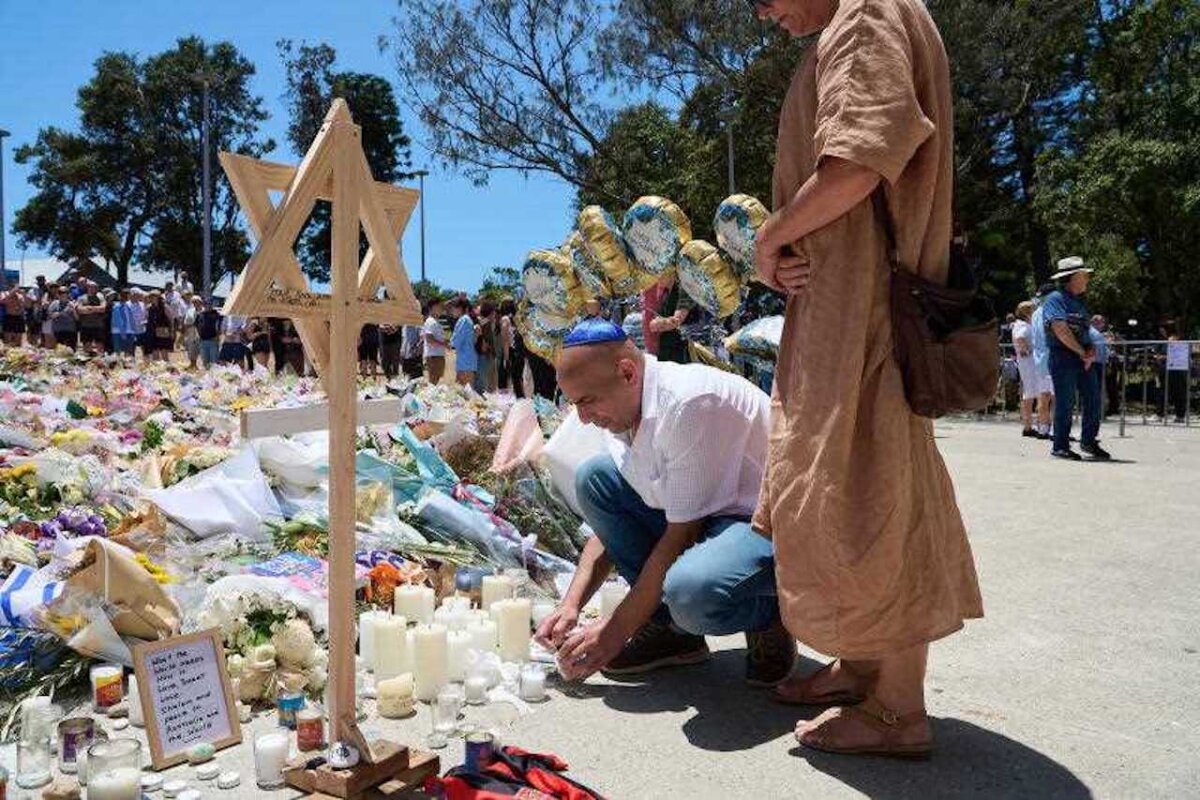

The Royal Commission’s interim report into the Bondi Beach terror attack has been criticised for not devoting enough attention to “Islamic extremism.”
The report, released on April 30, makes only a passing reference to the Oct. 7 attacks by Hamas and their global ripple effects, noting a rise in anti-Semitism in Australia and globally.
It does not directly address Islamic extremism or radicalisation as a possible cause.
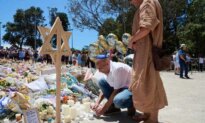
The commissioner, former High Court Justice Virginia Bell, also makes clear the inquiry will not examine the “motive” of the shooters—police have stated they were motivated by ISIS ideology—behind the Bondi massacre that killed 15 people and injured 40.
“The report’s credibility is undermined by its failure to address the issue of radical Islamist extremism. No serious analysis of the lead-up to the Bondi massacre can ignore this,” said Robert Gregory, CEO of the Australian Jewish Association, in a statement posted on X.
The report also found no gaps in Australia’s counter-terrorism, immigration, or law enforcement frameworks and said no urgent legislative changes were needed.
This has also drawn criticism from the group.
“There were serious failings by multiple agencies. If the legislation is adequate, then these failings are inexplicable,” he added.
The view was shared by One Nation’s Pauline Hanson who said radical Islam was the “elephant” in the room.
“The report mentions firearms more than 150 times while barely mentioning Islam at all,” Senator Hanson said in a statement.
“Radical Islam is the elephant in the Royal Commission’s room. The vast majority of terrorism attacks around the world have been committed in the cause of radical Islam and that was certainly the case at Bondi.
“This inquiry is supposed to be about social cohesion, but we have a system which actively works against it by allowing immigration by people who have absolutely no interest in assimilating with a cohesive Australian society.”
Jailed shooter, Naveed Akram, interacted with hardline Islamists previously and was briefly investigated by the Australian Security Intelligence Organisation in 2019.
Families Still Seek Answers
Alex Ryvchin, co-chief executive of the Executive Council of Australian Jewry said families were still seeking clarity.
He said the report confirms the legal framework is adequate, but responsibility now lies with authorities to act effectively.
“Clearly, the Commissioner feels like the legal framework is adequate to deal with the threat. There’s now responsibility, obviously, on leaders of all varieties, civic and political, on law enforcement, to then act appropriately within the legal powers which are handed to them to keep Australians safe.”
He said the human cost remains central.
“Ultimately, the proof in the failure is in the fact that we buried 15 of our dead at Bondi,” he said.
Ryvchin said families and survivors still have unanswered questions around how the attackers obtained weapons, travelled despite being known to authorities, and planned the attack in plain sight.
“These are still burning questions, which really haven’t been resolved, but as I said, this is an interim report. There’s a process here, and we have faith, ultimately in the process of the Royal Commission and the commissioner to ultimately get us to where we need to be.”
The final report is due by the first anniversary of the attack on Dec. 14 later this year.
 Friends Read Free
Copy
Facebook
Tweet
Friends Read Free
Copy
Facebook
Tweet