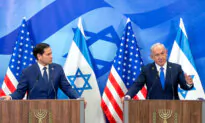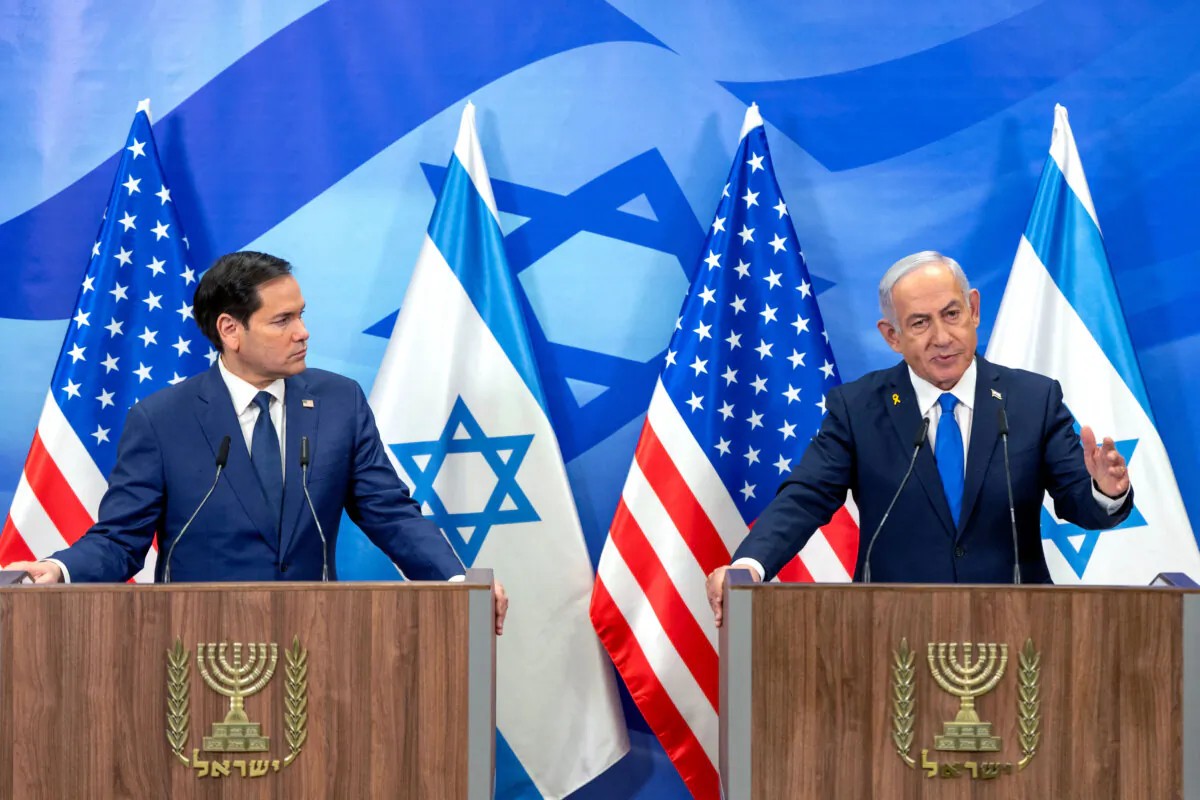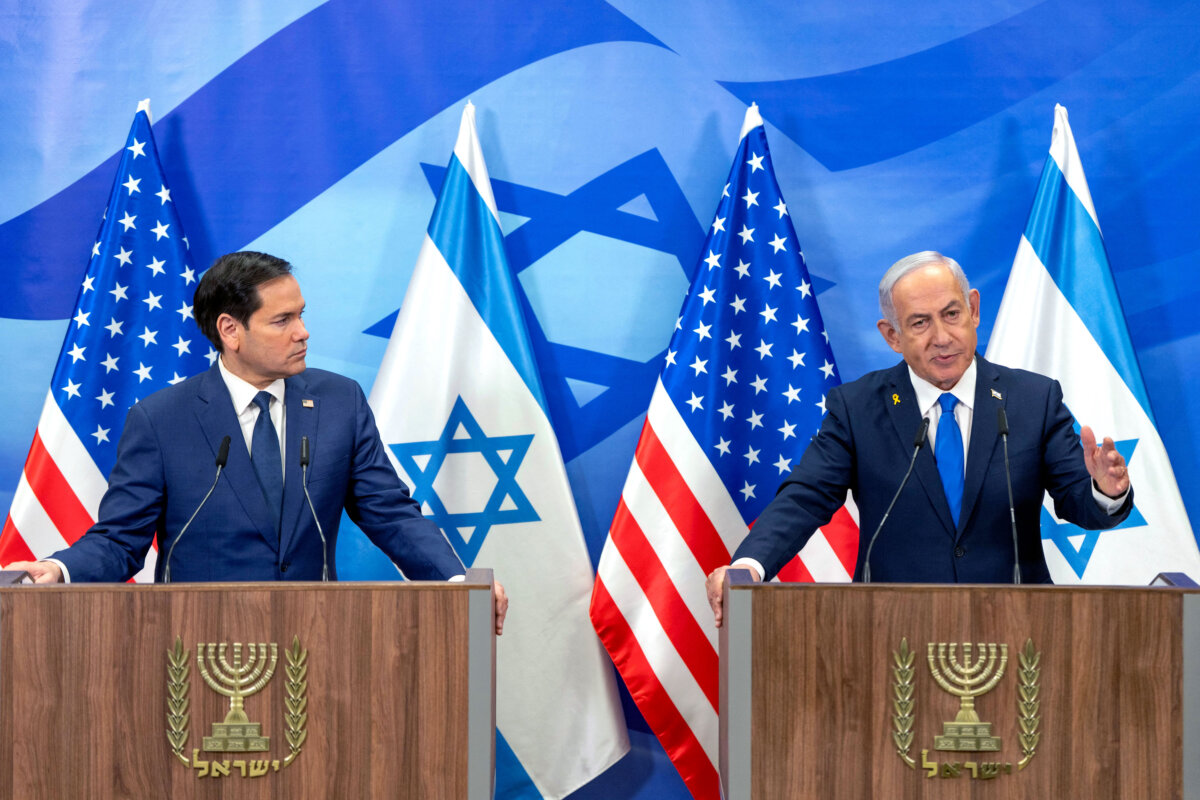

An international security force in Gaza under a cease-fire agreement would have to be made up of countries that Israel is “comfortable with,” U.S. Secretary of State Marco Rubio said on Oct. 24 during a visit to Israel.
Speaking to the media after visiting the Civil-Military Coordination Center in southern Israel, Rubio said that many countries have offered to be part of the force.
“Obviously, as you put together this force, it’ll have to be people that Israel’s comfortable or countries that Israel’s comfortable with as well,” he said. “There are plenty of countries that have offered and are interested in participating.”
Rubio is the latest senior U.S. official to visit Israel in support of implementing the U.S.-brokered peace plan for Gaza. His trip follows visits earlier this week by U.S. Vice President JD Vance, special envoy Steve Witkoff, and President Donald Trump’s son-in-law Jared Kushner.
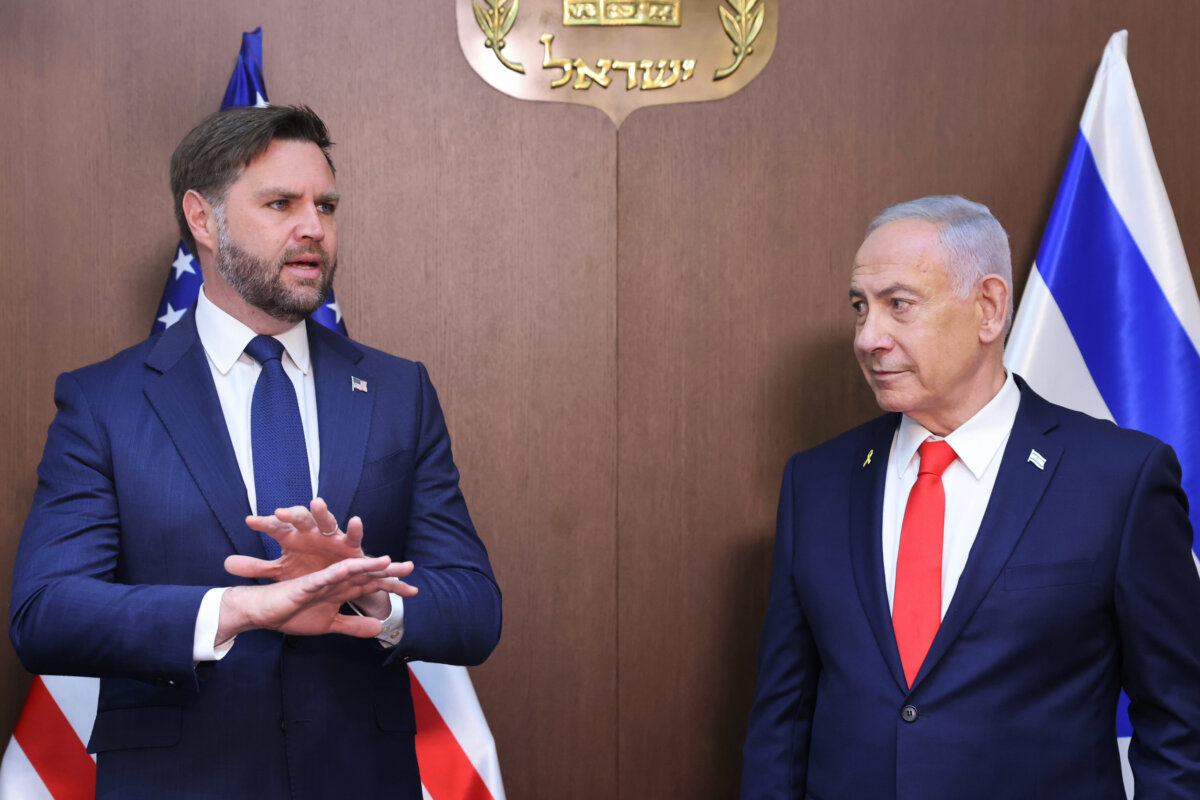
The cease-fire agreement requires the return of all living and deceased Israeli hostages held by Hamas, the disarmament of the terrorist group, and the establishment of peaceful governance in Gaza.
Rubio rejected any role for Hamas or other terrorist organizations in the long-term governance of Gaza, saying that the territory could not include any elements of terrorism, such as tunnels or rockets.
“It cannot be a place that is governed by anyone who wants to use it as a launch pad for attacks against Israel. If it is, then we’ll just be another war,” he said. “Everyone understands that, and everyone that signed on to this deal understands that.”
Speaking about the Palestinian Authority, led by Mahmoud Abbas, and its potential role in Gaza’s future, Rubio said it “certainly needs reform.” He added that its role “is yet to be determined, if any role at all.”
Turkey’s Role in Gaza
Turkey, alongside Egypt and Qatar, has acted as a mediator in the cease-fire deal and has previously said it would join a task force to oversee the implementation of the agreement.
During a press conference with Vance on Wednesday, Israeli Prime Minister Benjamin Netanyahu hinted at his opposition to the possibility of allowing Turkish security personnel inside the Gaza Strip, saying he has “very strong opinions about that.”
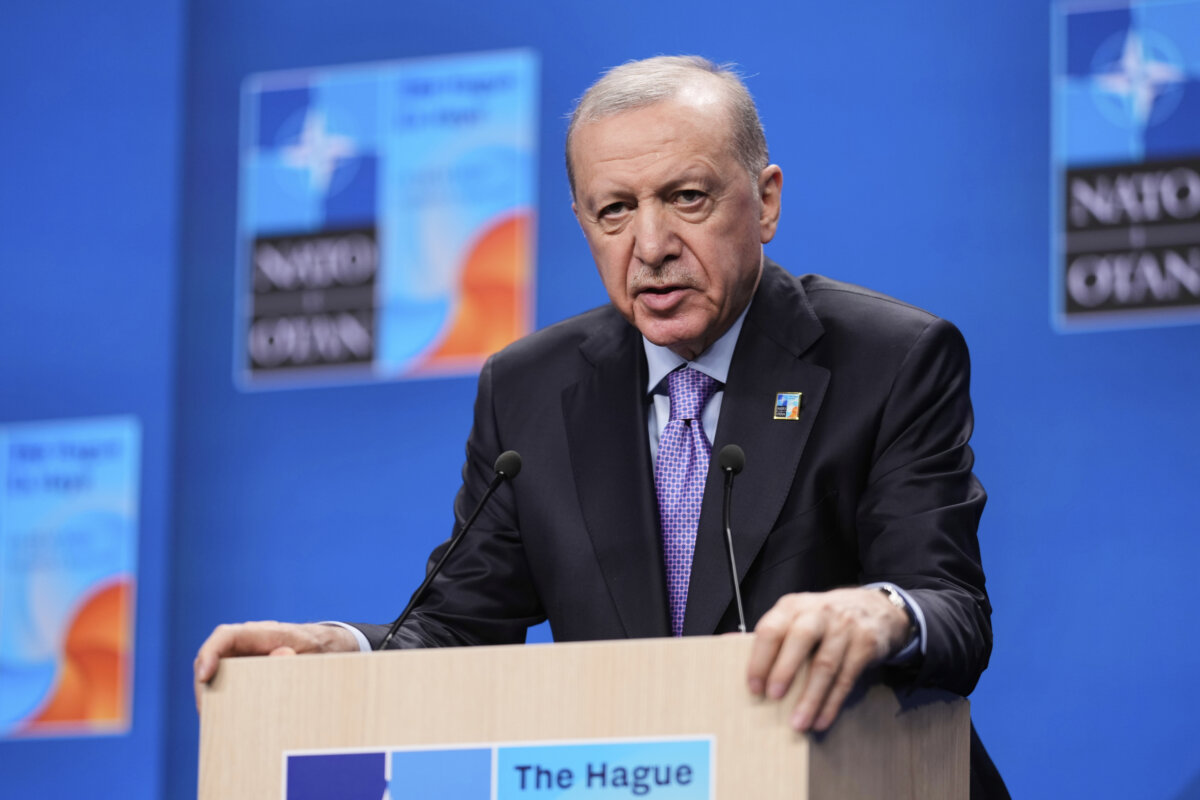
When asked about Netanyahu’s comments on his return flight from a regional Gulf tour, Turkish President Tayyip Erdogan said on Friday that talks were still underway.
“Talks are continuing on the task force that will work in Gaza. The modalities of this are not yet clear. As this is a multifaceted issue, there are comprehensive negotiations. We are ready to provide Gaza any form of support on this issue,” he said.
Earlier this week, Vance announced a new U.S.–Israel Civil-Military Cooperation Center to support Middle East peace efforts. He suggested that foreign troops, possibly from Turkey or Indonesia, could join peacekeeping operations, but noted that the final decision rests with Israel.
Rubio said discussions were ongoing about whether the proposed international security force in Gaza would operate under a U.N. mandate. He noted that some participating countries might require such a mandate under their own laws in order to take part.
He said that several options were being considered, including a possible U.N. resolution or an alternative international agreement.
“We’ll find the right formula to do it,” Rubio said, adding that the United States was already working on language that could establish the necessary framework.
Hostage Commitments and Humanitarian Aid
Rubio said the negotiating parties are currently focused on ensuring the fulfillment of commitments regarding the return of Israeli hostages, including 13 of the 28 bodies that remain in the Gaza Strip, and the elimination of any threats against Israel from Gaza.
“All that work is ongoing,” he said. “The U.S. is doing more than anybody else is for that. The remains are going to be released. That’s going to happen.”
Rubio rejected any role for the United Nations Relief and Works Agency (UNRWA) in delivering humanitarian aid to Gaza, saying, “UNRWA is not going to play any role in it.”
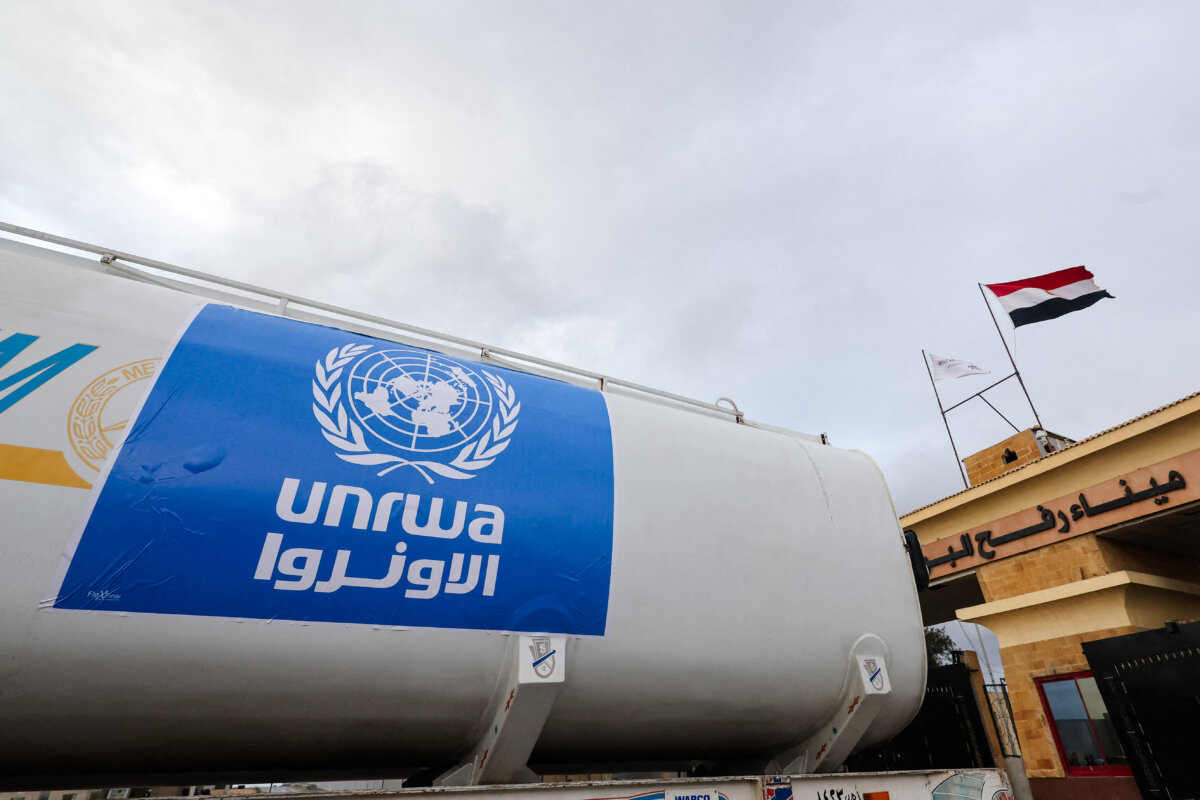
His remarks came a day after the U.N.’s top court issued an advisory opinion requiring Israel to allow U.N. agencies, including UNRWA, as well as other international organizations and third states, to deliver aid to Palestinian territories.
The United States and Israel have condemned and rejected the International Court of Justice opinion, criticizing UNRWA for alleged links to Hamas.
Rubio said the United States is prepared to work with other U.N. bodies and aid organizations, such as the World Food Programme and Samaritan’s Purse, noting that around 8 to 12 agencies are currently operating on the ground.
“The United Nations is here. They’re on the ground. We’re willing to work with them if they can make it work. But not UNRWA. UNRWA became a subsidiary of Hamas,” he said.
Knesset Vote on West Bank
On Wednesday, Israel’s Knesset gave preliminary approval to a bill that would apply Israeli law in the West Bank, a territory Israel asserts its right to settle but which Palestinians claim for a future independent state.
Vance, who was visiting Israel at the time, described the move as an “insult,” calling it a “very stupid” political stunt.
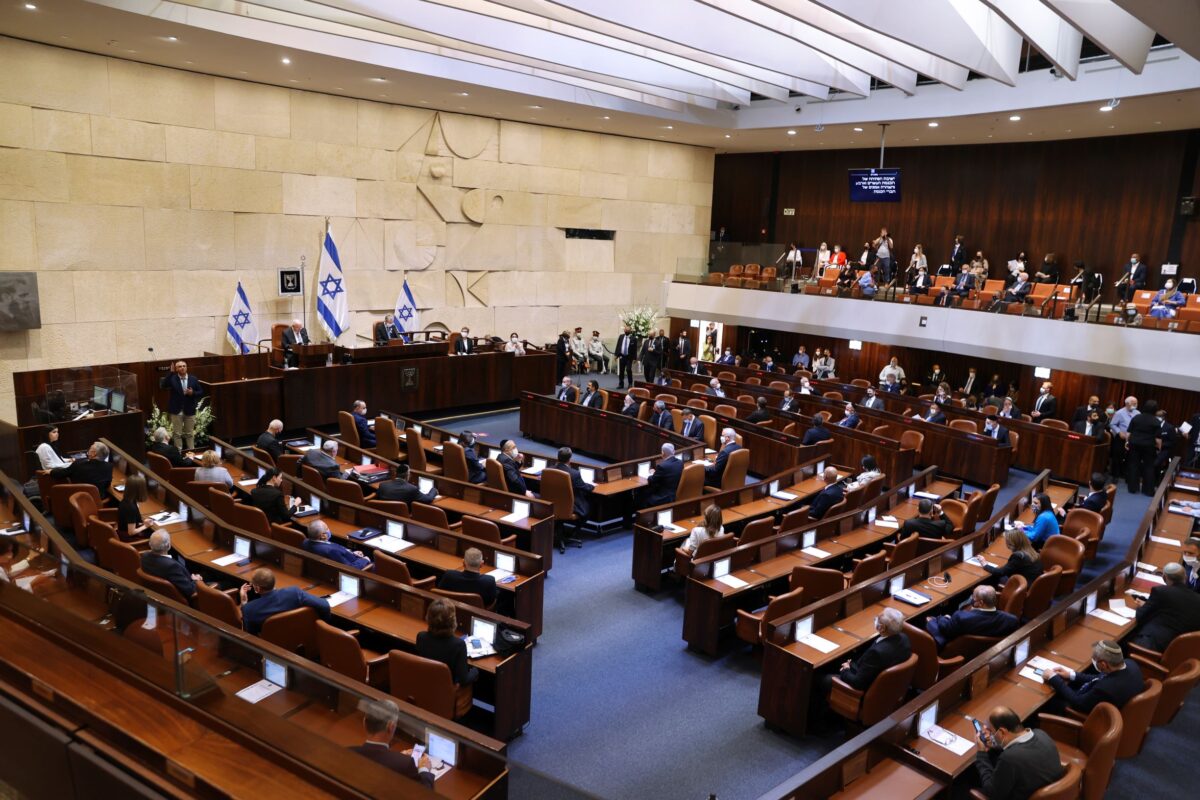
Rubio said he understood the vote to be largely symbolic and politically motivated, explaining that it appeared to be an attempt by some lawmakers to embarrass Netanyahu during Vance’s visit. He said the measure was unlikely to advance further or have any legislative effect, adding that such a move could threaten the broader peace process.
Any effort to formally apply Israeli law to the West Bank at this stage could discourage countries currently engaged in the peace initiative from continuing their involvement, he warned.
Expanding the Abraham Accords
Rubio also addressed the potential expansion of the Abraham Accords, the series of U.S.-brokered agreements that normalized relations between Israel and several Arab nations, including the United Arab Emirates, Bahrain, Sudan, and Morocco.
He said that more countries could be added soon, though details remain confidential.
“I’m not going to mention the country’s names, because it’s up to them to announce it,” he said. “There’s some bigger than others, but we’d like to have as many members of the Abraham Accords as possible.”
Rubio said the State Department continues to dedicate resources to expanding the accords, even as officials are focused on implementing the Gaza cease-fire.
 Friends Read Free
Copy
Facebook
Tweet
Friends Read Free
Copy
Facebook
Tweet