
Russia is increasingly using drone incursions, cyberattacks, sabotage and other covert operations to sow fear, test Western resolve, and weaken backing for Kyiv, but is not planning an imminent direct attack on NATO members, European officials said.
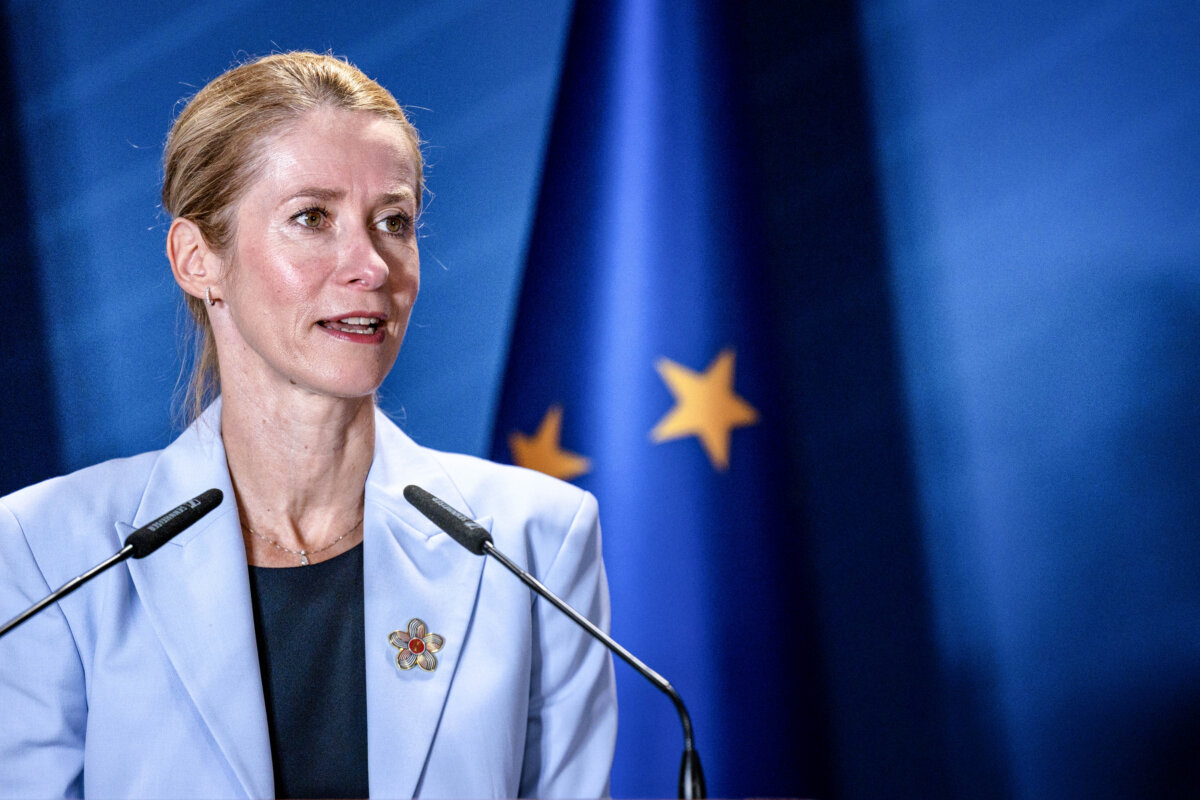
EU foreign policy chief Kaja Kallas told reporters on the sidelines of the U.N. General Assembly this week that Europe is facing a proliferation of sabotage attacks and airspace violations.
“Moscow is trying to scare Europe into winding down its support for Ukraine. As Russia is willing to take greater risks, we also need to impose greater costs,” Kallas said on Monday. “There are many ways to do that, to begin with: stronger action against Russia’s shadow fleet and tougher measures targeting its military-industrial complex.”
Shadow fleet refers to vessels whose obscure ownership and insurance structures allow them to evade detection as Russian-operated entities, often sailing under flags of convenience from other countries.
“Russia’s economy is one of its weakest parts, and we need to increase the pressure on it so that they would stop this war,” she added.
Both Lithuania and Estonia are on NATO’s eastern frontier and have been subject to increased drone incursions in the past several months by both suspected Russian and Ukrainian unmanned aerial vehicles.
Estonian Foreign Minister Margus Tsahkna told Reuters in comments published on Wednesday that predictions of an imminent attack by Moscow on NATO are misplaced.
“We don’t see that Russia is able and even preparing for some kind of active military aggression against NATO or the European countries,” Tsahkna said, adding that Moscow does not have the ability to launch an attack on an ally because its forces are still heavily engaged in its war with Ukraine.
Lithuanian Foreign Minister Kestutis Budrys said allied intelligence suggests there is a risk Moscow could seek to add pressure on NATO through increased hybrid activity, such as attacks on critical infrastructure.
Earlier this month, Polish Prime Minister Donald Tusk cited unnamed intelligence agencies saying that Moscow is planning to launch hybrid drone and missile attacks against countries that are supporting Ukraine.
Moscow has repeatedly denied that it is involved in any kind of hybrid warfare, most recently rejecting claims of involvement in an attempted attack on Leipzig Airport in Germany in August.
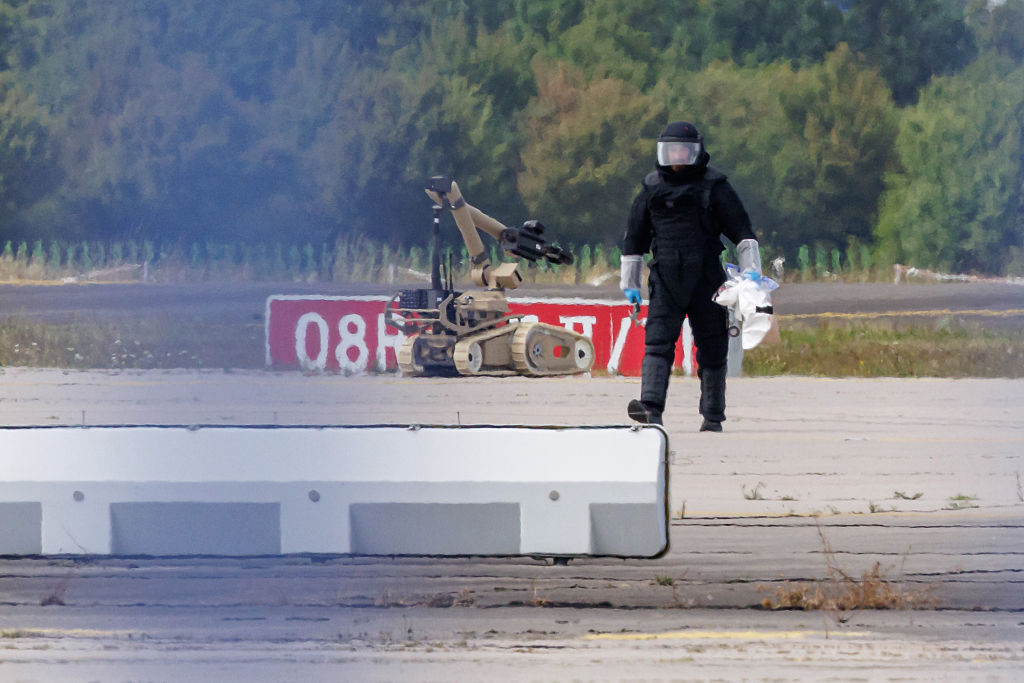 A police investigator works on the tarmac with a robot capable of defusing explosives near a Ukrainian Antonov cargo plane at Leipzig Airport in Germany, on Aug. 5, 2026. (Jens Schlueter/Getty Images)
Airspace Incursions
This week, NATO members on the alliance’s eastern flank scrambled jets in response to possible incursions into their airspace.
The Romanian National Ministry of Defense said on Sept. 22 that two F-16s were monitoring the skies while Vylkove, Ukraine, near the Romanian border, was under attack. No incursions into NATO airspace were detected.
Poland’s Operational Command of the Armed Forces on Sept. 23 said that its fighter craft were scrambled to ensure the country’s safety, while western Ukraine was under attack, including by jet-powered unmanned aerial vehicles (UAVs). Similarly, no airspace violations had been detected.
Romanian Foreign Minister Oana Toiu said that the country had experienced more than 100 incursions by UAVs or drone fragments onto its territory.
Reuters contributed to this report.
 Friends Read Free
Copy
Facebook
Tweet
Friends Read Free
Copy
Facebook
Tweet