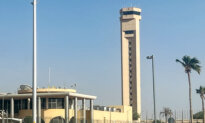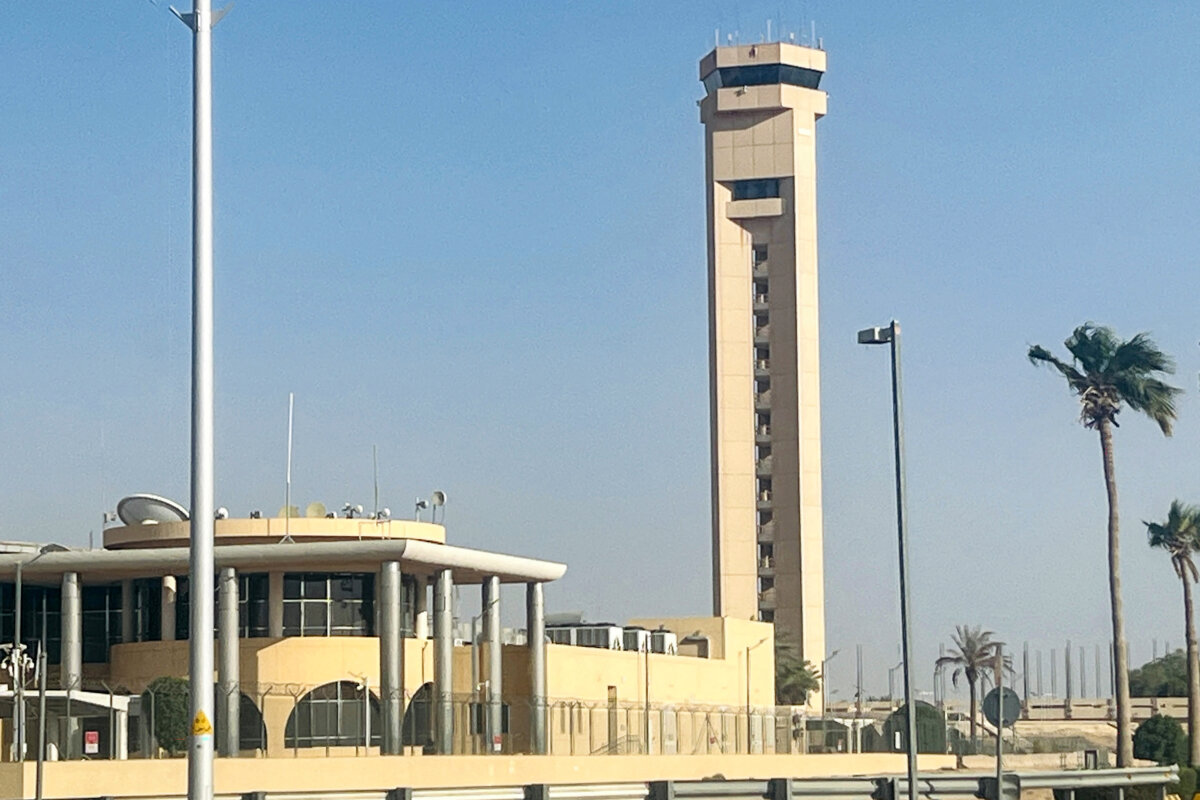

Saudi Arabia has extended the closure of its second-busiest airport after Houthi attacks on the facility over the weekend killed at least 13 people and injured at least 309.
An official aviation notice issued by Saudi aviation authorities on Monday stated that King Khalid International Airport in Riyadh would remain unavailable until 4 p.m. (EST) on Oct. 17 due to “precautionary measures.”
The extension will allow it to “ensure the safety and operational readiness of the airport’s facilities,” the Saudi General Authority of Civil Aviation said in an Oct. 12 post on X.
Continuing attacks by Yemen’s Iran-aligned Houthi terrorist group have left the skies over Riyadh largely empty, prompting airlines across Europe and Asia to suspend services.
The Federal Aviation Administration advised U.S. airlines on Oct. 11 to exercise caution when flying to or over Saudi Arabia.
The U.S. Embassy in Riyadh issued its own alert on Oct. 12, urging American citizens to use “extreme caution” at airports in Saudi Arabia. It also told them to stay alert for possible flight cancellations, travel disruptions, and airspace closures.
The Oct. 10 attack on the Riyadh airport involved a barrage of missiles and drones that Saudi air defenses did not intercept. Saudi Arabia has opened an investigation into how the weapons got through.
The Houthis struck the King Khalid International Airport again on Oct. 11, leaving one person dead and 11 injured, while Saudi aviation authorities reported another attack at King Fahd International Airport in Dammam.
Houthi military spokesperson Brig. Gen. Yahya Saree on Monday urged airlines and travelers worldwide to avoid flying to Saudi airports, which he called “not safe.” He made an exception for the airports and airspace of Mecca and Medina.
Saree renewed warnings on Tuesday, telling workers at all Saudi oil facilities to avoid sites that could be targeted. He also cautioned that any strike on targets in Yemeni capital, Sanaa, “will be met with a harsh and painful response” in Riyadh.
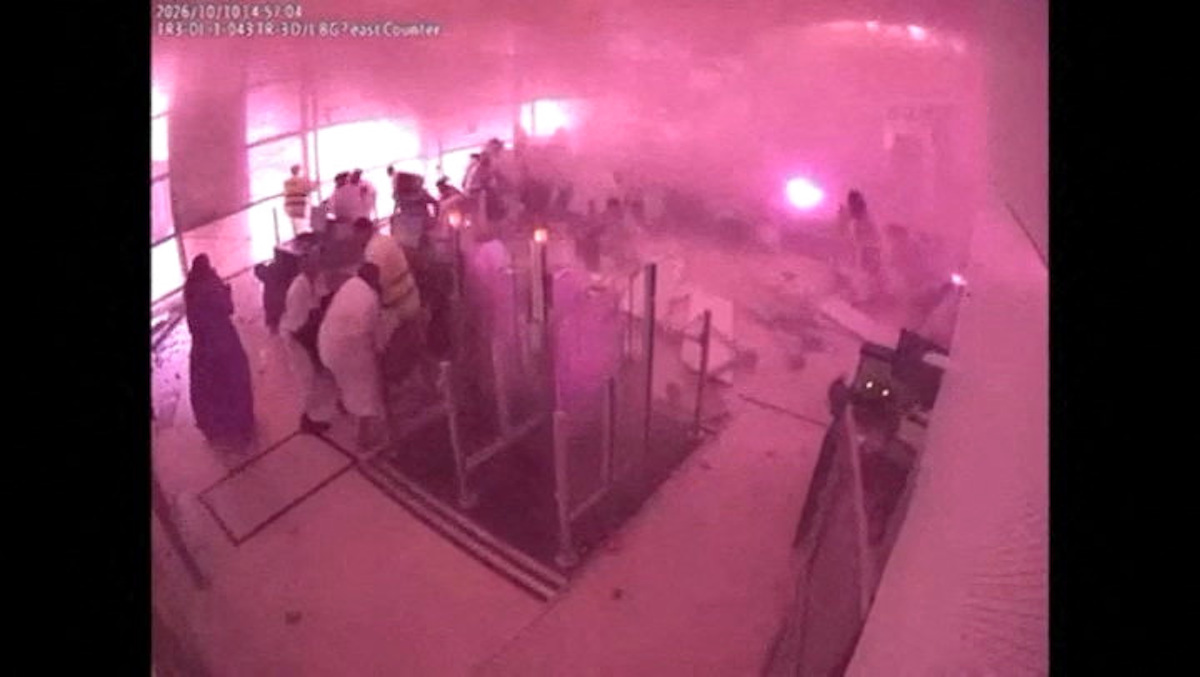 Surveillance footage shows smoke and fire as people react at the moment of an attack at King Khalid International Airport in Riyadh, Saudi Arabia, on Oct. 10, 2026. (Saudi Ministry of Media/Reuters)
The coalition’s military command asked civilians on Tuesday to evacuate the Yemeni Oil Company’s Al-Sabah Central Station in Sanaa. It said the move was for their safety and pointed to an illustrative map of the site.
The fighting among the Houthis, Saudi Arabia, and Saudi-backed Yemeni government forces has expanded over the past few months. The Houthis declared a naval blockade against Saudi Arabia in the Bab al-Mandeb Strait on July 20.
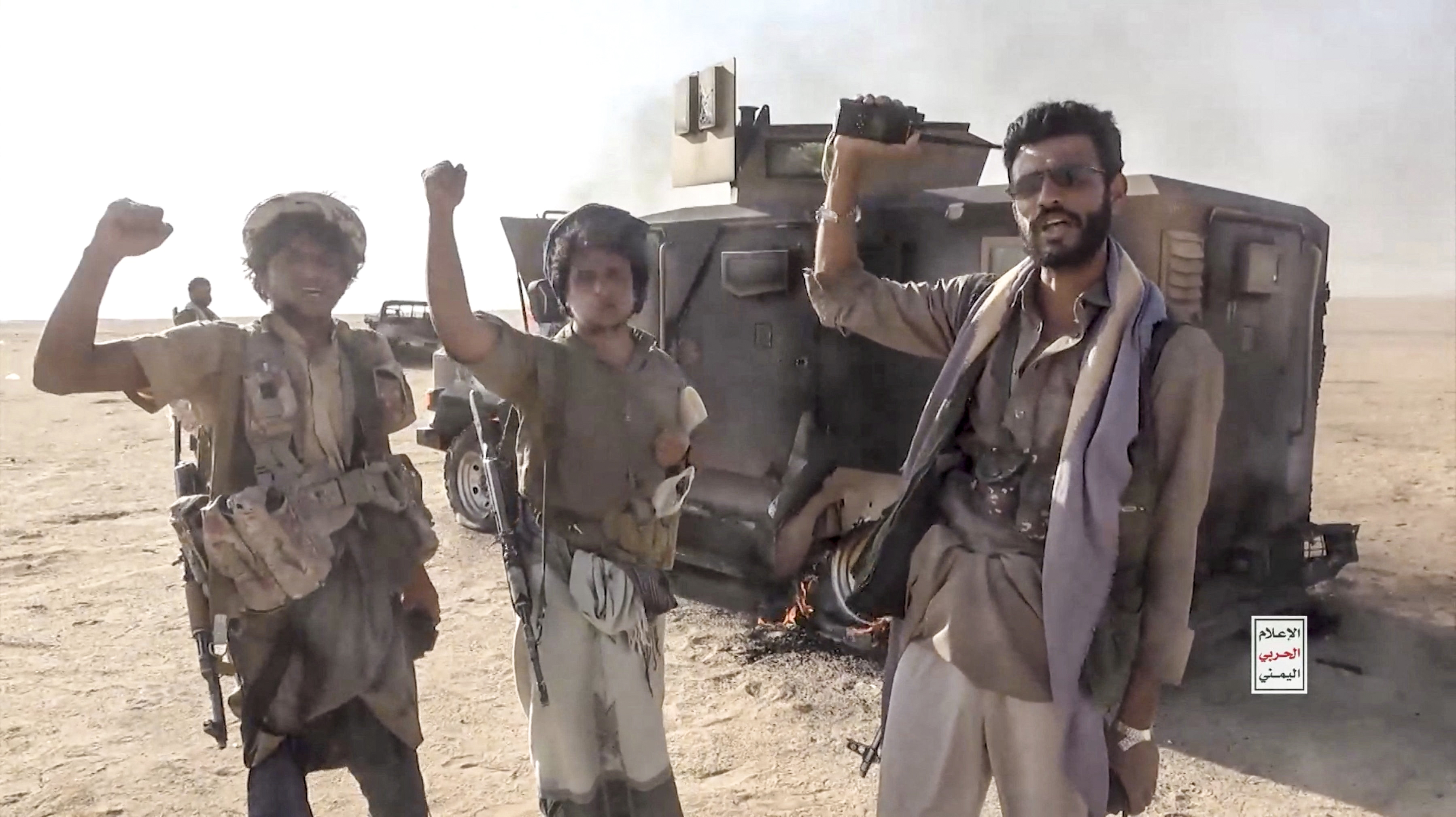 Iran-aligned Houthi fighters pose next to a destroyed vehicle following what the source described as an attack on Saudi-backed forces in the location given by the source as al Jawf governorate, Yemen, in this screengrab taken from a video released by Houthi Military Media on Sept. 15, 2026. (Houthi Military Media /Reuters)
The Houthis launched missile and drone attacks in September against the Saudi cities of Abha, Khamis Mushait, and Jazan. They also targeted Saudi oil infrastructure and the airbase at Khamis Mushait.
On the ground, the Houthis captured Perim Island and the port city of Mokha. They also advanced near Taiz, Hodeidah, and other key locations.
The Saudi-led coalition and Yemeni government forces have since tried to reclaim that territory. Yemeni officials said last week that allied forces had retaken the towns of Bab, Dhubab, and Hadeid near the strait.
Last week, President Donald Trump said that Washington could potentially join future Saudi attacks against the Houthis.
Reuters and Timothy Frudd contributed to this report.
 Friends Read Free
Copy
Facebook
Tweet
Friends Read Free
Copy
Facebook
Tweet