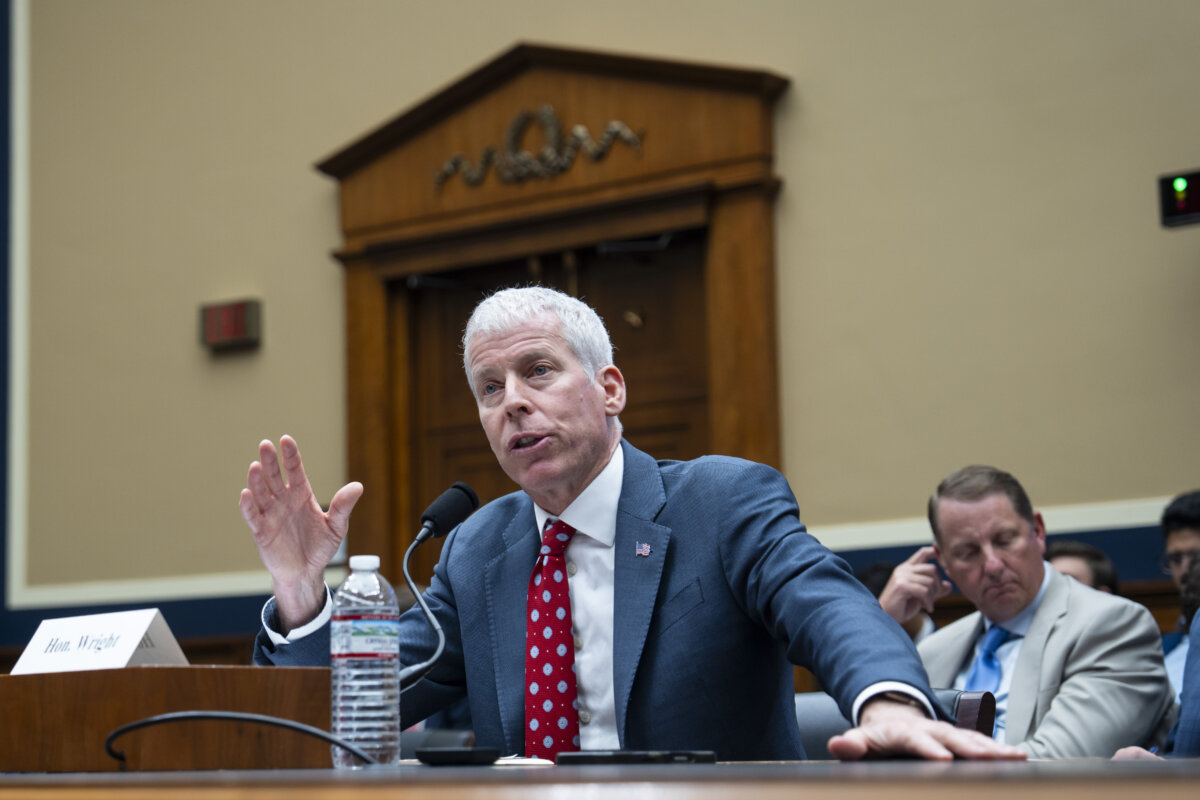

Crude oil flow through the East-West Pipeline of Saudi Arabia should resume in days, U.S. Energy Secretary Chris Wright said on Sept. 15.
The desert kingdom shut off the vital energy artery on Sept. 11, “as a precaution,” after several attacks on the pipeline by Yemen’s Iran-aligned Houthis occurred the day before.
There have been fears that the pipeline, which transports crude from the Abqaiq oil field in eastern Saudi Arabia to the Red Sea port of Yanbu, could be offline for weeks, but Wright told CNBC that it would be back up and running “very soon.”
“Well, look, these are Iran-supported attacks from proxy groups that are doing this, but the Saudis are ingenious, and I think you will see the pipeline running again very soon. This will be a brief and temporary interruption,” he said, adding that the timeframe “will be measured in days.”
Wright also said that the Saudis are taking action to move oil that won’t be flowing through the pipeline while it is out of action “out the Strait of Hormuz with the United States military.”
The energy secretary presented a much more optimistic timeframe for bringing the East-West Pipeline back online than some industry analysts, who have said the conduit could be out of commission for weeks.
Craig Steinke, cofounder and chief executive of BluEnergies Ltd., a West African deepwater oil and gas exploration company, said on Sept. 14 that the pipeline “may take weeks to come online.”
Michael Haigh, head of commodities research at French bank Société Générale, told The Wall Street Journal the same day that his estimates, depending on the degree of the damage, for the length of the repairs were three to seven days in a best-case scenario, but it would more likely take between one and three weeks.
However, he added that if pumping stations have suffered major structural or electrical damage, restoring flows could take between five and six weeks.
The pipeline’s owner, Saudi national oil firm Aramco, has not said how long it expects the pipeline to be offline.
The Epoch Times contacted Aramco for further comment but didn’t receive a response by the time of publication.
The 746-mile-long pipeline, which bisects the kingdom from east to west, as its name suggests, was constructed in the 1980s and has a maximum capacity of 7 million barrels of crude per day, according to Aramco.
Saudi Arabia, the world’s largest oil exporter, has increasingly relied on the Red Sea shipping route to get its crude oil to market as an alternative to the Strait of Hormuz, where Iran has been attacking ships.
But that route has also faced issues as a result of Houthi actions targeting Saudi ships as they attempt to cut off the Bab al-Mandeb Strait, the Red Sea’s entry point.
In addition to targeting shipping, the Yemen-based terror group has taken to striking deeper into the kingdom, with Saudi authorities on Sept. 14 issuing an alert for the Muslim holy city of Mecca amid the latest wave of attacks.
Residents were told to shelter indoors as similar short warnings covered other cities in the Arabian Peninsula kingdom after days of Houthi strikes.
Mecca is Islam’s holiest city and the site of the annual Hajj pilgrimage, drawing millions of Muslims each year.
Riyadh said its air defences downed a Houthi drone south of the holy city on Tuesday before it entered prohibited airspace, adding that the attack crossed a “red line” of threatening sacred Islamic shrines.
Houthi military spokesman Yahya Saree denied the Houthis had targeted Mecca, saying the Saudi reports were a set-up for propaganda purposes.
Reuters contributed to this report.
 Friends Read Free
Copy
Facebook
Tweet
Friends Read Free
Copy
Facebook
Tweet