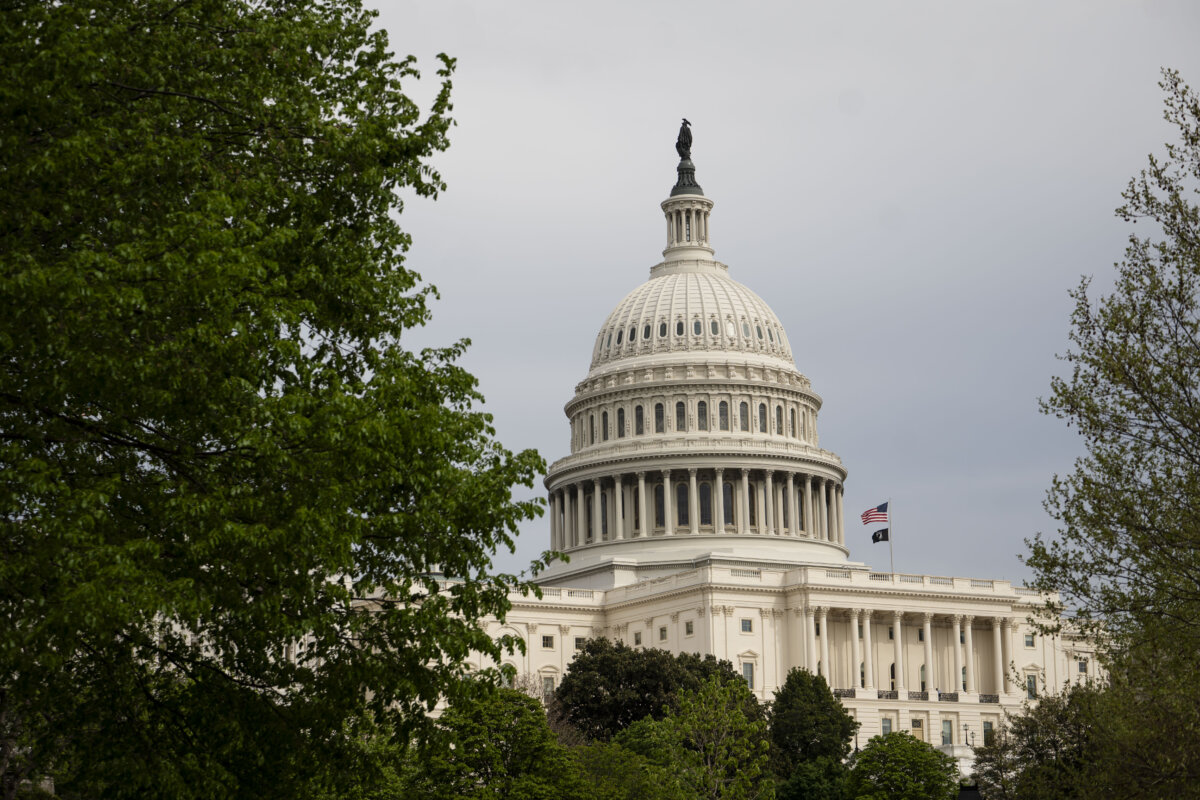

The U.S. Senate voted on Sept. 24 against a war powers resolution that would have directed President Donald Trump to end the U.S. military action against Iran.
The Senate’s 49–50 vote on House Concurrent Resolution 89 comes nearly seven months since the start of the U.S. military’s Operation Epic Fury and just weeks before the midterm election. Thursday marked the 14th time the Senate had considered a war powers resolution since the start of the conflict with Iran.
Sens. Susan Collins (R-Maine), Lisa Murkowski (R-Alaska), Rand Paul (R-Ky.), and Thom Tillis (R-N.C.) joined Democrats in support of the measure on Thursday. Meanwhile, Sen. John Fetterman (D-Pa.) voted with Republicans to reject the resolution.
Rep. Pramila Jayapal (D-Wash.) initially introduced the resolution in the House of Representatives in April. The House later passed the measure on July 23.
“The American people deserve better than an endless war that is costing Americans’ lives and making it harder for them to get by at home,” Sen. Tammy Baldwin (D-Wis.) said in a speech from the Senate floor prior to the vote.
Sen. Peter Welch (D-Vt.) called for the president to end the war in Iran and encouraged senators to support the resolution.
“This is a day-to-day catastrophe, and the man who started this must end it,” he said. “But we, as U.S. senators … have a say. And it’s time for us to say, ‘End this war. End this war now.’”
Sen. Tim Kaine (D-Va.) urged his fellow senators to take action to end what he described as a “deeply unpopular” war.
“The Constitution says the president cannot declare war; only Congress can,” he said. “There’s been no congressional declaration of war. The president is violating the Constitution with this war.”
Prior to the vote, the House passed a similar war powers resolution on Sept. 15 by a vote of 220–204, aimed at limiting the president’s authority to direct U.S. military actions against the regime. The House had previously passed two other war powers resolutions calling for an end to the conflict with Iran.
The war powers resolutions, however, have only represented a symbolic rebuke of the Trump administration’s military campaign against the Iranian regime.
The War Powers Resolution of 1973 aims to limit the president’s authority to extend military actions beyond 60 days without congressional approval. However, the administration has claimed that the federal law is unconstitutional and the resolutions are not binding without the president’s signature.
The Senate voted 50–48 in favor of a war powers measure on June 23, then reversed the vote the next day after Trump confronted Republican senators who had initially supported the resolution.
The latest Senate vote on the Iran war powers resolution came just two days after Trump said in an address to the United Nations General Assembly on Sept. 22 that he had a major decision to make regarding the conflict.
“Will a deal be made with Iran that lets them rebuild and create a far greater country than it ever was before, maybe one of the greatest in the Middle East or even the world?” he said on Tuesday.
“Or do I annihilate the Islamic Republic and do it quickly, never giving them a chance to kill and destroy people and countries again?”
The president also said on Tuesday that he believes the United States and Iran will reach an agreement to end the war following the midterm election in November.
The issue of affordability, particularly with regard to fuel prices, has become a key issue in the midterm election. As of Sept. 24, the average cost of a regular gallon of gasoline was $4.48 and the average cost of a gallon of diesel was $6.51, according to the American Automobile Association.
Addressing affordability concerns, Murkowski told reporters on Sept. 24 that even if the conflict in Iran ended immediately, things would not be the way they were before the war started in February.
“That’s just not the nature of how global oil markets work,” she said.
Murkowski suggested that the Trump administration should have considered the “full consequences” of the war and the possibility that Iran would try to close the Strait of Hormuz.
“Decisions were made. They knew the midterms were coming. There was no secret there,” she added.
Nathan Worcester contributed to this report.
 Friends Read Free
Copy
Facebook
Tweet
Friends Read Free
Copy
Facebook
Tweet