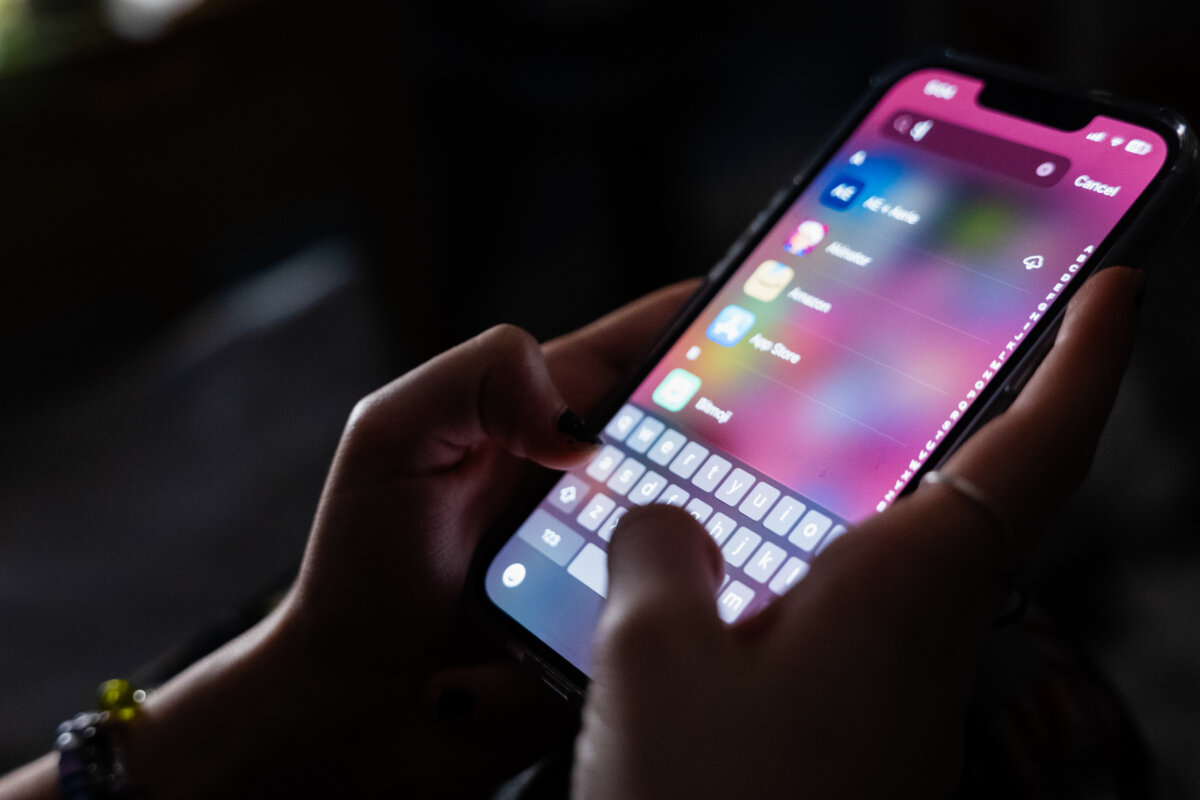

Australia’s major social media platforms have agreed to enforce the federal government’s ban on children under 16 using their apps, but warn the move could drive teens toward unsafe corners of the internet and weaken public confidence in the rules.
From Dec. 10, platforms including Snapchat, TikTok, Facebook, Instagram, and YouTube must remove accounts belonging to users under 16.
Companies that fail to comply face fines of up to $50 million.
Exemptions apply for services whose main purpose is messaging or calling, such as WhatsApp, Messenger Kids, and iMessage, which will remain available to minors.
‘Blunt’ Ban Could Backfire, Says TikTok
At a parliamentary inquiry on Oct. 28, executives from the world’s biggest social media firms defended their safety measures but said they would implement the ban despite concerns about its effectiveness.
TikTok public policy lead Ella Woods-Joyce said the company shared experts’ doubts about blanket age restrictions.
“We support evidence-based sensible legislation that improves safety standards for all internet users … a ban will push younger people into darker corners of the internet where rules, safety, tools and protections don’t exist,” she said.
Woods-Joyce said TikTok’s position had been consistent across jurisdictions.
“We share the concerns of the many experts who have stated that blunt age bans won’t work and will not resolve the genuine concerns the legislation aims to address,” she said.
“As a mum of two, I understand the challenges families face with online safety.”
Snapchat Claims Uneven Treatment
Snapchat said it would comply but argued the law had been applied inconsistently.
Exclusion rules exempt platforms used mainly for messaging, voice, or video calling—a definition the company believes includes Snapchat.
“They did this because they recognise that young people need to be able to communicate with friends and family,” said Jennifer Stout, Snap’s vice-president of global public policy.
“Over 75 percent of the time on Snapchat spent in Australia is messaging and calling—the same functions used on services like WhatsApp, Messenger and iMessage, all of which have been excluded from these restrictions.”
Despite this, Snapchat has been classified as an age-restricted service.
“We do not agree with this interpretation. We have provided compelling evidence to the eSafety Commissioner showing that Snapchat’s primary purpose is messaging in line with the government’s stated approach,” Stout said.
Stout said the company would “nonetheless … comply with the law.”
“For teens, connection and communication are strong drivers of happiness and well-being. Taking that away does not necessarily make them safer, and it may instead push them towards other messaging services that lack Snapchat safety and privacy protections,” Stout said.
Meta Flags Global Compliance Hurdles
Meta, owner of Facebook and Instagram, told the committee that enforcing Australia’s ban would be technically complex because 16 is a “globally novel age boundary.”
“Distinguishing 13 from 16 is inherently less reliable and it also found greater challenges at the 16 age boundary with age estimation technologies,” said Mia Garlick, Meta’s regional policy director.
Meta said it already operates extensive systems to protect teen users. Hundreds of millions of teens globally are in “teen accounts,” and “nine out of ten accounts choose to stay in the more restrictive settings,” indicating the controls are welcomed.
The company has introduced PG-13–level content filtering on Instagram, expanded AI tools to detect underage accounts, and begun notifying Australian parents about safety settings.
Garlick said Meta uses an “age assurance” system instead of mandatory ID checks, describing it as a “waterfall model” that begins with minimal data collection and escalates only when necessary.
She warned that letting each app design its own verification process could lead to “inconsistent outcomes and privacy risks.”
Meta suggested device operating systems or app stores could verify ages more uniformly.
Crackdown Follows Removal of Unsafe Apps
The new rules come amid a broader campaign to remove unsafe online platforms. Apple and Google recently pulled the video-chat app OmeTV from their stores after it was linked to grooming and sexual exploitation of Australian children.
eSafety Commissioner Julie Inman Grant said the app’s Portugal-based operator ignored requests to add child-safety measures.
“This is an app that randomly pairs young children—with pedophiles,” she told ABC News.
“This app will no longer be able to reach Australians, and they will no longer be able to make money off children’s misery.”
Under the new law, social media companies must “detect and deactivate” underage accounts. Regulators estimate about 1.5 million profiles across Facebook, Instagram, TikTok, YouTube, Threads, and X will be removed in the coming weeks.
Children and families will not be penalised for accessing restricted platforms, but companies that fail to act face multimillion-dollar fines and potential investigations.
 Friends Read Free
Copy
Facebook
Tweet
Friends Read Free
Copy
Facebook
Tweet