Fighting between Russian and Ukrainian forces has intensified in recent days, as the relationship between President Donald Trump and Ukrainian President Volodymyr Zelenskyy enters a new period of uncertainty.
The rift between Trump and Zelenskyy has grown as Trump has pursued a deal for Russian diesel and pressed Ukraine to halt attacks on Russian oil refineries. Speaking with Axios on Oct. 9, Zelenskyy said the diesel deal is “not fair and not honest” and described it as a gift to Russian President Vladimir Putin.
Trump has since accused Zelenskyy of failing to take viable off-ramps to end the Russia–Ukraine war and said Ukraine should choose a new president.
Amid this spat with Trump, Zelenskyy and other Ukrainian officials have claimed interruptions in key lines of U.S. support in Ukraine’s ongoing fight with Russia.
On Oct. 14, Ukrainian officials said the country was experiencing limitations in its Starshield satellite internet service—a military-grade version of SpaceX’s Starlink service. The officials said the service had been blocked on linked devices moving faster than 100 miles an hour, including fast-moving interceptor drones that Ukraine’s forces use to blunt barrages of Russian explosive one-way attack drones.
Zelenskyy has since claimed a three-day pause in U.S. intelligence flows to Ukraine.
Following the Russian strikes on Oct. 14, Zelenskyy announced Ukrainian forces had stopped abiding by the energy ceasefire Trump had declared between Russia and Ukraine on Oct. 11.
Energy Truce Collapses
Russian forces currently exercise control over about 20 percent of Ukraine’s pre-war territory, and the battle lines have seen little significant change since 2023.
With the frontline showing little give, the fighting between Russia and Ukraine has been a battle of attrition, with each side testing the other’s national will. This trial of endurance has seen both sides target the other’s domestic energy sites, infrastructure, warehousing, and logistical hubs.
Recent attacks on Russian energy sites have come as the global economy already contends with fuel shortages brought on by conflict in the Middle East. After U.S. and Israeli forces commenced attacks on Iran on Feb. 28, Iranian forces responded by attacking commercial shipping in the Strait of Hormuz—a key artery for global fuel exports.
On Oct. 9, amid efforts to stabilize domestic energy prices ahead of the 2026 U.S. midterm elections, Trump announced he had struck a deal for Russia to supply the United States with diesel. Two days later, Trump announced Moscow and Kyiv had both agreed to halt attacks on each other’s energy sites; an easement he has tried to broker on multiple prior occasions.
On Oct. 12, Kremlin spokesman Dmitry Peskov told reporters that while Trump had announced an energy ceasefire was in effect, discussions on such a truce were still ongoing.
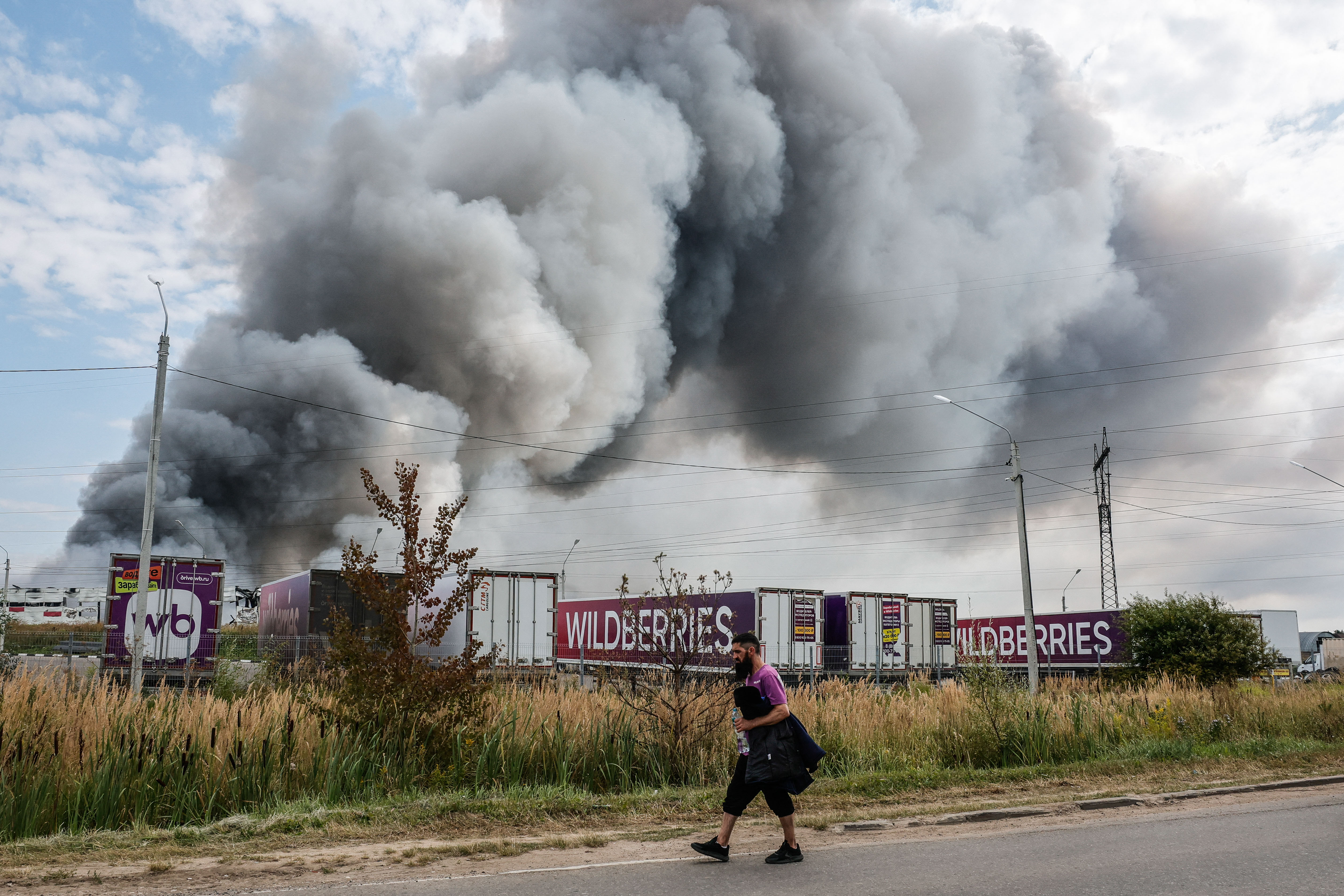 A Wildberries employee walks past a plume of smoke rising during a fire at the Russian e-commerce firm’s logistics complex near Podolsk, outside Moscow, on Aug. 16, 2026. (Tatyana Makeyeva/AFP via Getty Images)
When asked about the energy ceasefire on Oct. 12, Trump told reporters, “They agreed because I said they agreed.”
As Ukrainian forces described facing sudden new limitations on their Starshield services on Oct. 14, Russian forces launched a wave of ballistic missiles and explosive one-way attack drones. Several of these Russian missiles and drones managed to break through Ukraine’s air defenses before damaging numerous power plants, leaving hundreds of thousands of Ukrainians without electricity.
Following the Russian strikes on Ukraine on Oct. 14, Zelenskyy told the Financial Times, “The block [on attacking refineries] is out. We’re done.”
On Oct. 15, the governor of Russia’s Ryazan province said Ukrainian attack drones had hit an oil refinery in the province.
Speaking with Newsmax on Oct. 15, Trump called news of renewed Ukrainian strikes on Russian energy sites “a disgrace.”
“There are a lot of targets that you can hit, but when you shoot at diesel refineries where you make, you know, diesel, and we need that, and the world needs that, then he’s not doing a good service for the world,” Trump said.
On Oct. 18, the governor of St. Petersburg reported additional Ukrainian drone attacks and a fire at the St. Petersburg Oil Terminal.
Reason for Starshield Disruptions Unclear
In a statement shared with The Epoch Times on Oct. 15, Chargé d’Affaires at the Ukrainian Embassy in Washington Denys Sienik said Starshield services had improved in Ukraine since the disruptions the day before.
Still, Ukrainian officials are seeking clarity about the reason their satellite internet services were limited.
In an Oct. 14 interview, Piers Morgan asked Zelenskyy whether he believed Ukraine’s SpaceX satellite internet services were deliberately suppressed amid a deepening spat with Trump.
“I’m sure that they knew what they did,” Zelenskyy replied.
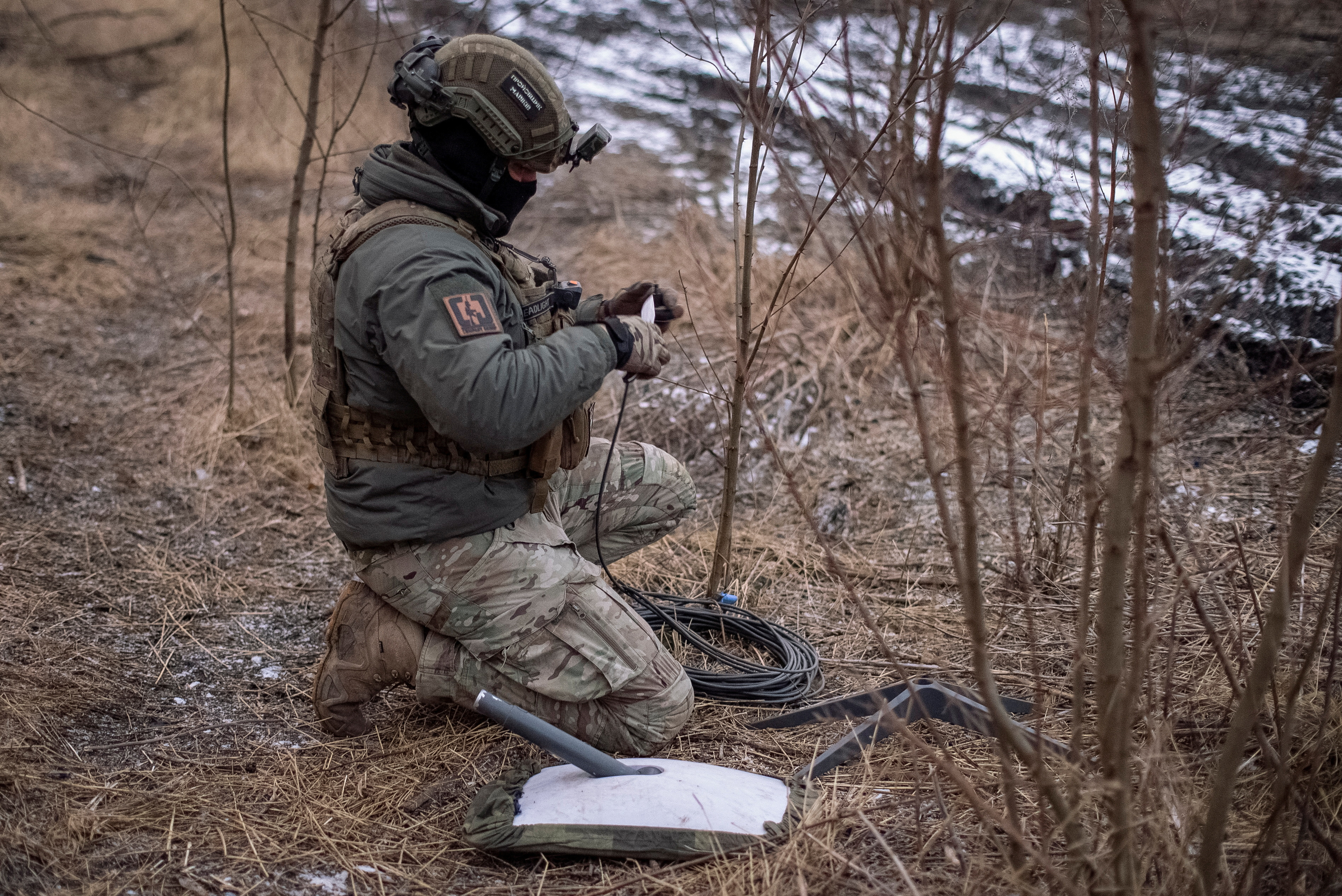 A Ukrainian serviceman of the 47th brigade prepares a Starlink satellite internet system at his position on the front line, amid Russia’s attack near the town of Avdiivka, on Feb. 20, 2024. (Inna Varenytsia/File Photo /Reuters)
The Pentagon did not respond by publication time to a request for comment about the recent curbs to Ukraine’s satellite internet services.
Following a meeting with U.S. Secretary of War Pete Hegseth on Oct. 15, British Defense Minister Wes Streeting said he was “reassured directly” by Hegseth that the service has been restored.
Asked whether the Pentagon had restricted Ukraine’s access to the satellite network to prevent strikes on Russian energy infrastructure during a Thursday interview on Fox News’ “The Story with Martha MacCallum,” Streeting said, “That’s not my understanding.”
Speaking with reporters on Oct. 16, Trump denied any role in the Starshield disruption impacting Ukraine.
In an interview with NBC News on Oct. 18, Zelenskyy said he and other Ukrainian officials continue to believe the U.S. government directed the Starshield slowdown.
Zelenskyy Says US Intelligence-Sharing Disrupted
Ukraine may be facing further disruptions to U.S. support, including intelligence-sharing arrangements, as the feud between Trump and Zelenskyy continues.
Such an interruption is not unprecedented under the Trump administration. In March 2025, CIA Director John Ratcliffe announced the United States had paused some intelligence flows to Ukraine as Trump questioned Zelenskyy’s support for a peace process with Russia.
Speaking with reporters outside the White House on Oct. 13, Trump denied ordering any new pause on intelligence-sharing with Ukraine.
Zelenskyy appeared to contradict Trump during his interview with NBC News on Oct. 18. The Ukrainian leader said his country recently experienced a three-day period in which Ukrainian forces weren’t receiving alerts about incoming Russian ballistic missile attacks.
Zelenskyy described such alerts as a unique intelligence capability provided by the United States.
“It was blocked for some period of time, and then it was de-blocked by the American side,” Zelenskyy told NBC News.
 Ukrainian servicemen walk past a Patriot air defence system at an undisclosed area in Ukraine on Aug. 4, 2024. (Sergei Supinsky/AFP via Getty Images)
Asked about the status of U.S. intelligence support for Ukraine on Oct. 19, Trump said, “We share intelligence.”
“We share a lot. We’ve given a lot to Ukraine. You know what? We’ve given a lot to Ukraine. They’ve given nothing to us.”
Several European leaders have reiterated their support for Ukraine amid Zelenskyy’s feud with Trump.
“In these moments, Britain will continue to provide you with whatever support that we can,” British Prime Minister Andy Burnham told Zelenskyy as he hosted the Ukrainian leader at Downing Street on Oct. 14.
Burnham said Britain would accelerate the delivery of additional air defense systems to Ukraine.
As European Union leaders met in Belgium on Oct. 16, European Commission President Ursula von der Leyen said the bloc is continuing to engage Ukraine and the United States in discussions on ending the war.
The European Commission recently announced it had disbursed about $3 billion in support for Ukraine to obtain additional air defense systems, radars, missiles, and drones.
Following an EU conference on Oct. 16, French President Emmanuel Macron said his country is also working to provide Ukraine with satellite imagery and other early warning capabilities to help fend off Russian strikes.
Timothy Frudd contributed to this article.
 Friends Read Free
Copy
Facebook
Tweet