
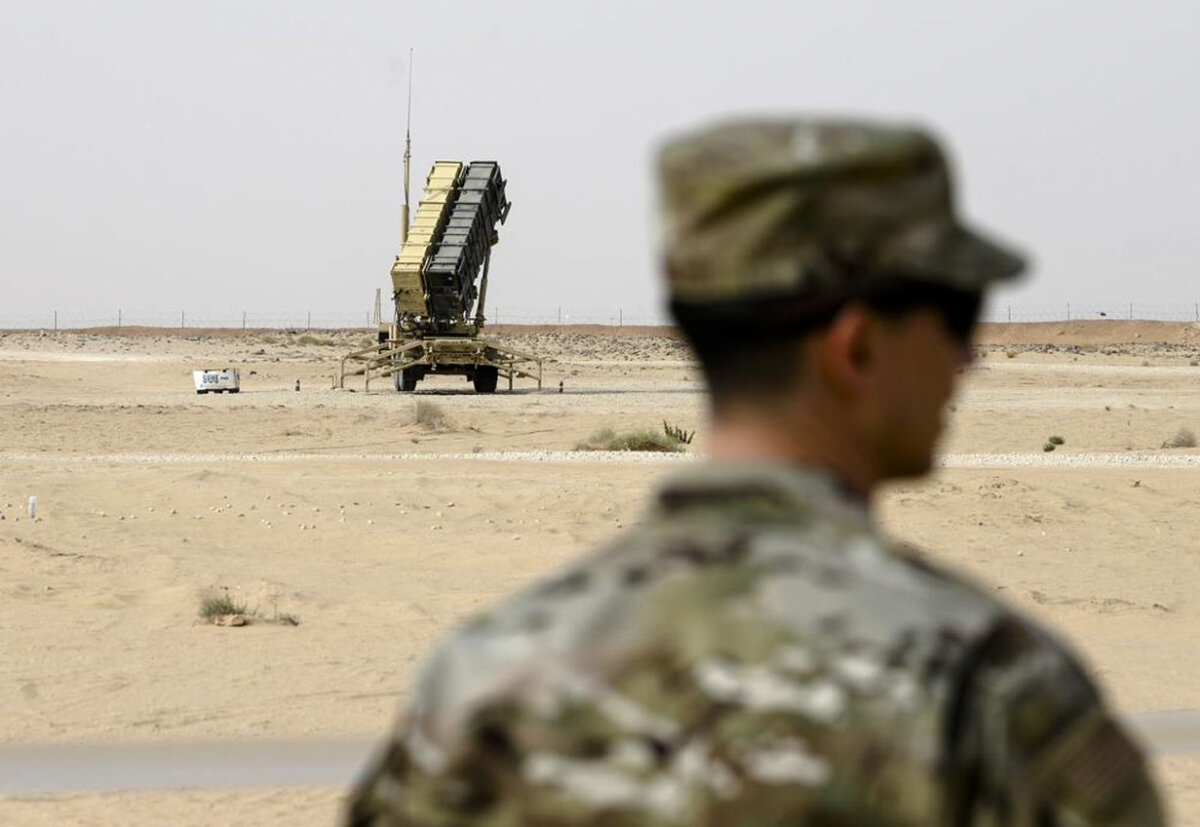

The U.S. Mission to Saudi Arabia has urged Americans in the kingdom to take extra precautions and avoid traveling to U.S. military installations across the region, as Iranian officials issued fresh warnings that Tehran is prepared to respond forcefully after President Donald Trump hinted that Washington is not ruling out strikes over protester deaths.
In a security alert on Jan. 14, the mission said its personnel have been advised to “exercise increased caution and limit non-essential travel to any military installations in the region,” and recommended American citizens in Saudi Arabia take the same precautions.
The mission said staffing and operations were unchanged and that consular services were continuing as normal, but encouraged travelers to review the latest security alerts, check travel plans for disruptions, and make appropriate decisions for themselves and their families.
The advisory came as President Donald Trump threatened Iranian leaders with “very strong action” if reports that authorities are hanging protesters turn out to be true, and as Iran’s leadership escalated warnings that U.S. interests and allies could be hit in any confrontation.
Trump Warns Iran
Trump issued the warning in an interview with CBS News broadcast on Jan. 13, after being asked whether Iran would cross a “red line” if it begins hanging protesters.
“I have not heard about the hanging. If they hang them … we will take very strong action,” Trump said. “If they do such a thing, we will take very strong action.”
Earlier on Jan. 13, Trump encouraged demonstrators to keep up pressure on Iran’s leadership, writing on Truth Social that protesters should take over the country’s institutions and preserve evidence of abuses.
“Save the names of the killers and abusers. They will pay a big price,” he wrote, adding that all meetings with Iranian officials had been canceled until the killing stopped. “HELP IS ON ITS WAY.”
When asked about the “end game,” Trump pointed to examples from his first term, referring to the elimination of ISIS leader Abu Bakr al-Baghdadi and Iranian Gen. Qasem Soleimani.
“We don’t want to see what’s happening in Iran happen,” he said. “If they want to have protests, that’s one thing. When they start killing thousands of people, and now you’re telling me about hanging, we’ll see how that works out for them. It’s not going to work out good.”
Teheran Says It Will Respond to Any US Attack
Iranian officials have repeatedly signaled that a U.S. strike would trigger retaliation and could expand across multiple target sets and theaters.
Ali Shamkhani, an adviser to Supreme Leader Ayatollah Ali Khamenei, hinted on X on Jan. 14 that Iran would respond to any aggression, referencing Iran’s earlier missile strike on the U.S. Al Udeid Air Base in Qatar.
In the post, Shamkhani said Trump should recall the Iranian missile strike that “plowed” the U.S. base at Al Udeid in retaliation for U.S. strikes against Iranian nuclear facilities. Shamkhani said that Iran’s retaliatory strike against Al Udeid should serve as a reminder of “Iran’s will and capability to respond to any aggression.”
Al Udeid is the largest U.S. military base in the Middle East and has played a key role in U.S. air operations and command functions in the region.
Separately, Mohammad Bagher Ghalibaf, speaker of Iran’s parliament, said on Jan. 13 that Iran is prepared to “set the region on fire” in case of a U.S. attack, adding that “legitimate targets” would include American ships and military bases across the Midde East, as well as Israeli territory, according to a report by Al Jazeera.
Qatar Issues Warning Amid ‘Regional Tensions’
Qatar, which hosts Al Udeid, acknowledged precautionary measures at the base amid the latest surge in tensions.
In a statement on Jan. 14, Qatar’s International Media Office said reports about the departure of certain personnel from Al Udeid were linked to steps being “undertaken in response to the current regional tensions.”
“The IMO reaffirms that the State of Qatar continues to implement all necessary measures to safeguard the security and safety of its citizens and residents as a top priority, including actions related to the protection of critical infrastructure and military facilities,” the statement said.
The statement did not specify whether U.S. troops were part of any departures.
The Epoch Times contacted the U.S. Central Command for comment but did not receive a response by the time of publication.
Diplomacy Is ‘First Option’ But Strikes Not Ruled Out
The White House has said that Washington is weighing multiple tools in response to Iran’s clampdown on protesters, including military options.
On Jan. 12, White House press secretary Karoline Leavitt told reporters that the United States has many options left on the table regarding Iran. While airstrikes remain an option, she said “diplomacy is always the first option for the president.”
The State Department has also issued warnings to U.S. citizens in Iran, urging them not to rely on U.S. assistance to depart. The U.S. Virtual Embassy of Iran warned Americans still in the country to leave immediately.
“Leave Iran now. Have a plan for departing Iran that does not rely on U.S. government help,” the embassy said. “If you cannot leave, find a secure location within your residence or another safe building. Have a supply of food, water, medications, and other essential items.”
The embassy cautioned that protests were escalating and could turn violent, resulting in arrests and injuries.
The U.S.-based Human Rights Activists News Agency (HRANA) said on Jan. 13 that it has been 17 days since mass protests began, originally triggered by economic conditions but later expanding into direct challenges to Iran’s clerical leadership.
HRANA reported 614 protest gatherings recorded across 187 cities and all 31 provinces, and said approximately 18,434 individuals had been arrested, based on available accounts. The group said about 2,403 protesters had been killed, including 12 children, and said the real toll may be higher.
More than 1,100 people have been severely injured in the clampdown, HRANA reported, as well as nine nonprotesters recorded dead since the protests began. It also reported 147 members of the security forces and government supporters killed.
The figures could not be independently verified by The Epoch Times.
Iran has imposed sweeping restrictions on internet access and telecommunications since the unrest intensified, complicating efforts to independently verify developments on the ground.
Evgenia Filimianova and Naveen Athrapully contributed to this report.
 Friends Read Free
Copy
Facebook
Tweet
Friends Read Free
Copy
Facebook
Tweet


























