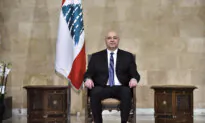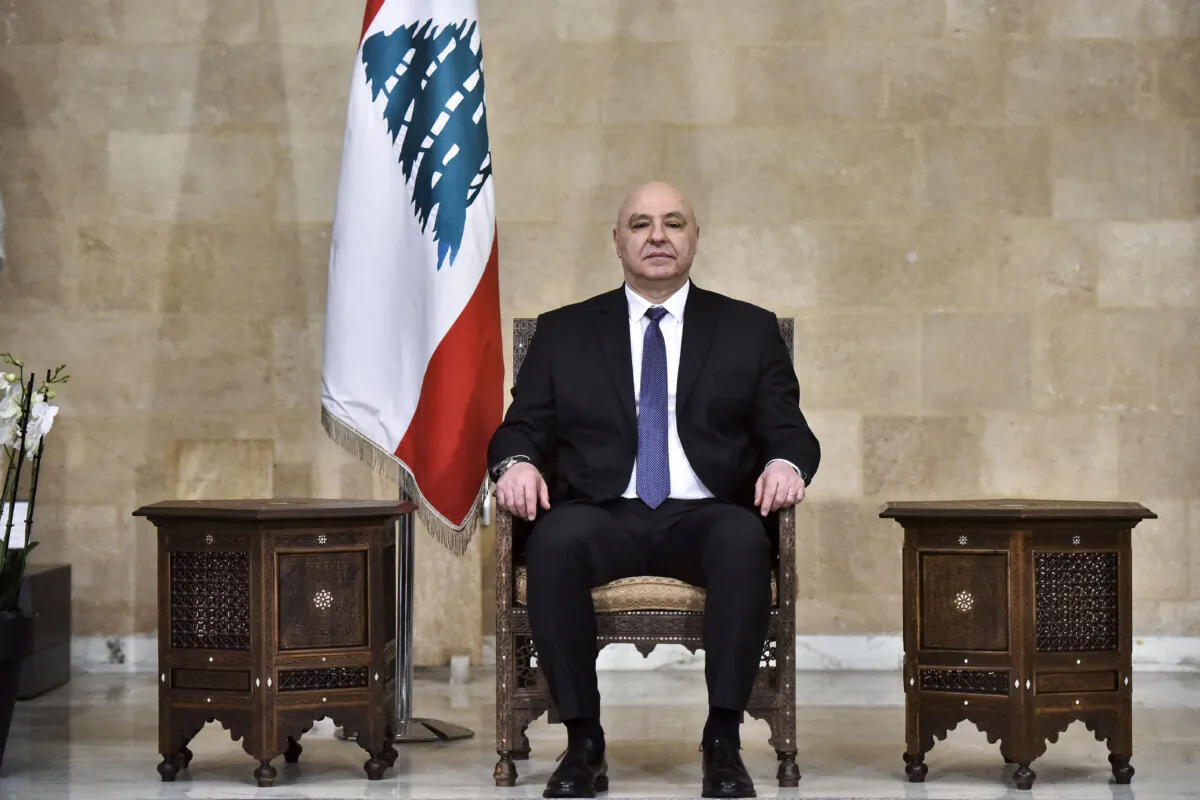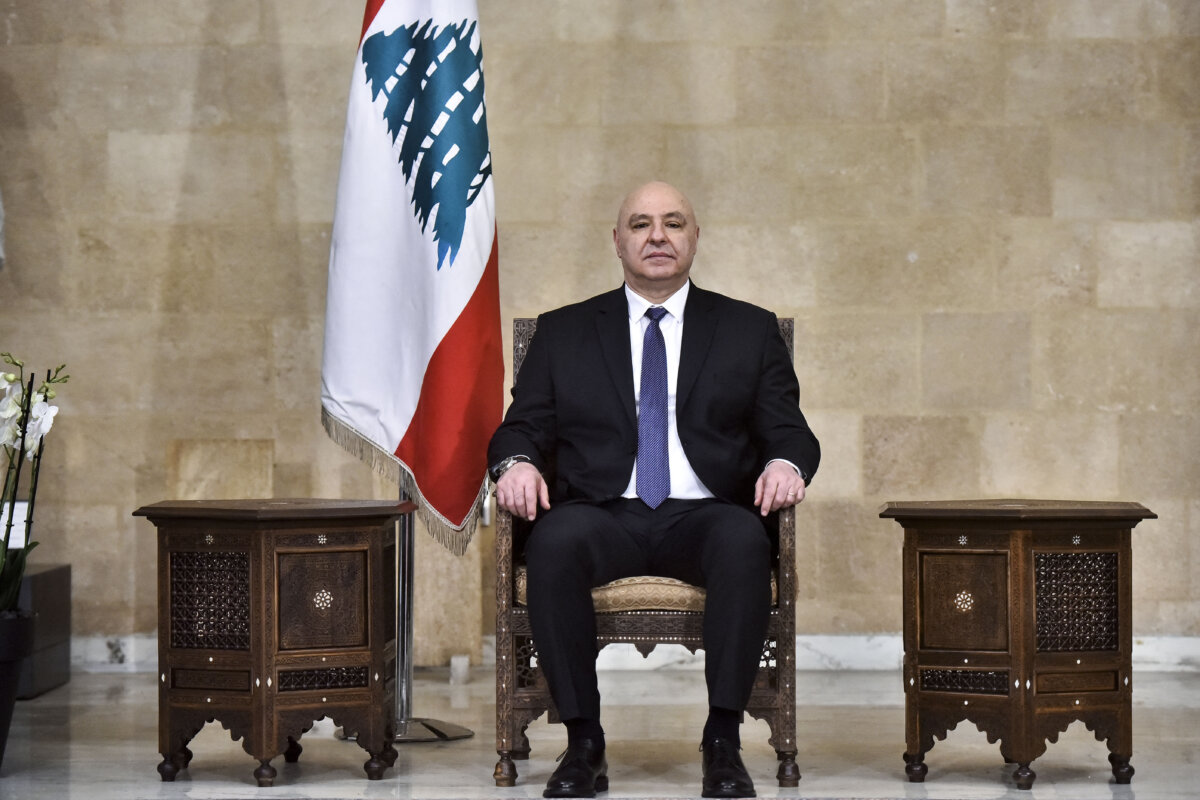

Lebanese President Joseph Aoun said on Dec. 5 that this week’s phase of Lebanon–Israel negotiations in southern Lebanon focused on ending Israeli military action in Lebanese territory, after the Israeli prime minister’s office said it seeks economic cooperation.
In his speech to the visiting U.N. Security Council delegation, Aoun said officials from Lebanon, Israel, and the United States met in Naquora, southern Lebanon, on Dec. 3, and the negotiations were primarily aimed at ending what he called “the hostile actions carried out by Israel on Lebanese territory,” recovering prisoners, scheduling the withdrawal of Israeli forces, and resolving disputed points along the Blue Line. The Blue Line is the U.N.-mapped boundary that serves as the frontier between Lebanon and Israel.
He said that the success of the talks depended mainly on Israel’s position, which would determine “whether the negotiations produce practical outcomes or fail.”
Ahead of the Dec. 3 meeting, Israeli Prime Minister Benjamin Netanyahu described it as a step toward establishing a basis for relations and economic cooperation with Lebanon.
Lebanese Prime Minister Nawaf Salam said on Dec. 3 that normalization of relations with Israel remains distant, but hoped the meetings would help “defuse tensions,” saying further Israeli strikes in recent weeks sent an escalatory signal.
Under the 2024 U.S.–French-brokered cease-fire, Israel was to pull its forces out of southern Lebanon, while the Lebanese army was tasked with removing Hezbollah fortifications near the border.
Tensions have persisted, with Israel retaining positions inside Lebanon and carrying out airstrikes it says are aimed at stopping Hezbollah from rearming and preparing new attacks.
The Israel Defense Forces (IDF) said it targeted several Hezbollah weapons storage sites in southern Lebanon on Dec. 4, describing them as “located in the heart of the civilian population” and accusing Hezbollah of using civilians as human shields.
The IDF said the sites violated agreements with Lebanon and that it would continue to operate to remove any threat to Israel.
US Role
The United States, having designated Hezbollah a terrorist organization in 2014, has been leading efforts to permanently end the fighting, while also recognizing Israel’s security interests.
In August, the acting U.S. ambassador to the U.N. and former ambassador to Lebanon, Dorothy Shea, praised the Lebanese Armed Forces (LAF) for progress made since the 2024 cease-fire and said Washington would continue working with the LAF to strengthen its capabilities.
The current U.S. ambassador to Lebanon, Michel Issa, commended Israel and Lebanon for opening “a channel of dialogue” in Naquora.
In a Dec. 3 statement, he said the meeting showed “willingness to pursue peaceful, responsible solutions” and reaffirmed the U.S. commitment to easing the burdens faced by affected communities.
In his remarks to the U.N. Security Council delegates, Aoun also spoke about the impact on residents in the south of the country. He said the people of southern Lebanon trust the army and want to return to their land to rebuild their homes.
“Reconstruction and the return of residents to their land are priorities for us,” he said, urging the international community to support rebuilding the damaged areas.
UNIFIL
UNIFIL, the U.N. peacekeeping force deployed in southern Lebanon since 1978, has long worked with the Lebanese army to monitor the border and help enforce Security Council Resolution 1701, which prohibits armed groups from operating near Israel.
Aoun said coordination between the army and UNIFIL remains strong and exemplary, adding that Lebanon had hoped the force would stay until the army could fully deploy along the internationally recognized border.
With UNIFIL scheduled to end its mission in 2027—following a Security Council vote in August to extend it through 2026 and then withdraw the following year—Aoun noted that several countries have expressed willingness to keep some forces in Lebanon afterward to support the army.
Lebanon, he said, welcomes such offers. Aoun added that continued international support will be essential as Lebanon prepares for UNIFIL’s departure and works to secure and stabilize its southern region.
 Friends Read Free
Copy
Facebook
Tweet
Friends Read Free
Copy
Facebook
Tweet