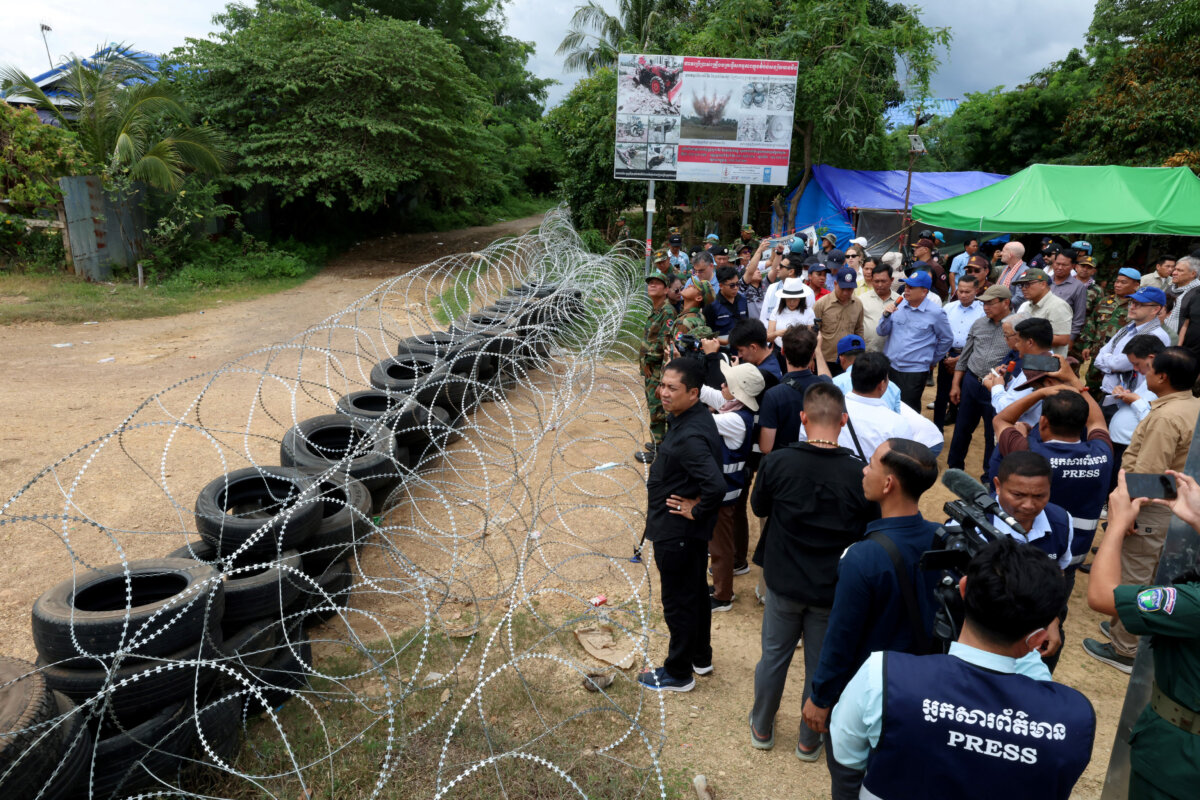

The Thai Army launched airstrikes along the disputed border with Cambodia on Dec. 8 after the two countries blamed each other for breaking a cease-fire the previous day.
Border disputes erupted into five days of conflict in July before a cease-fire was called, leading to a U.S.-led peace agreement in October in which the two nations pledged to work together to ease long-standing tensions.
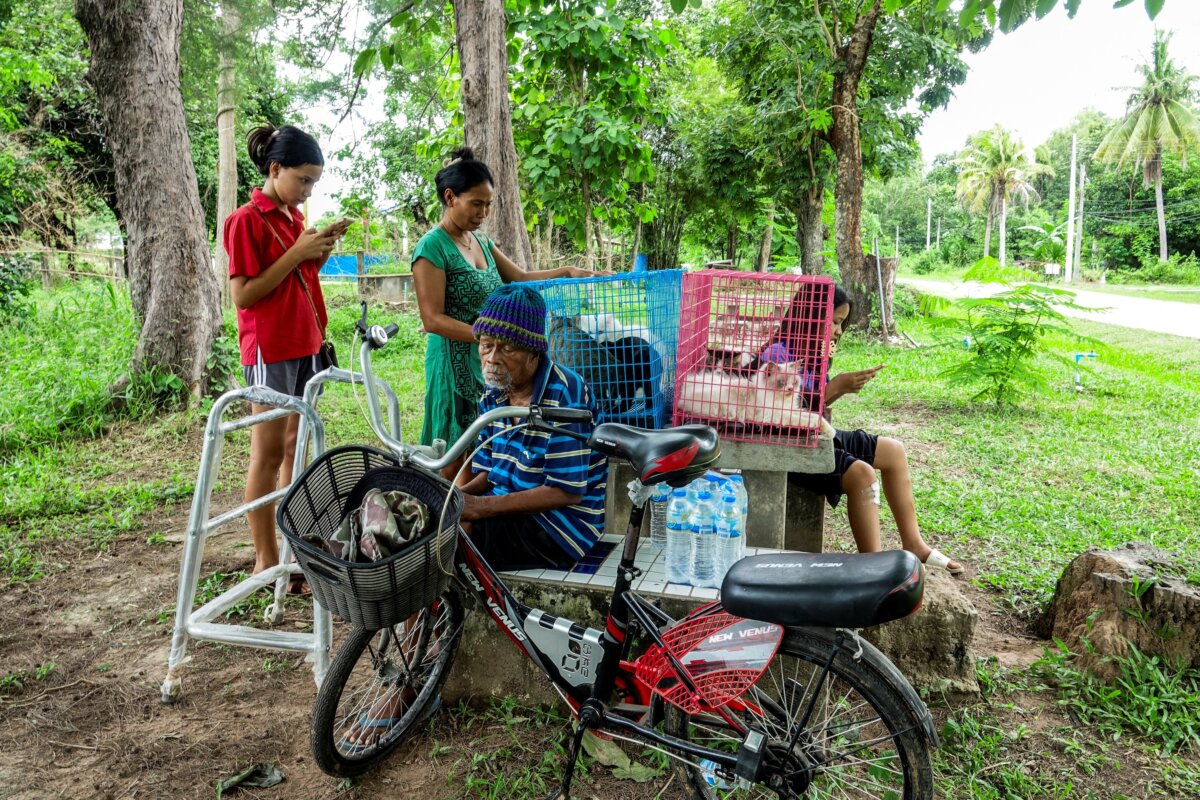
The renewed conflict on Dec. 7 forced the evacuation of civilians, and each side accused the other of firing first.
The Thai army said Cambodian fire injured two Thai soldiers on Dec. 7 and that Thai troops retaliated, resulting in an exchange of fire that lasted about 20 minutes. Cambodia said that the Thai side fired first and that its own troops did not retaliate.
In a televised speech, Thai Prime Minister Anutin Charnvirakul said: “Thailand has never wished for violence. I’d like to reiterate that Thailand has never initiated a fight or an invasion, but will never tolerate a violation of its sovereignty.”
Thai army spokesperson Maj. Gen. Winthai Suvaree said that exchanges of fire continued on Dec. 8 in multiple locations and that in one incident, a Thai soldier was killed and four others wounded.
The army also expressed concern that Cambodia had designated coordinates for “long-range weapons aimed deeper into Thai territory,” about 30 kilometers (18.6 miles) from the border, a spokesperson said.
Local media outlet The Nation Thailand reported that the Royal Thai Air Force had deployed F-16 fighter jets to confront three Cambodian artillery positions from where Cambodian troops were allegedly firing into Thai territory.
Thailand deployed aircraft “to strike military targets in several areas to suppress Cambodian supporting fire attacks,” Suvaree said.
Thailand’s Ministry of Defence said that more than 35,000 civilians had been evacuated from areas near the border, with “Cambodian strikes targeting Thai civilian areas,” and that more are believed to have fled to stay with relatives elsewhere.
Maly Socheata, spokesperson for Cambodia’s Ministry of National Defence, said, “Cambodia urges that Thailand immediately stop all hostile activities that threaten peace and stability in the region.”
Cambodian Information Minister Neth Pheaktra said Thai forces killed four Cambodian civilians and injured about nine others. Residents of several villages near the border were evacuated, Pheaktra said.
Malaysian Prime Minister Anwar Ibrahim called for restraint in a Dec. 8 statement posted to social media. He said his country stands ready to support efforts to avert further fighting.
“Our region cannot afford to see long-standing disputes slip into cycles of confrontation,” he wrote. “The immediate priority is to halt the fighting, safeguard civilians, and return to a diplomatic path supported by international law and the neighbourly spirit on which ASEAN depends.”
Thailand is one of 19 designated major non-NATO allies of the United States. Others in the region include Japan, the Philippines, and South Korea. Cambodia is one of Beijing’s closest allies in the region.
Shared Hopes for Peace
Thailand and Cambodia have a history of conflict going back centuries, since they were warring empires. Their modern territorial claims stem largely from a 1907 map drawn when Cambodia was under French colonial rule, which Thailand has argued is inaccurate.
The International Court of Justice in 1962 awarded sovereignty to Cambodia over an area that included the 1,000-year-old Preah Vihear temple, which is still a source of discontent for many Thais.
U.S. President Donald Trump became involved in peace talks after the territorial dispute devolved into five days of violence in July.
Several Thai soldiers were injured by a Cambodian land mine on July 23. The violence killed at least 48 soldiers and civilians and displaced about 300,000 people.
The conflict threatened a resurgence in early November after Thai troops were again injured by land mines in the disputed border zone, leading Thailand to announce that it would indefinitely suspend implementation of the agreement.
Both sides continue to trade accusations over responsibility. The Thai military has said the area had previously been cleared of land mines and cordoned off. It accused those responsible for the attack of removing the barbed wire and placing new explosive devices.
Cambodia’s foreign ministry said it categorically denied the allegations and that it remained committed to implementing the peace agreement.
As per the agreement, dubbed the Kuala Lumpur Peace Accords, both sides agreed to work together to remove the land mines.
Trump, in mid-November, said he’d intervened to preserve the cease-fire as tensions threatened to unravel the deal.
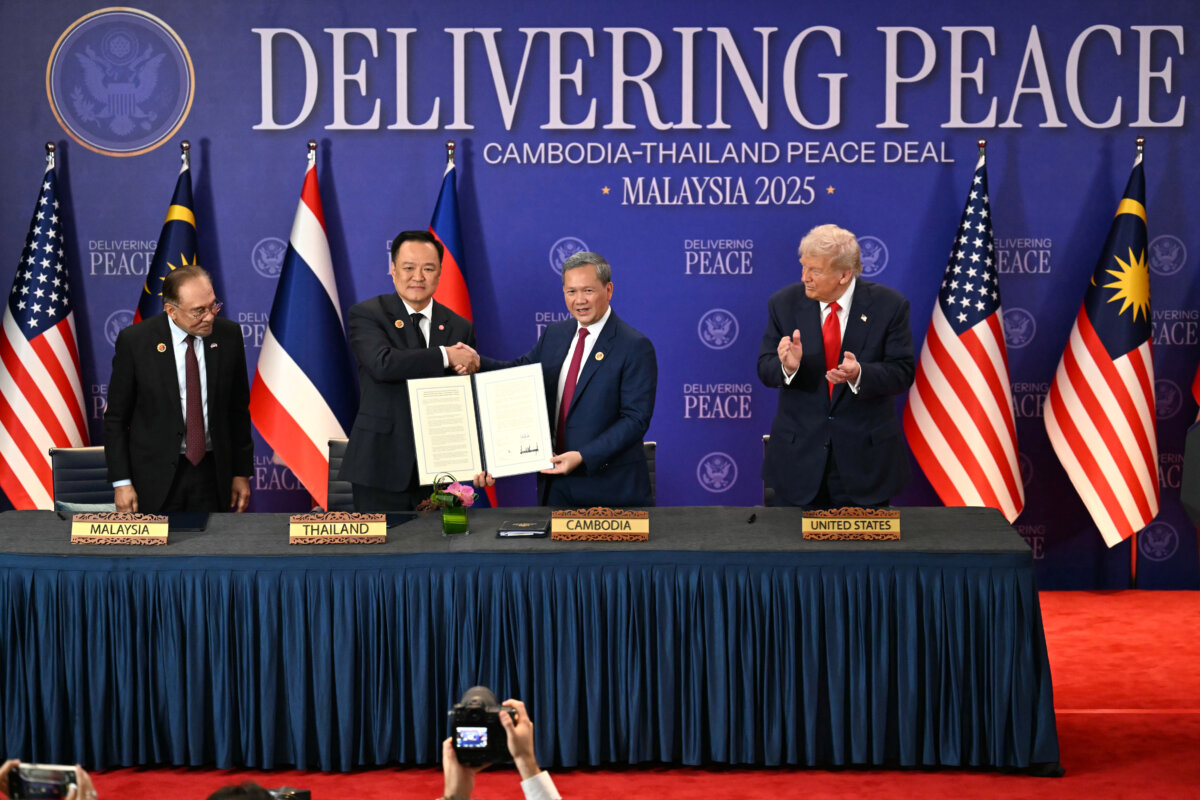
According to the compact, members of the Association of Southeast Asian Nations, including Malaysia, will act as third-party observers to monitor the situation on the ground to ensure compliance.
The carrot in the peace deal was the United States’ offer of reciprocal trade deals with Cambodia and Thailand and a critical minerals agreement with Thai authorities, which both welcomed as they announced their “unconditional” cease-fire.
Trump said in a July 26 post on Truth Social that he would halt trade negotiations with both countries if they did not stop the fighting.
The cease-fire did not spell out a path to resolve the underlying basis of the dispute, the longstanding differences over where the border should run. Both leaders agreed to attend peace talks in Malaysia with Trump.
Chris Summers, Ryan Morgan, and The Associated Press contributed to this report.
 Friends Read Free
Copy
Facebook
Tweet
Friends Read Free
Copy
Facebook
Tweet