
Shipping activity through the Strait of Hormuz declined on June 26 from earlier in the week, according to ship-tracking data, following an incident in which a Taiwanese-operated vessel was targeted by Iranian forces.
In response to the attack, which damaged the vessel near Oman’s waters, the United Nations shipping agency temporarily suspended its voluntary evacuation program for hundreds of stranded ships and thousands of seafarers in the Gulf.
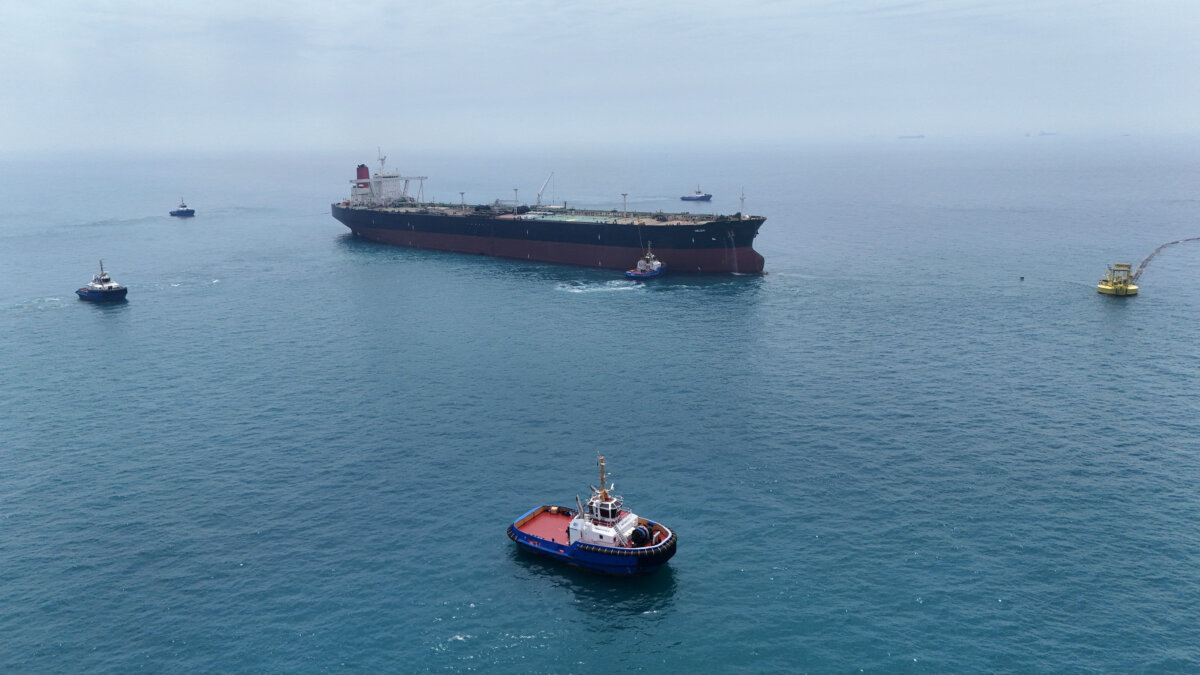
Despite the heightened security concerns, oil exports continued. Tracking data from LSEG and MarineTraffic showed that at least four oil tankers, including three very large crude carriers capable of transporting up to 2 million barrels each, entered the Gulf to load crude. Separate shipping records indicated that two additional supertankers transited the Strait of Hormuz to load Iranian oil, while another tanker carrying approximately 2 million barrels exited the strait through Omani waters, according to Kpler.
Following the ceasefire agreement between Washington and Tehran, oil buyers have been working to rebuild inventories after months of supply disruptions linked to the conflict. As concerns over supply eased and Saudi Arabia resumed Gulf oil shipments, crude prices fell more than 3 percent on Friday.
Jakob Larsen, chief safety and security officer at shipping association BIMCO, said the incident complicates efforts to evacuate stranded vessels and restore normal shipping through the strait, although some traffic is expected to continue. He also stressed the need for clear agreements between the United States and Iran to ensure the safe resumption of maritime operations.
Iranian Deputy Foreign Minister Kazem Gharibabadi said that safe navigation through the Strait of Hormuz could not be guaranteed without coordination with Tehran.
Oil prices increased by more than 2 percent on June 25 following the attack.
Oil and gas shipments have faced interruptions since the joint U.S. and Israeli attacks on Iran at the end of February. However, a ceasefire agreement between the United States and Iran has allowed shipping to resume through the Strait of Hormuz, a critical trade route that Iran had previously blocked.
As a result, Brent crude futures climbed $1.52, or 2.1 percent, to close at $75.26 per barrel. Meanwhile, U.S. West Texas Intermediate (WTI) crude gained $1.58, or 2.3 percent, ending the day at $71.92 per barrel.
During his trip to Bahrain, U.S. Secretary of State Marco Rubio warned that any Iranian effort to interfere with shipping in the strait would create serious problems. He reiterated that international waterways must remain open and that shipping fees would not be included in any future agreement.
Reuters contributed to this report.
 Friends Read Free
Copy
Facebook
Tweet
Friends Read Free
Copy
Facebook
Tweet