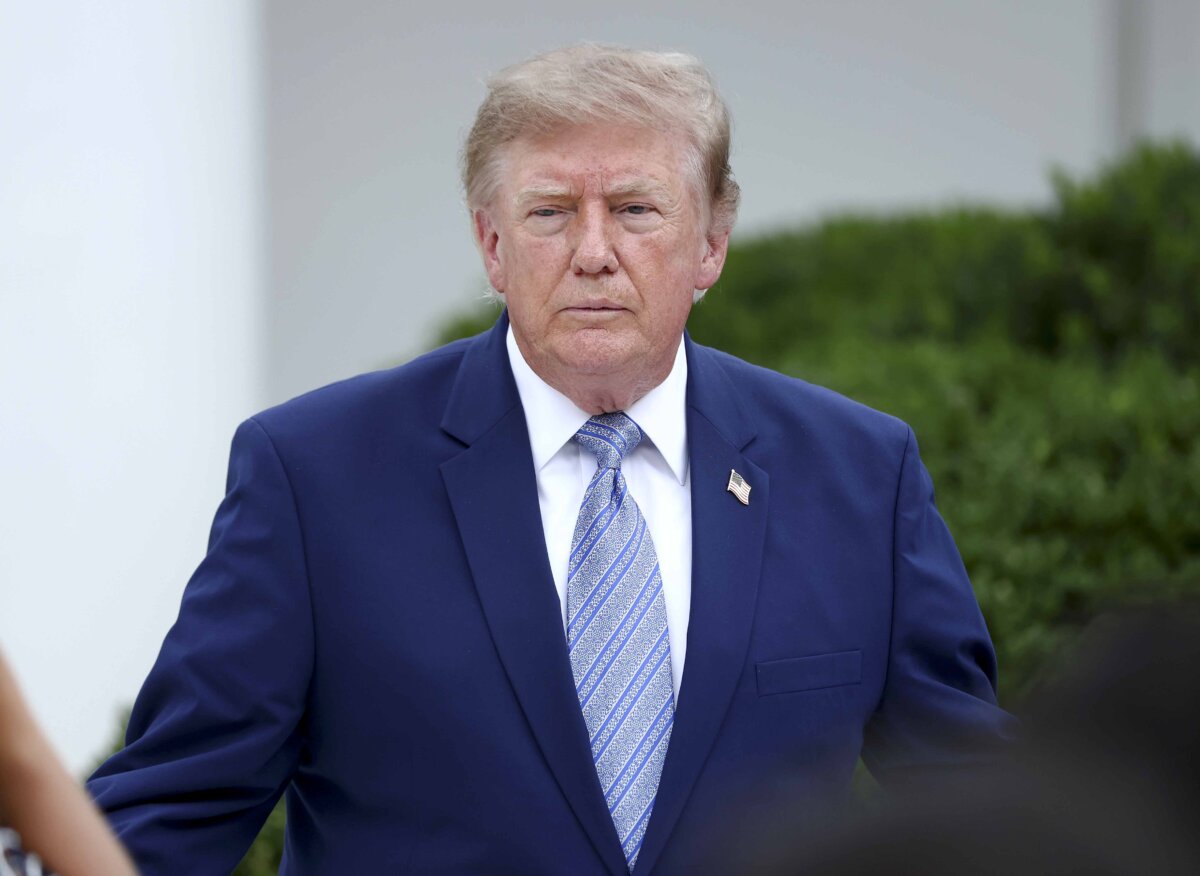

U.S. President Donald Trump on Tuesday dismissed reports that he seeks to force Iran into negotiations following the latest strikes against Tehran, saying the United States is currently in a better position.
Trump said in a post on Truth Social that the U.S. military has almost complete control of the Strait of Hormuz, the critical waterway for global oil and gas shipment that Iran has sought to control.
“I’m not trying to force Iran to the bargaining table, as ABC Fake News reported. I couldn’t care less if they sign a worthless, to them, agreement,” he wrote. “They are just playing out the inevitable. When are the Iranian people going to rise up and fight?”
The U.S. military on Sept. 1 struck Iran’s air defense sites, radar systems, maritime assets, mine-laying capabilities, and communications sites following attempted attacks by the Islamic Revolutionary Guard Corps (IRGC) against commercial shipping in the Strait of Hormuz and U.S. service members.
Iranian officials said the strikes were in response to the U.S. attack on Larak Island on Aug. 30, which Tehran denounced as an “act of aggression.”
U.S. Central Command rejected Iran’s claim, saying its forces took “limited, precise action” to prevent Tehran from placing mines in the international waterway.
“In essence, Iran created the threat, and the U.S. military eliminated it to protect civilian mariners, commercial shipping, and the free flow of global commerce,” Central Command said on Sept. 1.
Trump said later on social media that the attacks were in response to Iran’s failed attempt to place additional sea mines in the Strait of Hormuz and for attacking U.S. forces in Jordan.
He warned Iran against retaliating for the Sept. 1 attack, saying the United States would respond “at a much harder and higher level.”
Before the U.S. attack, Iranian President Masoud Pezeshkian had offered to return to the peace deal outlined under the June 17 memorandum of understanding between the United States and Iran if Washington agreed to do the same.
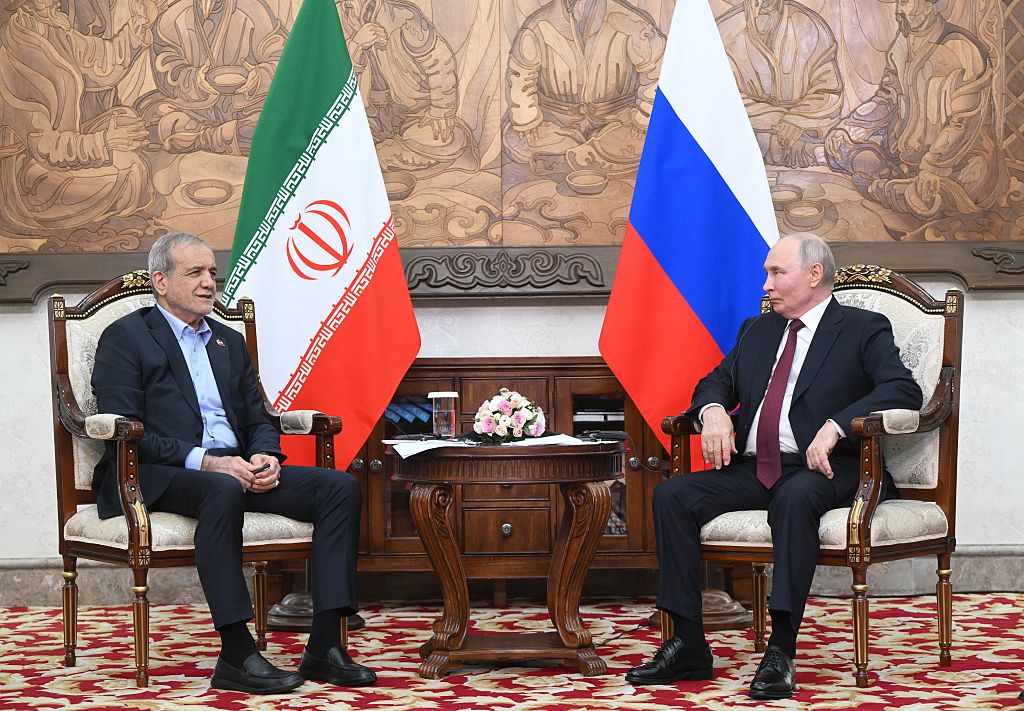 Russian President Vladimir Putin (R) and Iranian President Masoud Pezeshkian (L) hold a meeting on the sidelines of the Shanghai Cooperation Organization (SCO) summit in Bishkek on Sept. 1, 2026. (Kristina Solovyova/AFP via Getty Images)
Iran and the United States signed a preliminary agreement in June to halt the war and fully reopen the Strait of Hormuz. The ceasefire collapsed on July 7 after Trump declared it over and ordered strikes, as he accused Iran of attacking ships in the waterway.
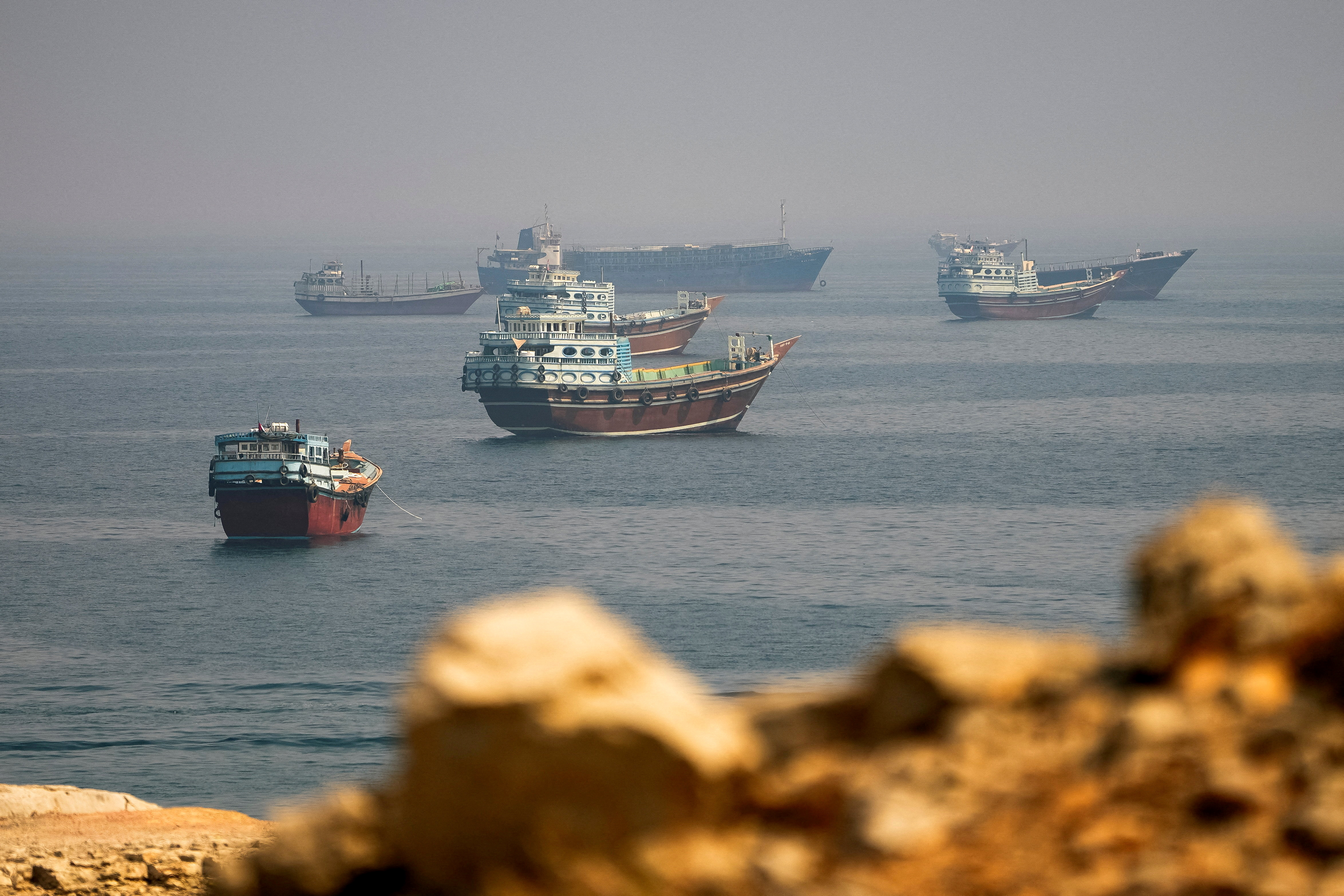 Vessels near the Strait of Hormuz, viewed from Musandam, Oman, on Aug. 31, 2026. (Stringer/Reuters)
The deal had called for the full reopening of the strait and provided a 60-day window for negotiations, which ended on Aug. 16, to end the war and resolve the outstanding issues related to Iran’s nuclear program.
Trump said on Aug. 21 that he believes Iran is ready to reach an agreement, but that any deal must include terms acceptable to the United States.
“They would love to make a deal, but they’re not ready to make the right deal in my opinion,” he told reporters.
Timothy Frudd contributed to this report.
 Friends Read Free
Copy
Facebook
Tweet
Friends Read Free
Copy
Facebook
Tweet