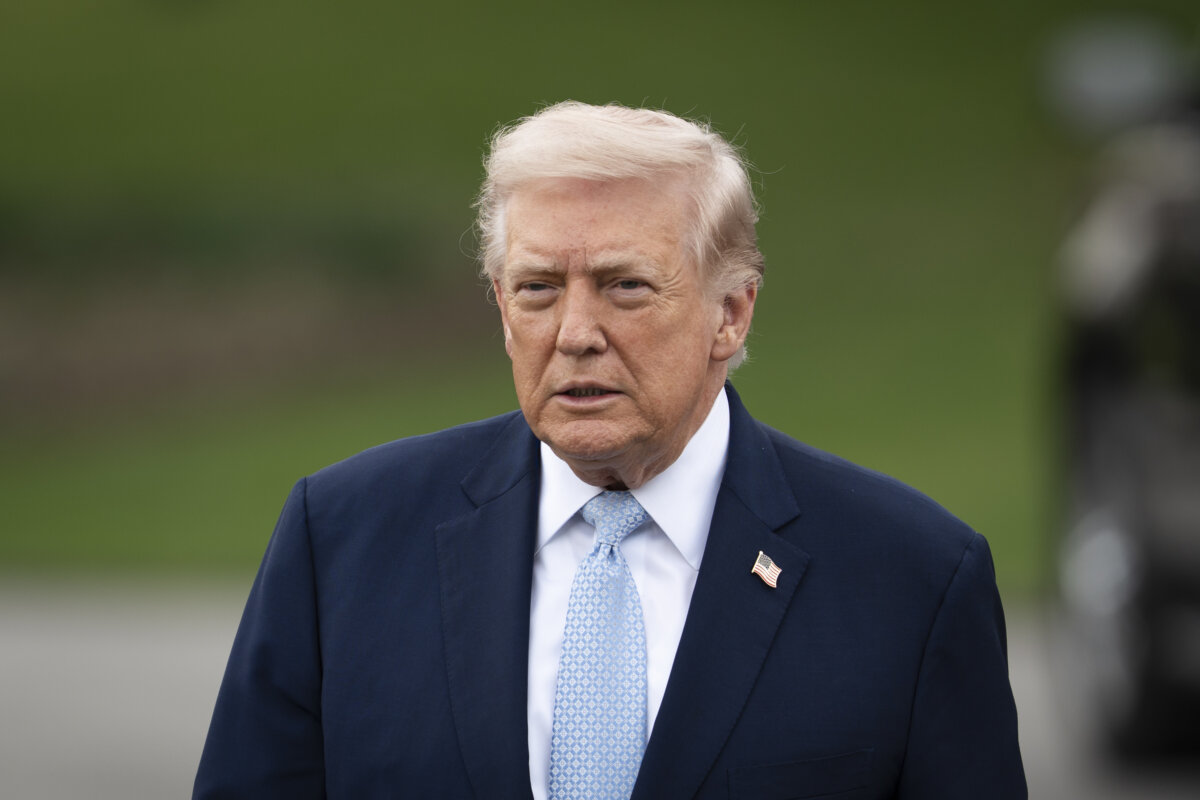

President Donald Trump on Wednesday night said that Iranian leaders “are negotiating” with the United States on a path to end the war.
“By the way, and they want to make a deal so badly, but they’re afraid to say it because they will be killed by their own people. They’re also afraid they’ll be killed by us,” Trump said from the National Republican Congressional Committee’s fundraising dinner on March 25.
Earlier in the day, Iran’s foreign minister said the exchange of messages through mediators does not equate to negotiations with Washington.
“Messages being conveyed through our friendly countries and us responding by stating our positions or issuing the necessary warnings is not called negotiation or dialogue,” Araqchi said on state television. “It is simply an exchange of messages through our friends.”
The White House earlier Wednesday addressed reports of Iran rejecting a 15-point plan to end the war in the Middle East, with press secretary Karoline Leavitt saying that talks are ongoing and productive.
During a press briefing, Leavitt told reporters that the White House has not confirmed the full proposal, and cautioned against taking “speculative points or speculative plans from anonymous sources” as fact.
“The White House never confirmed that full plan,” Leavitt said. “There are elements of truth to it, but some of the stories I read were not entirely factual. So I am not going to negotiate on behalf of the president here at the podium. What I will tell you is these talks are ongoing. We’re not going to get into the nitty-gritty details that have been exchanged between the United States and Iran at this time.”
She reiterated that the president prefers peace.
“There does not need to be any more death and destruction,” she said. “But if Iran fails to accept the reality of the current moment, if they fail to understand that they have been defeated militarily and will continue to be, President Trump will ensure they are hit harder than they have ever been hit before.”
She said Trump does not bluff and he is prepared to “unleash hell” should Iran once again miscalculate.
“Their last miscalculation cost them their senior leadership, their navy, their air force, and their air defense system,” she said. “Any violence beyond this point will be because the Iranian regime refused to understand they have already been defeated and refused to come to a deal.”
A senior Iranian parliamentary official told state media that Tehran had rejected the American plan.
“Iran will end the war when it decides to do so and when its own conditions are met,” the official said.
In rejecting the reported 15-point peace plan, Iran floated its own five conditions for a cease-fire and launched missile and drone strikes on Israel and targeted energy infrastructure in the Persian Gulf. Saudi Arabia and Kuwait intercepted some of the threats. Israel retaliated with attacks on Iranian military and industrial sites.
Trump said on March 24 that Iran had agreed not to pursue nuclear weapons and made a concession related to the flow of oil and gas and the Strait of Hormuz, without providing further details.
“What it showed me is that we’re dealing with the right people,” he said.
The White House has not confirmed or commented further on reported points in the alleged 15-point plan, which according to Israeli sources briefed on the matter who spoke to Epoch Magazine Israel, demands that Iran halt all uranium enrichment, transfer its enriched uranium stockpile to the International Atomic Energy Agency, take apart key nuclear facilities at Natanz, Isfahan, and Fordow, shrink its ballistic missile program, and stop supporting regional terrorists such as Hezbollah, the Houthis, and Hamas.
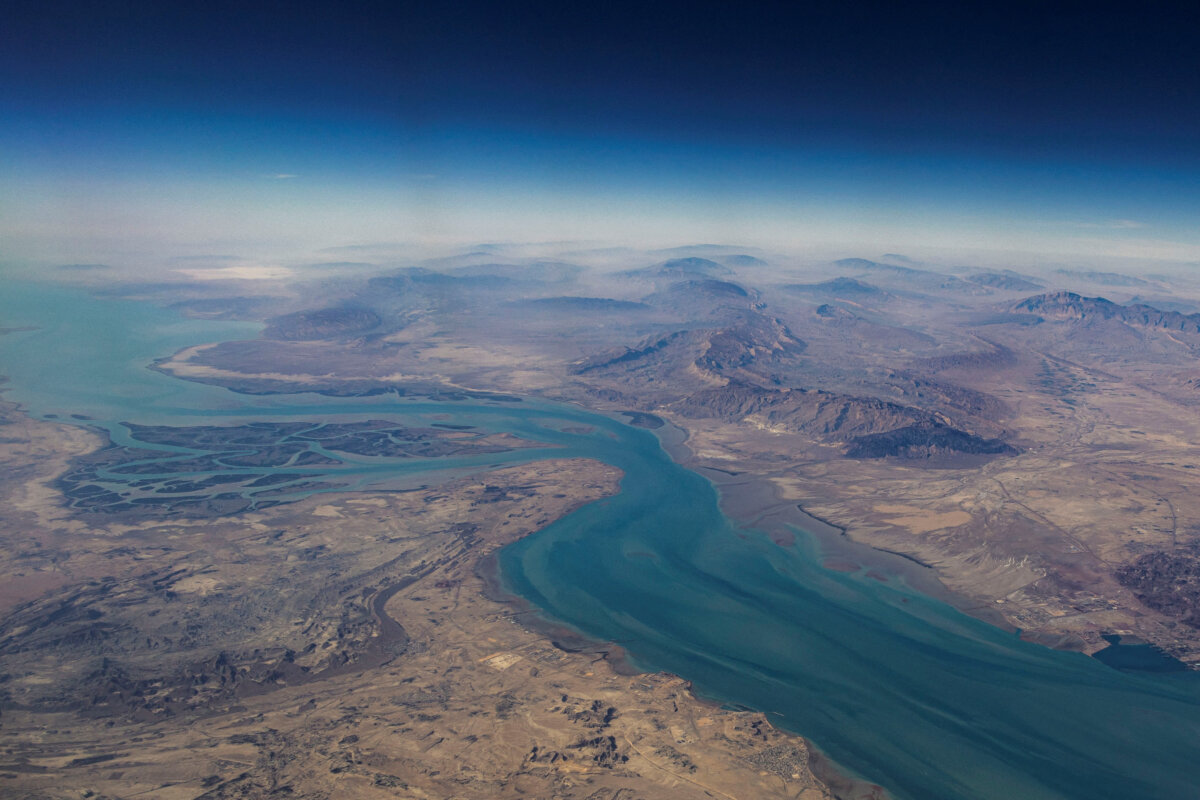
The Israeli sources also said that Washington offered sanctions relief and revocation of the “snapback” mechanism, which is a framework for reimposing sanctions. The plan also called for Iran to end its violation of international law under the U.N. Convention on the Law of the Sea (UNCLOS) and lift its impediment to the right of transit passage in the Strait of Hormuz—which is defined as an international strait as it is bordered by both Iran and Oman.
“Iran has rejected the U.S. proposal conveyed through a friendly regional mediator and is prepared to continue its defense and inflict heavy blows on the enemy,” Iran’s consulate statement said. “Iran will end the war at a time of its own choosing and only if the conditions it has set are fulfilled. It will not allow Trump to determine the timing of the war’s end.”
Tehran’s five conditions include an immediate halt to “aggression and assassinations,” no future conflict, payment of war reparations, an end to all fighting, including with its proxies, and formal recognition of Iran’s claims of sovereignty over the Strait of Hormuz.
Iranian regime figures told mediators that “no negotiations will be conducted” without its demands being accepted.
The developments come in the wake of Trump saying negotiations were progressing and that “major points of agreement” had been reached in earlier contacts.
Iranian parliamentary speaker Mohammad Bagher Ghalibaf has pushed back on White House claims that substantive negotiations had taken place. A military spokesman stated that the Americans were “negotiating with themselves.”
The conflict broke out in late February and, according to the Pentagon, has destroyed Iranian military capabilities. Oil prices skyrocketed, but briefly fell below $100 per barrel due to hopes of diplomacy before partially recovering to around $100 per barrel.
 Friends Read Free
Copy
Facebook
Tweet
Friends Read Free
Copy
Facebook
Tweet