
The Turkish Ministry of National Defence said on March 9 that a ballistic missile fired from Iran had been intercepted after it entered Turkish airspace.
“A ballistic munition launched from Iran and entering Turkish airspace was neutralized by NATO air and missile defence assets deployed in the Eastern Mediterranean,” the ministry said in the statement posted on X.
The ministry said debris from the missile fell on empty land in the southeastern province of Gaziantep.
“There have been no casualties or injuries,” the statement added.
Turkish officials said the incident underscores the country’s concerns about regional security amid escalating conflict across the Middle East.
Turkey “places great importance on good neighbourly relations and regional stability,” the ministry said, adding that authorities would respond decisively to any threat to its territory.
The March 9 statement follows a similar incident last week involving a missile detected near Turkey’s airspace.
Turkish officials said on March 4 that NATO’s air defence system destroyed an Iranian missile after it was detected travelling over Iraqi and Syrian airspace before approaching Turkey.
Turkish communications chief Burhanettin Duran said the missile was intercepted before it could reach Turkish territory. Following the incident, U.S. Defence Secretary Pete Hegseth told reporters at the Pentagon on March 4 that it was unlikely to trigger NATO’s collective defence clause.
“We are aware of that particular engagement, although there is no sense that it would trigger anything like Article 5,” Hegseth said.
Article 5 of the NATO treaty states that an attack on one member is considered an attack on all members of the alliance. The provision has been invoked only once, after the Sept. 11, 2001, attacks on the United States.
Turkey was the first NATO member to report an Iranian missile approaching its airspace since regional tensions escalated following a joint U.S.–Israeli military operation that began on Feb. 28 targeting Iranian regime infrastructure and leadership.
The U.S. State Department on March 9 ordered the departure of non-emergency U.S. government employees and their family members from the U.S. Consulate General in Adana, citing security risks in southeastern Turkey.
In a travel advisory, the department urged American citizens in the region to leave as soon as possible and said the consulate in Adana had suspended all consular services.
Northern Cyprus
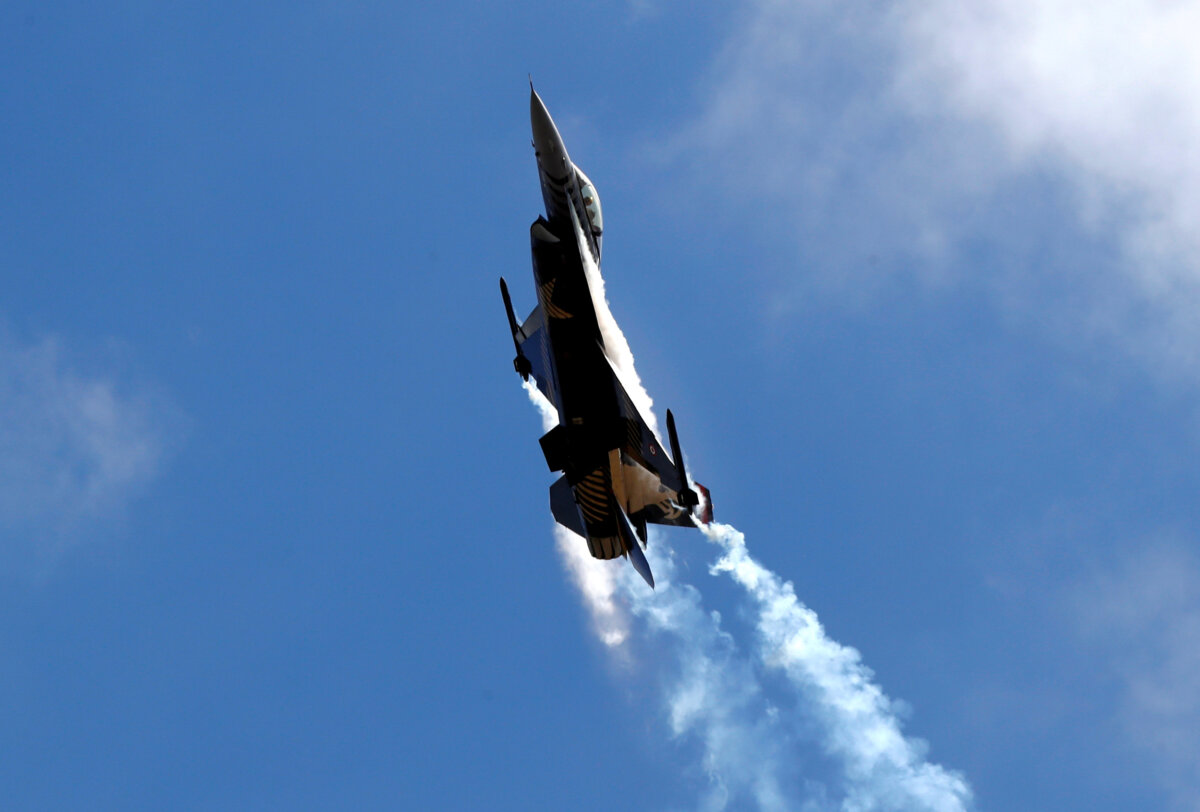
Separately on March 9, Turkey said it had deployed fighter aircraft and air defence systems to the Turkish Republic of Northern Cyprus (TRNC), citing rising regional tensions.
The Ministry of National Defence said six F-16 fighter jets and additional air defense assets had been sent to the territory.
“Additional measures will continue to be taken if deemed necessary,” the statement added.
Cyprus has been divided since 1974. The internationally recognized Republic of Cyprus controls the southern part of the island, while the northern area is administered by Turkish Cypriots.
In 1983, authorities in the north declared the TRNC, a state recognized only by Turkey.
The two sides are separated by a United Nations-patrolled buffer zone, monitored by the UN Peacekeeping Force in Cyprus.
The Turkish announcements come amid a broader military buildup around Cyprus following a drone attack earlier this month on a British air base on the island.
European allies, including the UK, Greece, Spain and France, have moved to reinforce their military presence in the eastern Mediterranean after a drone struck the Royal Air Force Akrotiri base in Cyprus on March 2.
Greece said on March 2 that it would deploy four F-16 fighter jets to Cyprus, according to Cypriot government spokesperson Konstantinos Letymbiotis, who announced the decision in a March 3 statement.
UK Prime Minister Keir Starmer said on March 3 that Britain would deploy HMS Dragon, an air defense destroyer, to Cyprus to help strengthen regional security.
Spain has also announced a naval deployment.
In a March 5 statement, Spain’s Ministry of Defence said it would send the frigate Cristóbal Colón to Cyprus to operate alongside the French aircraft carrier Charles de Gaulle and vessels from the Greek navy.
 Friends Read Free
Copy
Facebook
Tweet
Friends Read Free
Copy
Facebook
Tweet