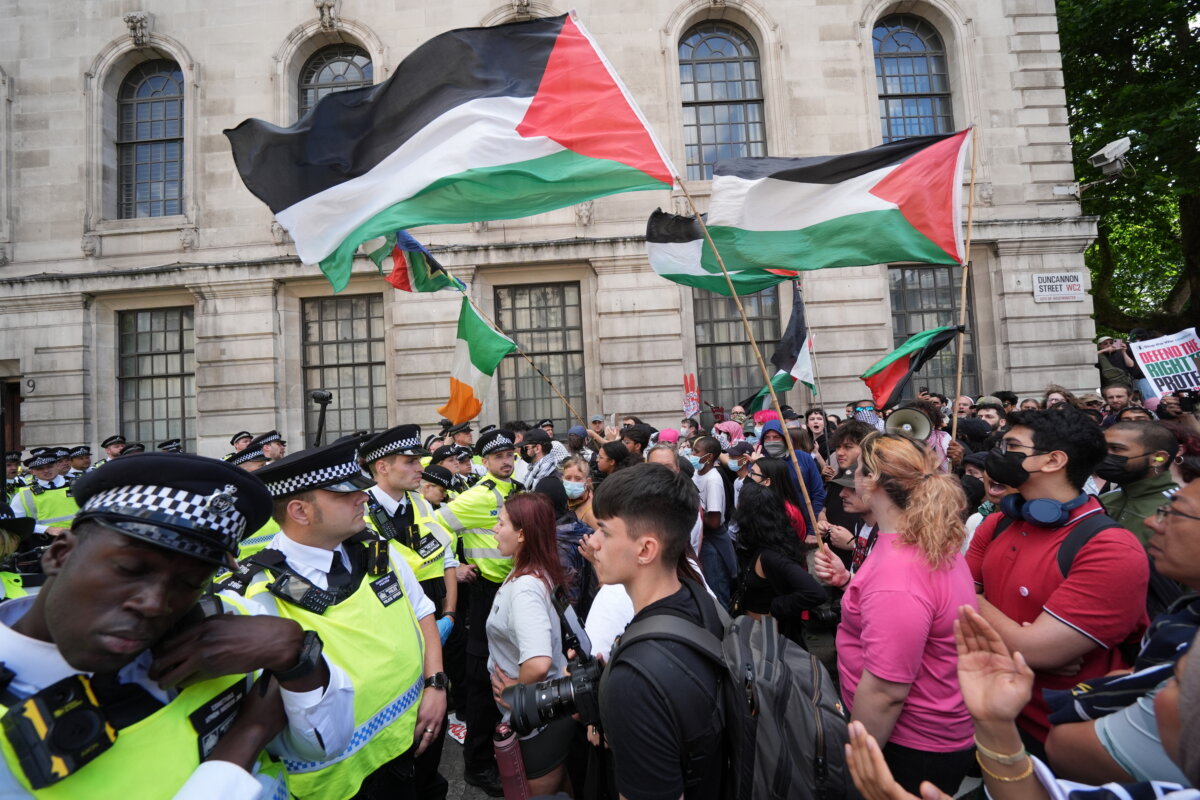

The UK High Court ruled on Feb. 13 that the government’s decision to outlaw the Palestine Action group as a terrorist organisation was unlawful.
Palestine Action, founded in July 2020, campaigns primarily against companies it says are involved in Israel’s military operations. The group was formally proscribed as a terrorist organisation in July 2025 under the Terrorism Act 2000, making membership or support a criminal offence punishable by up to 14 years in prison. The ban put Palestine Action on the same footing as the ISIS and al-Qaeda terrorist groups.
In a 46-page judgment, Judges Victoria Sharp, Jonathan Swift, and Karen Steyn said, “The nature and scale of Palestine Action’s activities falling within the definition of terrorism had not yet reached the level, scale and persistence to warrant proscription.”
They found that while a “very small number of Palestine Action’s activities amounted to acts of terrorism,” they were “satisfied that the decision to proscribe Palestine Action was disproportionate.”
The justices said they would not quash the ban until a further hearing on whether it should stay in place “pending the possibility of an appeal.” They gave lawyers for the two sides until Feb. 20 to prepare for that hearing.
UK Home Secretary Shabana Mahmood said in a Feb. 13 post on X that she rejected claims that “banning this terrorist organisation is disproportionate,” adding that she would challenge the ruling in the Court of Appeal.
“The proscription of Palestine Action followed a rigorous and evidence-based decision-making process, endorsed by Parliament,” Mahmood said. “The proscription does not prevent peaceful protest in support of the Palestinian cause, another point on which the Court agrees.”
The group’s co-founder Huda Ammori, who brought the case against the Home Office, said in a statement following the judgment that it would be “profoundly unjust” for the government to delay or prevent the lifting of the ban.
“This ban was unlawful, resulting in the unlawful arrest of nearly 3,000 people – among them priests, vicars, former magistrates and retired doctors – under terrorism laws for simply sitting in silence while holding signs reading: ‘I oppose genocide – I support Palestine Action’,” she said.
Actions, Controversy
The UK government moved to ban the group after a series of high-profile incidents.
In 2022, activists targeted the Thales defence plant in Glasgow, causing more than 1 million pounds ($1.36 miilion) in damage. On June 20, 2025, two activists sprayed Voyager aircraft with red paint at RAF Brize Norton, the UK’s largest air base.
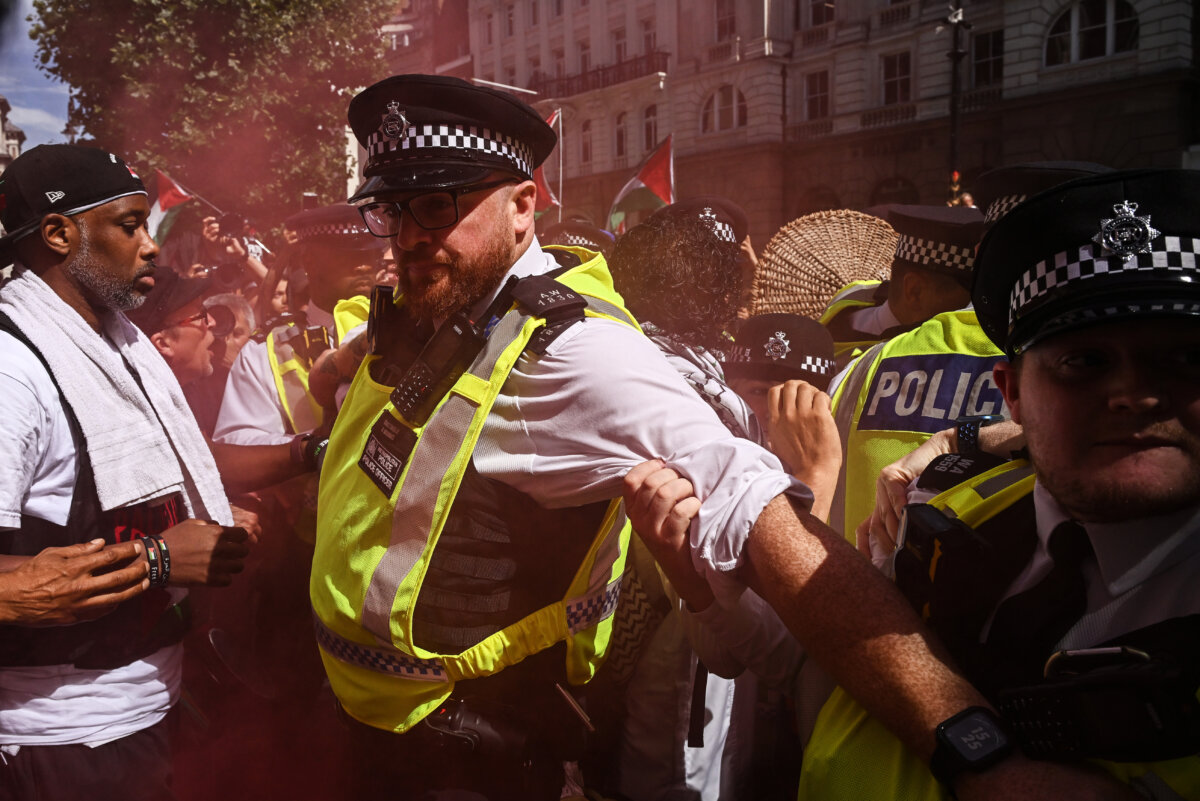
Then-Home Secretary Yvette Cooper said in June 2025 that the group’s “long history of unacceptable criminal damage” met the threshold for terrorism under UK law.
A spokesperson for Palestine Action defended the RAF incident at the time, saying the group “decommissioned” the military planes to interrupt the UK’s “direct participation in the commission of genocide and war crimes across the Middle East.”
Court Weighs Terrorism Threshold
In its Feb. 13 ruling, the court acknowledged the difficulty of balancing public safety with freedom of expression and assembly.
“Deciding where the balance should be struck in this case is difficult,” the justices wrote. “When striking the balance between issues such as these the court must permit some latitude to the Home Secretary given that she has both political and practical responsibility to secure public safety.”
The ruling described the organisation as one that “promotes its political cause through criminality and encouragement of criminality,” while noting that only “a very small number of its actions have amounted to terrorist action.”
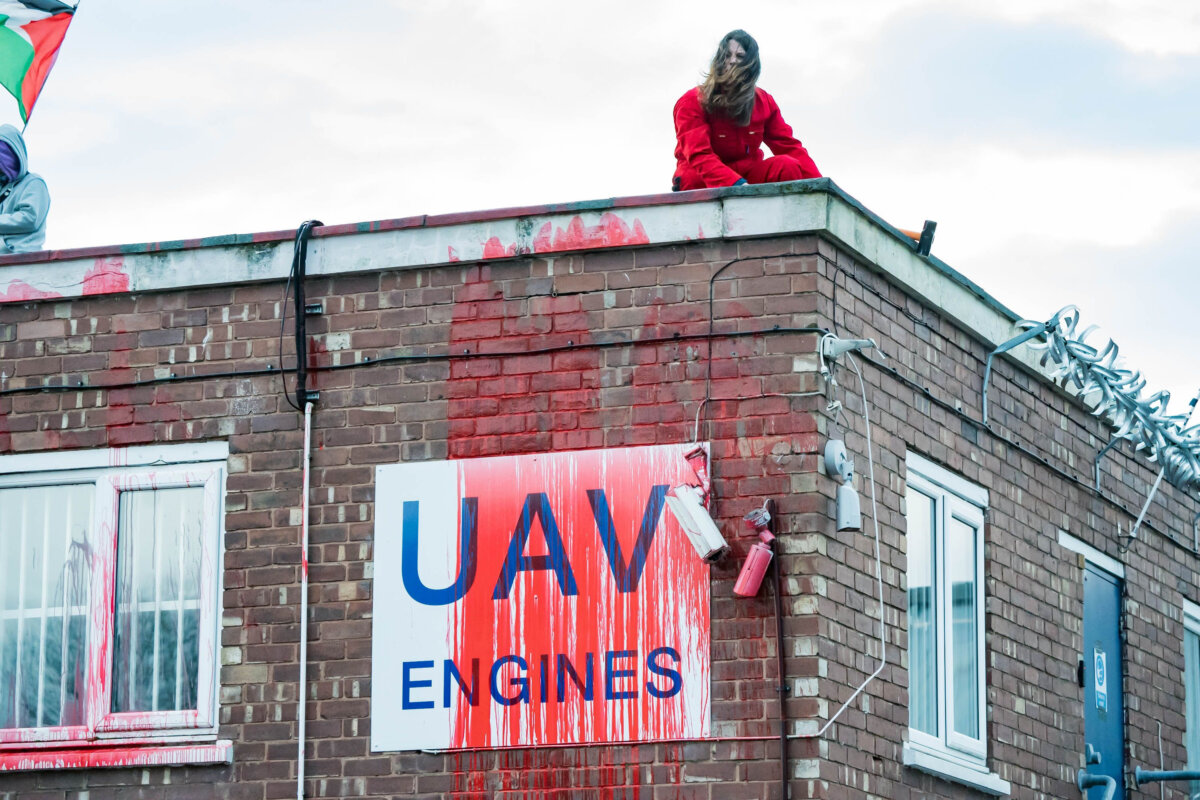
The judges said the consequences of proscription were severe and could chill lawful behaviour.
“We accept that the fact of proscription and the heavy penalties for the offences under the 2000 Act will mean that it is reasonable to expect people to be risk averse, to adjust their behaviour,” they wrote.
Reactions to Ruling
Some lawmakers and rights groups reacted swiftly to the ruling.
The Board of Deputies of British Jews and the Jewish Leadership Council said in a Feb. 13 statement that they were “deeply concerned” by the High Court’s decision.
They said that while they “recognise the vital importance of judicial oversight in matters of national security and civil liberties,” the practical impact of the group’s actions on Jewish communal life had been “significant and deeply unsettling.”
They added that Palestine Action had “repeatedly targeted buildings hosting Jewish communal institutions, Jewish-owned businesses, or sites associated with Israel,” causing fear beyond the immediate protest sites.
The groups said they welcomed the home secretary’s response and noted her “intention to fight the judgement in the court of appeal.”
“We will seek urgent clarity from the Government, police forces and the CPS regarding the implications of this ruling and the steps they intend to take to ensure that communities are protected from intimidation and criminality,” they added.
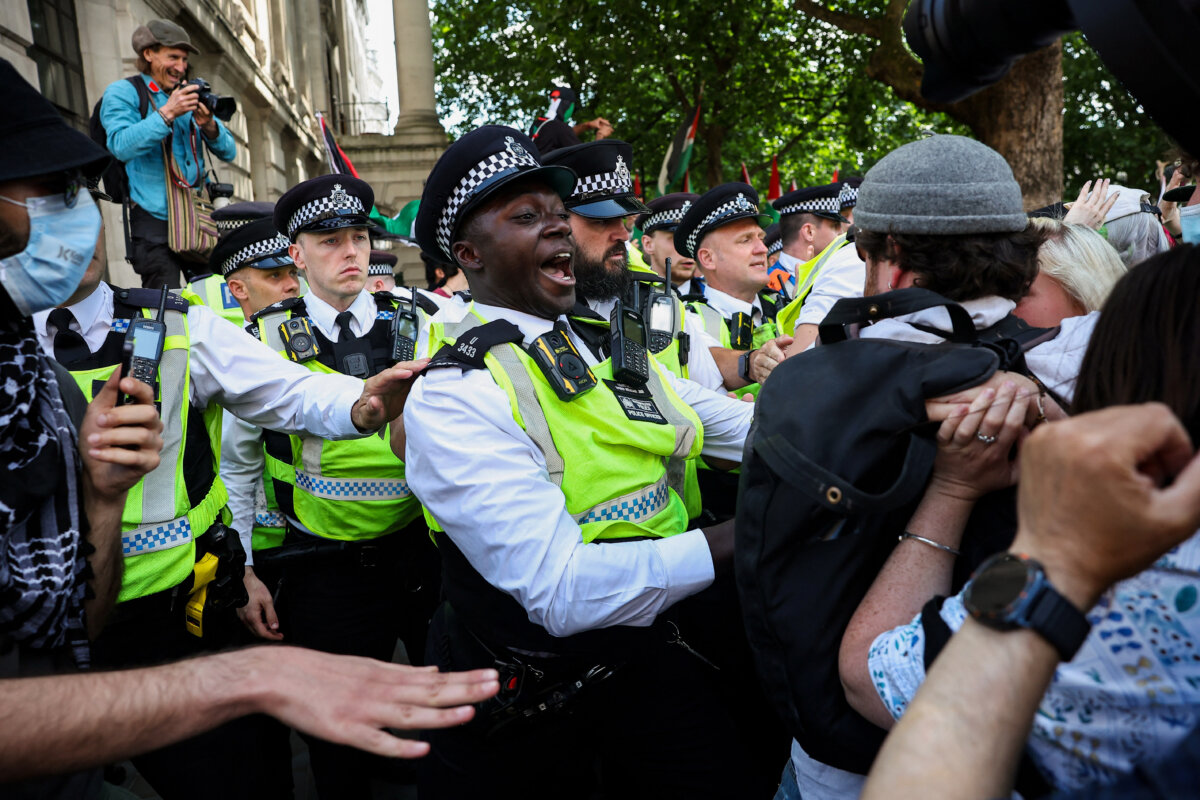
Green Party deputy leader Zack Polanski said charges against protesters who supported the group should be dropped.
“Time to stop criminalising the people protesting a genocide – and start ending the UK’s complicity,” Polanski said in a Feb. 13 post on X.
Liberal Democrat Home Affairs spokesman Max Wilkinson described the ban as a “grave misuse of terrorism laws,” and said placing the group “in the same legal category as ISIS was disproportionate and risked undermining public trust and civil liberties.”
Amnesty UK said in a Feb. 13 post on X that the ruling “draws a clear line in the sand” and called on the government to ensure counter-terrorism laws are not misused.
PA Media contributed to this report.
 Friends Read Free
Copy
Facebook
Tweet
Friends Read Free
Copy
Facebook
Tweet