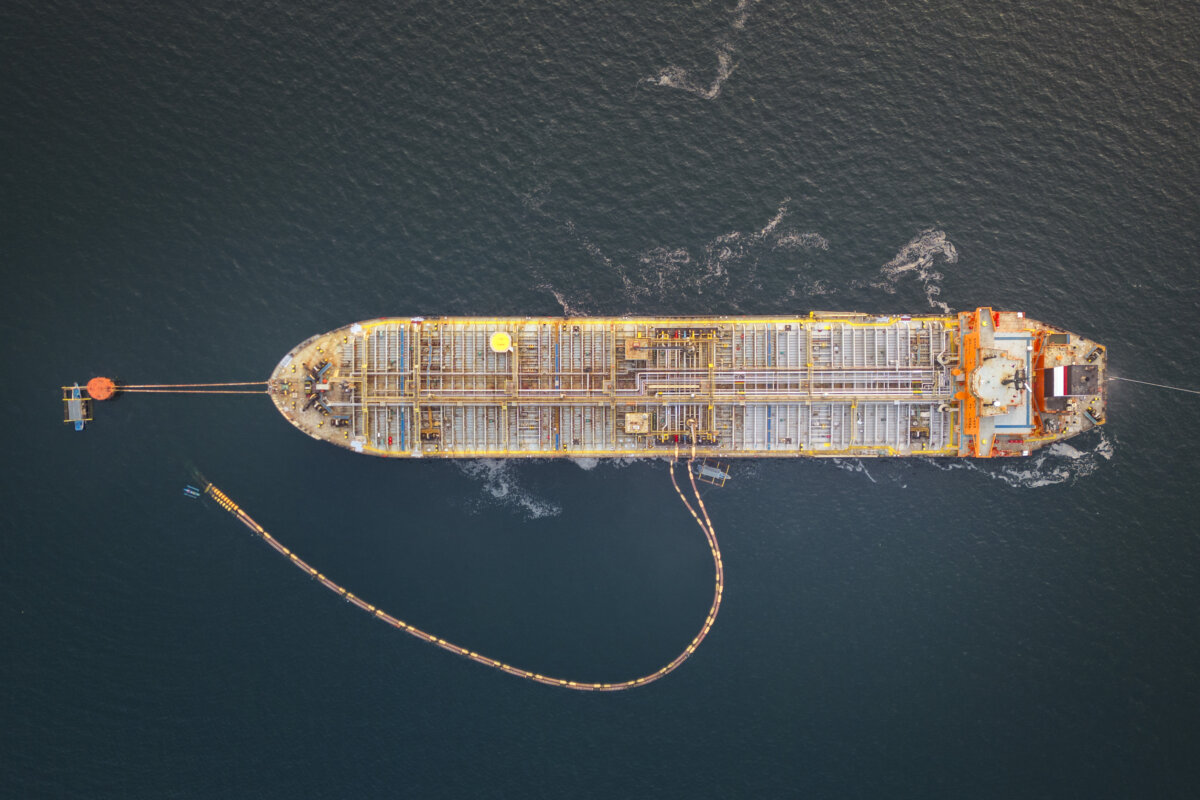

The United States allowed its waiver of sanctions on Russian seaborne oil to expire at midnight on June 17.
Washington has twice previously allowed the waiver to expire in recent months only to extend it days later.
During the war with Iran, the Trump administration waived the measures to help vulnerable economies cope with the energy crisis that ensued from the resulting closure of the Strait of Hormuz, through which a fifth of global oil supplies previously flowed.
On June 18, in the wake of Washington and Tehran signing a memorandum of understanding to end the war, which would allow oil from the Middle East to reach global markets, Trump was asked during the G7 summit in France whether the sanctions on oil transported by sea from Russia would be reimposed.
Trump told reporters his administration is “looking at that.”
“We’re seeing how far the price of oil comes down,” he said. “It’s really tumbling.”
A day prior, Trump suggested the United States could once again apply the sanctions by ending the waiver.
“Soon we’ll be able to do that, because the oil is now flowing” out of the Middle East, he said.
The United States last year sanctioned Russian oil majors Rosneft and Lukoil to pressure the Kremlin to end its war in Ukraine.
Russia, alongside the United States and Saudi Arabia, is one of the world’s top oil exporters.
Treasury Secretary Scott Bessent announced on May 18 another 30-day sanctions waiver allowing the purchase of Russian seaborne oil to aid “energy-vulnerable” countries hit by the Iran war.
The previously issued waiver, which expired on May 16, replaced an earlier 30-day exemption that expired on April 11.
The Epoch Times contacted both the U.S. Treasury and the Russian Ministry of Foreign Affairs for comment, but did not receive a response by the time of publication
Memorandum of Understanding
Under the terms of the memorandum of understanding agreed between the United States and Iran on June 17, set to be formalized in a ceremony slated for June 19 in Switzerland, Tehran can again sell its oil on the global market.
The agreement—signed digitally by both Trump and Iranian President Masoud Pezeshkian, and later confirmed by officials in Washington and Tehran—establishes a 60-day negotiation period during which military hostilities are suspended, the Strait of Hormuz is reopened to commercial traffic, and Iran is allowed to resume oil exports under U.S. sanctions waivers.
However, it could take months to bring oil and gas flows to normal levels.
Crude oil prices fell below $78 a barrel on Thursday for the first time since the opening days of the war.
Brent crude futures were down $1.59, or 2 percent, to $77.96 a barrel in early trading on June 18, while the U.S. West Texas Intermediate fell $1.83, or 2.38 percent, to $74.96 a barrel.
Early shipping data suggests commercial traffic is beginning to recover.
“Seven vessels stranded for 109 days since the war began are now underway, signaling a rapid reopening,” Maritime analytics firm Windward said in a June 18 post on X.
The company said five of the first vessels to depart were Chinese-affiliated ships, while European operators also appeared to be resuming movements, with Windward calling the activity a potential sign of growing industry confidence in the agreement.
Tom Ozimek and Reuters contributed to this report.
 Friends Read Free
Copy
Facebook
Tweet
Friends Read Free
Copy
Facebook
Tweet